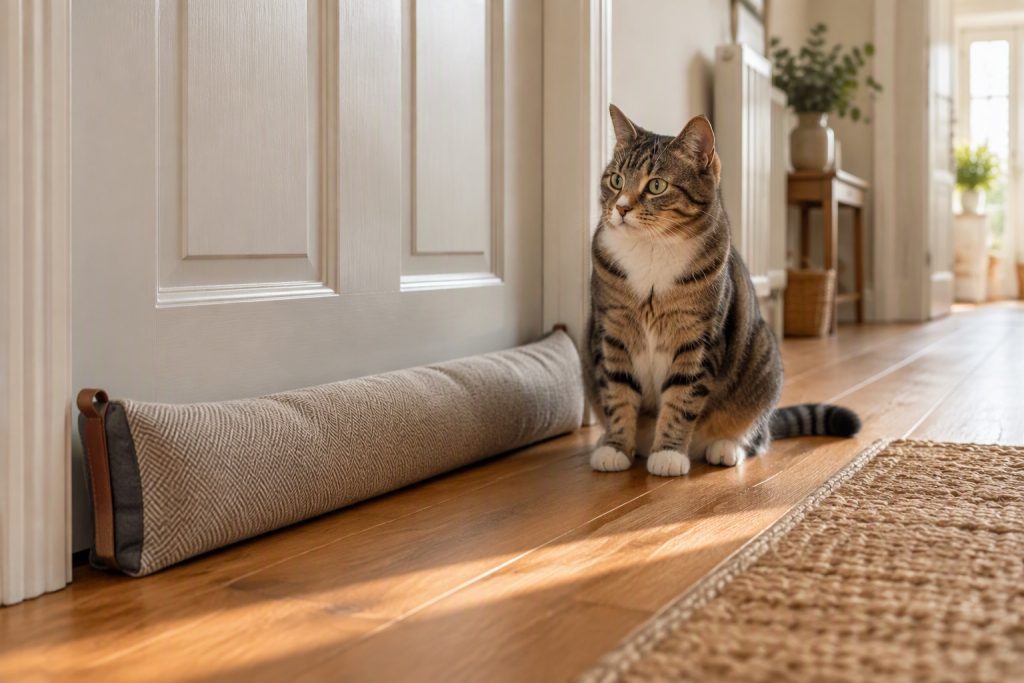
The best draft blocker for cats is one that seals a cold gap completely without being heavy enough to trap or trip a cat, and that stays put on the floor. A simple fabric door snake, a weighted strip, or a well-fitted brush seal all work, and the right choice depends on whether the gap is under a door, along a window, or between a sliding door and its frame. The aim is to stop cold air at floor level, where cats rest, without blocking her ability to move around.
- Seal the gap completely, but keep it light and easy to step over.
- Match the blocker to the gap: door, window, or sliding frame.
- Avoid weighted beads that could trap or hurt a cat.
- Pair it with a warm bed so she has somewhere to retreat.
Why does a draft matter so much to a cat?
Cold air sinks, so the coldest layer in any room is the one closest to the floor, which is exactly where a cat lives. A gap under an external door can funnel a steady stream of freezing air across the floor, and because cats are low to the ground and rest there for hours, they feel it far more than we do standing up. A draft also undermines heating, making the whole room feel cooler and pushing your cat to seek warmth in risky places such as radiators or open fires. Older cats, thin cats, and cats with arthritis feel drafts most, and a persistent chill can stiffen joints and discourage normal activity. Blocking a draft is one of the cheapest, most effective comfort improvements you can make, and it helps your energy bills at the same time. It is a simple fix with a real effect on welfare.
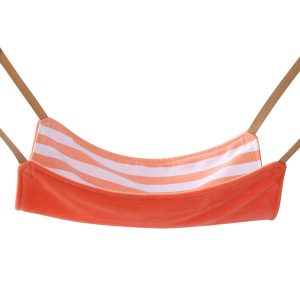
Cervical pillow, plush hammock, floor mat and paw cushion — four places to nap. Gives a cat a…
What types of draft blocker work best?
There are three main types, and each suits a different gap. Fabric door snakes or weighted fabric strips are the classic choice for a gap under an internal or external door; they are soft, cheap, and easy to move, and most cats simply step over them. Brush or rubber seals that screw or stick onto the bottom of a door are more permanent and seal tightly, and they are ideal for a door that is used often. For windows and sliding doors, adhesive brush strips or foam weatherstrip tape fill the narrow gaps where frames meet. For a large gap, a combination of a brush seal and a fabric snake gives the best result. Whatever you choose, avoid designs that leave a lip a cat could catch a claw on, and check that the blocker does not stop a door from closing or lock properly.
Are draft blockers safe around cats?
Most are safe, but a few designs are worth avoiding. Heavy bead-filled snakes can be a problem for very small kittens, and some cats chew and ingest the filling, so check that the fabric is tough and the seams are secure. Never use a blocker that is stiff and raised enough to trip a cat, and avoid anything with loose threads or small parts she could swallow. Do not place a hard, heavy object against a door in a way that could fall on her. If you have a cat who likes to scratch or bite soft things, choose a blocker with a tight weave and no tempting tassels. Also make sure the blocker does not block a cat flap or a route she uses, and check that nothing you fit creates a gap a small kitten could get a head stuck in. Inspect periodically for damage.
Where are the worst drafts in a home?
The biggest offenders are usually under external doors, especially a front or back door that faces the prevailing wind, and around single-glazed windows, where cold air seeps in past the frame. Letterboxes are a classic overlooked gap, as are cat flaps, keyholes, and the gaps around a sliding patio door. Open chimneys and vents also pull in cold air. Floors are worst in rooms with no carpet, such as kitchens and hallways, where the cold layer sits right where a cat walks. If you cannot seal every gap, prioritise the room your cat sleeps in and the route she uses most, then add a warm bed so she has a reliable retreat. Blocking drafts in the coldest two or three spots often transforms how warm the whole home feels. Our article on keeping cats warm in cold weather covers the wider plan.
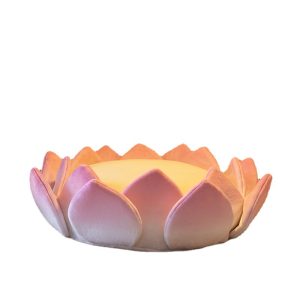
A thickened cloth bed is stepped into rather than climbed over. Try it near the window first, then…
How do I fit a draft blocker properly?
Measure the gap first, because a blocker that is too short leaves a cold channel and one that is too long will not sit flat. For a door snake, choose a length slightly wider than the door and place it hard against the base, then check the door still opens and closes freely. For a brush or rubber seal, clean the door or frame, cut the strip to size, and fit it so the bristles or blade just touch the floor without dragging, since a dragging seal wears out quickly and makes the door hard to close. For window gaps, apply adhesive weatherstrip to a clean, dry surface and press firmly. Test for drafts with your hand along the gap on a windy day, and adjust until you feel no cold stream. Recheck after a few days, because seals settle and may need tightening.
How else can I keep a cold room warmer for my cat?
Sealing gaps is the first step, but a few other measures help. Close curtains and blinds at dusk to add an insulating layer over cold glass, and use a heavier curtain in the coldest room. If a room is unused, close the door so you are not heating it. Raise your cat’s bed off the floor, since cold air pools low, and place it away from external walls and doorways. A self-warming mat or a low-voltage heated bed inside a draft-free spot gives her active warmth she can control. A covered bed or a box lined with fleece traps warmth especially well. Keep her food and water in a warmer area and use a fountain so water does not sit cold. Together these changes keep a cat comfortable without raising the thermostat much. Our guide to the best heated cat bed explains how to choose safe supplemental warmth.
Frequently asked questions
- Do draft blockers really help cats? Yes. Sealing floor-level gaps stops the cold layer cats rest in and makes a room feel noticeably warmer.
- Can a cat step over a door snake? Most cats step over or around them easily, especially a soft fabric design.
- Are bean-filled draft snakes safe? Generally yes, but check the seams and fabric, since some cats chew and ingest filling.
- Where should I put a draft blocker first? Start with your cat’s sleeping room and the door she uses most, especially an external one.
- Is a draft blocker enough in a cold room? It helps a lot, but pairing it with a raised, warm bed gives your cat a reliable retreat.