

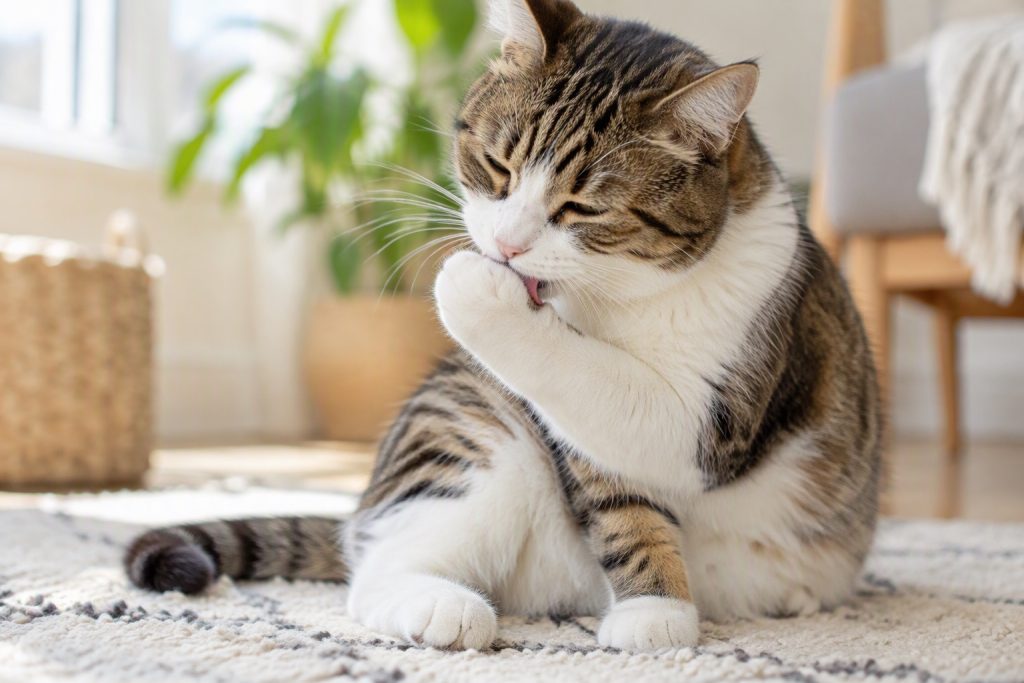
A cat who licks her paws more in winter is usually responding to dryness, irritation, or cold. Indoor heating dries the skin, salt and grit from outdoors irritate the pads, and cold weather can worsen existing allergies or joint pain that makes her focus on her feet. Occasional grooming is normal, but licking that becomes constant, leaves bald patches, or makes her limp is a sign that something needs attention rather than just a winter quirk.
- Dry heated air and road salt are the usual winter culprits.
- Occasional grooming is normal; constant licking is not.
- Check for cracks, redness, swelling, or foreign objects.
- Bald patches, limping, or bleeding need a vet.
Why does winter make cats lick their paws more?
Winter changes the environment in several ways that affect paw skin. Heating systems lower indoor humidity, which draws moisture out of the pads and leaves them dry, tight, and itchy, and a cat responds by licking to soothe them. Outdoors, de-icing salt and grit are abrasive and caustic, and a cat who walks on treated surfaces will lick her paws afterwards to clean them, ingesting some of the irritant in the process. Cold itself reduces circulation to the extremities, which can make pads more sensitive. Winter also coincides with indoor allergen exposure, since cats spend more time inside near dust, mould, and heating vents, and with dry skin conditions that flare in low humidity. For cats with arthritis, cold, stiff joints can make a cat lick or chew at a painful leg. Most winter paw licking is mild and manageable, but the cause is worth identifying.

A stainless ABS plastic and metal comb clears the loose hair before it lands on the furniture. Keep…
How much paw licking is normal?
Cats groom their paws as part of routine cleaning, usually briefly after eating, after using the litter tray, or after coming inside, and this is entirely normal. What matters is the change. Normal grooming is short, calm, and spread across the body, while problem licking is focused on one or more paws, lasts for long stretches, and often happens at times when she is resting or anxious. Watch for fur thinning or bald patches, red or shiny skin, saliva staining, and a cat who stops mid-activity to lick. A paw that is constantly damp from licking can develop a bacterial or yeast infection, which then makes the licking worse, creating a cycle. If the behaviour is new, focused, and persistent, treat it as a symptom rather than a habit. Our guide on cat paw pad cracks explains what damaged pads look like.
What should I check on her paws?
Look at the pads and between the toes in good light. Check for cracks, flaking, or peeling skin, and for redness or swelling, which suggests inflammation or infection. Look for grit, small stones, thorns, or splinters lodged between the pads, and for ice balls in cats who go outside. Note any discharge, a bad smell, or a paw that feels hot, all of which point to infection. Compare all four paws, since symmetry can suggest an allergy or a systemic skin problem while a single affected paw usually means a local injury. Look for hair loss, which may be from over-grooming, and for swelling at the base of a claw, which can indicate a broken or infected claw. Check the claws themselves for splits or overgrowth. If you find something embedded, do not dig at it; have your vet remove it safely.
What causes winter paw licking besides dryness?
Several conditions flare in cold months. Allergies, whether to dust, mould, food, or a new bedding, often worsen when a cat is indoors more, and itchy paws are a classic sign. Dry skin from low humidity can progress to flaking and cracking that invites infection. Parasites such as fleas and mites can cause intense paw chewing, and even in winter a warm home can support fleas. Fungal infections thrive on damp, licked skin. Arthritis and other joint pain can lead a cat to lick a sore limb, and nerve pain or referred discomfort can make her focus on a paw that is not the real source. Stress and anxiety also trigger over-grooming, and winter can bring changes such as less outdoor time, which unsettles some cats. Because the causes overlap, persistent licking needs a vet to sort out. Our article on itching when there are no fleas covers the allergy angle.
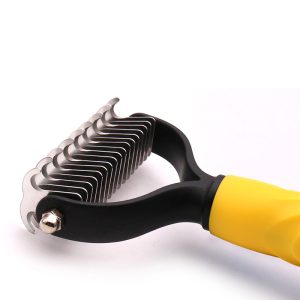
A plastic dematting comb clears the loose hair before it lands on the furniture. Use it before the…
How can I soothe and prevent winter paw licking?
Start with the environment and the paws. Raise indoor humidity with a humidifier, keep her away from direct heat sources, and rinse her paws with lukewarm water after any time outdoors to remove salt and grit. Dry them thoroughly. Trim the fur between the toes to reduce trapped moisture and ice, and apply a cat-safe balm to dry pads, distracting her briefly so it absorbs. Offer wet food and plenty of fresh water to support skin hydration from within. Keep bedding clean and wash it in unscented detergent, since residues can irritate. If fleas or mites are possible, use a vet-recommended parasite treatment rather than a guess. Manage stress with routine, play, and quiet spaces. Most importantly, do not let her keep licking a damaged paw, because the cycle worsens; if simple measures do not help within a few days, get it assessed.
When should I see a vet?
Book an appointment if the licking is constant, if you see bald patches, redness, swelling, discharge, or a bad smell, or if your cat is limping or reluctant to walk or jump. Seek prompt care if a paw is bleeding, if a claw is torn, or if there is a deep crack that will not heal. A vet can examine for foreign bodies, test for infection, and check for allergies, parasites, and arthritis. Do not apply human creams or medicated ointments, because many contain ingredients that are toxic when licked, and do not bandage a paw yourself unless instructed. Keep a note of when the licking started, which paws are involved, and any change in food, litter, or environment, since that history speeds diagnosis. Keep the paw clean and dry in the meantime, and prevent her from licking it raw by distracting her with play. For anything persistent, or if your cat seems unwell alongside the licking, always speak to your vet.
Frequently asked questions
- Is it normal for cats to lick their paws in winter? Light grooming is normal, but a clear increase or constant licking usually signals dryness, irritation, or pain.
- Can dry air make my cat lick her paws? Yes. Low indoor humidity dries the pads and causes itching, which prompts licking.
- Should I put cream on my cat’s paws? Only a cat-safe balm. Human creams may contain ingredients that are harmful if licked.
- Why does she lick only one paw? A single affected paw often points to a local injury, foreign object, or infection. Get it checked.
- When is paw licking an emergency? Bleeding, a torn claw, a hot swollen paw, or limping needs prompt veterinary care.





