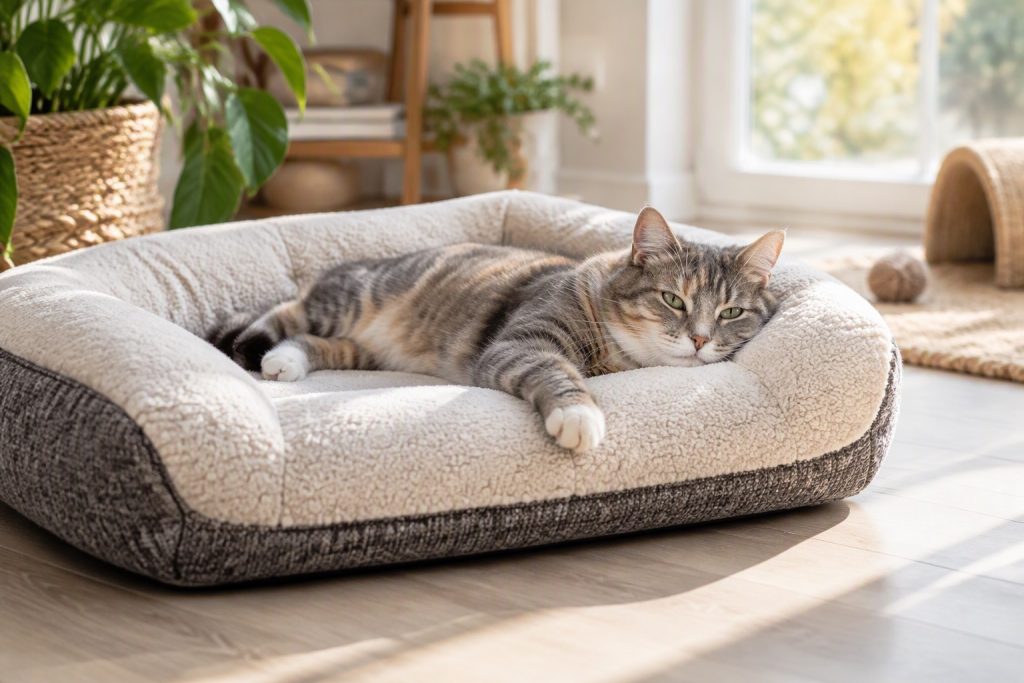
The best orthopedic cat bed uses a supportive memory foam or high-density base that spreads weight evenly and takes pressure off stiff joints, with a low, easy-to-enter shape and a washable cover. It matters most for older cats, cats with arthritis, and cats recovering from injury or surgery. A good orthopedic bed is firm enough to support but cushioned enough to be comfortable, and low-sided so she can walk in rather than leap in.
- Memory foam or dense support beats soft stuffing.
- Low sides so she can walk in without jumping.
- Washable cover is essential for daily use.
- Best for seniors, arthritis, and post-surgery recovery.
What makes a cat bed orthopedic?
An orthopedic bed supports the body rather than letting it sink into a soft void. The core is usually memory foam or a high-density foam that responds to weight and pressure, contouring to the cat’s shape and distributing her mass so no single point, such as a hip or elbow, bears too much load. This reduces pressure on joints and improves comfort for a cat with arthritis or one recovering from surgery. Orthopedic beds are also generally firmer, which makes it easier for a stiff cat to stand up again, since soft, deep beds can trap a weak cat and make rising difficult. Some include a bolster or a raised edge that supports the head and neck or gives a sense of security, though very high sides can defeat the purpose for an arthritic cat. The best design balances support, easy access, and warmth. Look for foam that holds its shape rather than flattening within weeks.
A thickened cloth bed is stepped into rather than climbed over. Try it near the window first, then…
Does my cat really need an orthopedic bed?
Not every cat does, but the cats who need one benefit enormously. Older cats commonly develop arthritis, and a supportive bed reduces morning stiffness and helps them rest without constant shifting. Cats with hip dysplasia, spinal problems, or previous fractures also do better on supportive foam. Cats recovering from surgery, especially orthopedic procedures, need a firm, clean, low surface that is easy to reach. Overweight cats put extra load on their joints and benefit from pressure relief too. If your cat is sleeping more, hesitating before jumping, walking stiffly, or choosing hard surfaces because soft beds are hard to get out of, an orthopedic bed is worth trying. On the other hand, a young, healthy, flexible cat will be perfectly happy on a normal bed, and spending more will not change her life. Match the bed to her needs rather than buying the most expensive option. Our article on the best bed for an older cat covers the wider choice.
What features should I look for?
Start with the foam: genuine memory foam or high-density foam, thick enough to matter, usually at least five centimetres. A removable, machine-washable cover is essential, because an orthopedic bed is used daily and will collect hair and accidents, and older cats may have reduced bladder control. The base should be non-slip, so the bed does not slide when she pushes up to stand. Entry should be low and open, with no high lip to step over, and the size should let her stretch out fully, since a cramped bed forces her into the exact posture that hurts. Warmth helps stiff joints, so consider one that pairs with a self-warming mat or a low-voltage heated pad. Check the cover for a soft, gentle fabric with no loose threads, and confirm the foam does not have a strong chemical smell when new. Durability matters, because cheap foam collapses quickly.
How do I get an older cat to use a new bed?
Placement and access do most of the work. Put the bed where she already rests, in a warm, quiet, draughty-free spot, and raise it slightly off a cold floor. Do not place it somewhere she must jump up to, because a stiff cat will avoid it. Make entry easy by choosing a low-sided design and, if needed, adding a small step or a folded towel as a ramp. Scent is powerful: put a familiar blanket or a worn item of your clothing on the bed so it smells safe, and place it beside her current sleeping spot before moving it gradually. Never lift her into it or hold her there, which creates a negative association. Reward her calmly when she investigates. Some cats take to a new bed within hours, while others need a week, so be patient. If she still avoids it, check whether the room is cold or the bed is too high or too soft.
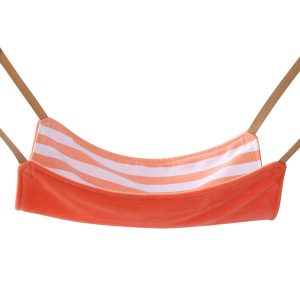
Cervical pillow, plush hammock, floor mat and paw cushion — four places to nap. Gives a cat a…
How does an orthopedic bed help arthritis?
Arthritis in cats causes joint pain and stiffness that is worst after rest and in cold weather, and a supportive bed addresses both. Pressure-relieving foam reduces the load on painful joints while she sleeps, so she shifts position less and rests more deeply, which supports her overall wellbeing. A firmer surface makes it easier to stand up, which matters because a cat who struggles to rise will sleep less and move less, worsening stiffness. Warmth improves circulation and reduces joint pain, so an orthopedic bed paired with gentle heat is especially effective. Low, easy access means she does not have to jump, protecting her joints from impact. Together these features can visibly improve how a cat moves in the morning. An orthopedic bed is not a treatment for arthritis, so if you suspect the condition, have your vet assess her. Our guide on cat arthritis signs explains what to look for.
How do I clean and maintain an orthopedic bed?
Clean the cover regularly, ideally weekly for a daily-use bed, using a gentle, unscented detergent and a warm wash. Avoid fabric softener, which leaves residue that can irritate skin. Air-dry or tumble dry on low, and make sure the cover is completely dry before reassembly, since damp foam grows mould. Spot-clean accidents immediately with an enzymatic cleaner, because older cats may have occasional leaks, and a soiled bed will be avoided. Do not soak or machine-wash the foam core unless the manufacturer says it is safe, since water can break it down; instead, vacuum it and air it in the shade. Check the foam every few months for flattening, crumbling, or a persistent smell, and replace it when it no longer springs back, because a collapsed bed offers no support. Keep a spare cover if you can, so the bed is never out of action while washing.
Frequently asked questions
- Is memory foam safe for cats? Yes, provided the bed is made for pets and has no strong chemical odour. Air it out before use.
- Do cats like orthopedic beds? Many older and arthritic cats do, especially low-sided ones placed in a warm, familiar spot.
- What size orthopedic bed should I buy? Large enough for her to stretch out fully, with a low entry she can walk over.
- Can I use a heated pad with an orthopedic bed? Yes. A low-voltage pet pad under a blanket adds welcome warmth for stiff joints.
- How often should I replace an orthopedic bed? When the foam no longer springs back or shows compression, often every one to two years with daily use.