

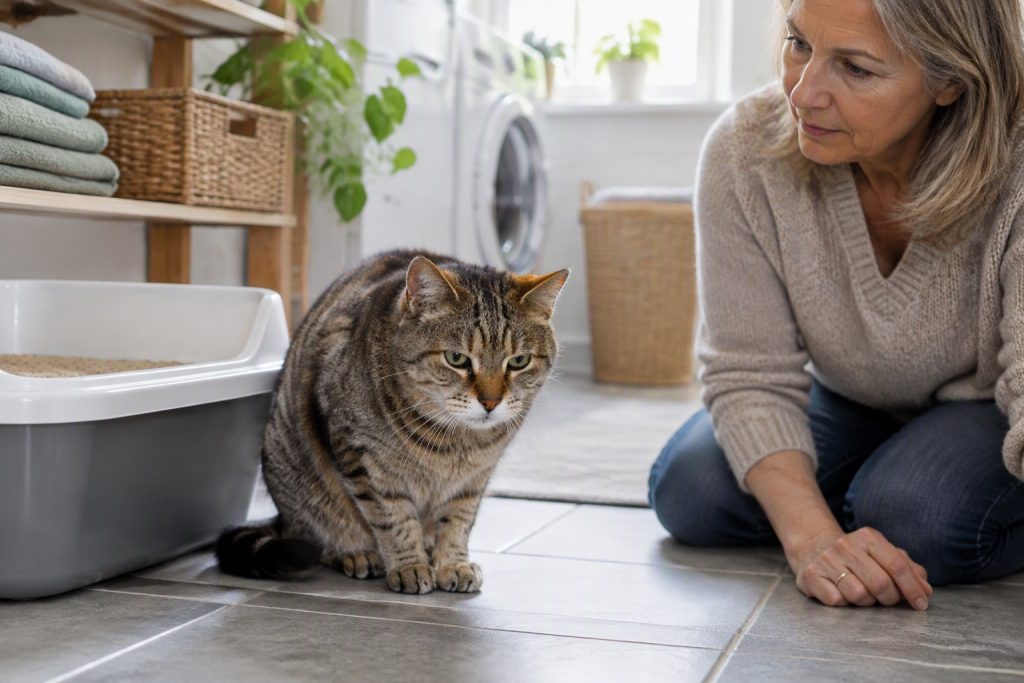
Constipation in older cats is common and usually caused by a combination of dehydration, reduced activity, and slower gut motility, though arthritis, kidney disease, and some medications also play a role. A constipated cat strains in the litter tray, passes small hard stools or none at all, and may seem uncomfortable. Simple changes such as more water, more wet food, and easier litter tray access help many cats, but repeated or severe constipation needs veterinary care, because it can progress to a dangerous blockage.
- Older cats constipate from dehydration and slower gut motility.
- More wet food and water is the first step.
- Arthritis can stop cats using the litter tray comfortably.
- Straining with no stool for a day needs a vet.
Why do older cats get constipated?
Several age-related changes combine. Older cats often drink less, and low water intake makes stool hard and dry, so it moves slowly and becomes painful to pass. Gut motility naturally slows with age, and weaker abdominal muscles make straining less effective. Arthritis is a major but often overlooked factor: a cat whose hips hurt may avoid the litter tray, hold on, and become constipated as a result. Kidney disease, very common in seniors, causes dehydration that worsens constipation. Dental pain can reduce eating and fibre intake, and some medications, including certain painkillers, diuretics, and antacids, slow the gut. Other causes include hairballs, a diet low in moisture, obesity, and, less commonly, tumours or neurological problems. Because the causes overlap, an older cat with constipation benefits from a proper assessment rather than repeated guesswork. Treating only the symptom often fails if the underlying reason is not addressed.
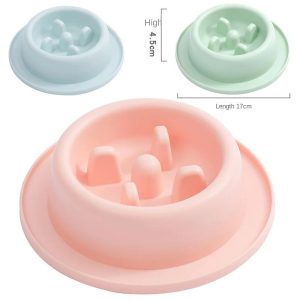
Round bowl with a removable flower insert. Made from PP. Made for daily feeding and fresh water. Keeps…
What are the signs of constipation in a senior cat?
The most obvious signs are straining in the litter tray, passing small, hard, dry stools, or producing nothing at all despite trying. You may notice less stool in the tray than usual, or stool outside the tray if she is uncomfortable. A constipated cat may vocalise while toileting, squat for long periods, or leave the tray abruptly. She may seem restless, pace, or sit in a hunched position with her back arched, and she may lose her appetite, become lethargic, or hide. Vomiting, a bloated abdomen, and weight loss are more serious signs. Sometimes you will see her licking her rear or scooting. Because the signs can be subtle at first, keep an eye on the litter tray and know what is normal for your cat. If she has not passed a stool for more than a day or two, or if she is straining without result, treat it as urgent. Our guide on cat constipation relief covers first steps.
How is constipation diagnosed and treated?
A vet will take a history, feel the abdomen to assess how much stool is present, and often run blood work to check for dehydration, kidney disease, thyroid problems, and electrolyte imbalances. X-rays or an ultrasound may be used if a blockage or a mass is suspected. Treatment depends on severity: mild cases may respond to increased water intake, a high-moisture diet, and a vet-recommended fibre or laxative product. More significant cases may need fluids, enemas, or manual removal under sedation. Chronic constipation, sometimes called megacolon, may require long-term medication to keep the gut moving, and occasionally surgery. Never give a cat human laxatives, stool softeners, or enemas, because the doses and ingredients are dangerous for cats. Follow your vet’s plan closely and report if it stops working. Early treatment prevents the painful, serious progression that makes management much harder later.
How can I help at home?
Hydration is the foundation. Switch to or increase wet food, add a little warm water to her meals, and offer a water fountain, since many cats drink more from moving water. Keep water bowls in several places, away from food, and consider a raised bowl for an arthritic cat. Increase gentle activity with short play sessions to stimulate gut movement. Make the litter tray easy to reach and comfortable: a low-sided tray helps a stiff cat, and a larger tray gives room to posture. Keep trays clean and plentiful. If your vet recommends it, add a vet-approved fibre source or a specific gastrointestinal diet. Pumpkin, psyllium, and similar remedies can help some cats but can worsen others, so ask your vet before adding anything. Also treat the underlying issue: pain relief for arthritis, dental care for a sore mouth, and management of kidney disease. Our article on home remedies for constipation has more detail.
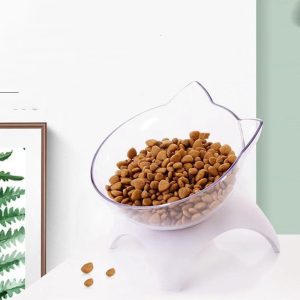
Clear glass bowl holding dry food. Made from plastic. Made for daily feeding and fresh water. Keeps food…
What about hairballs and constipation?
Hairballs and constipation are linked in older cats. Cats swallow hair while grooming, and normally it passes through the gut, but if the stool is dry and slow-moving, hair can accumulate and form a blockage that causes or worsens constipation. Older cats who groom less effectively or who have reduced gut motility are more prone. Regular brushing removes loose hair before she swallows it, and a high-moisture diet keeps the gut moving so hair passes through. Some cats benefit from a vet-approved hairball remedy or a diet formulated to support hair passage. If your cat vomits hairballs frequently, strains, or has repeated constipation, this combination needs veterinary attention, because it can indicate an underlying motility problem. Do not rely on over-the-counter hairball pastes indefinitely without advice. Keeping her hydrated, brushed, and active addresses both problems at once.
When is constipation an emergency?
Some situations need immediate veterinary care. Seek urgent help if your cat has not passed a stool for more than two days, is straining repeatedly with no result, is vocalising in pain, or has a swollen, hard, painful abdomen. Vomiting, refusal to eat, weakness, collapse, or a cat who is hiding and unresponsive are all emergencies. If she is straining to urinate rather than defecate, especially a male cat, that is a separate and life-threatening emergency that requires immediate attention. Repeated constipation that recurs despite treatment also needs review, because chronic megacolon requires ongoing management. Do not attempt to give an enema or a human laxative at home, and do not wait to see if it resolves on its own, because an obstructed bowel can become critical quickly. For anything persistent, or if your cat seems unwell alongside the constipation, always contact your vet.
Frequently asked questions
- How often should an older cat poop? Most cats pass a stool once or twice a day. Less than once daily, or a gap of two days, warrants attention.
- Can I give my cat a human laxative? No. Human laxatives and enemas can be dangerous for cats. Ask your vet instead.
- Does wet food help constipation? Yes. Its higher water content softens stool and supports gut motility.
- Why does arthritis cause constipation? Painful hips make cats avoid the litter tray, so they hold on and become constipated.
- When is constipation an emergency? Straining with no stool for two days, vomiting, a hard painful abdomen, or weakness needs urgent care.





