

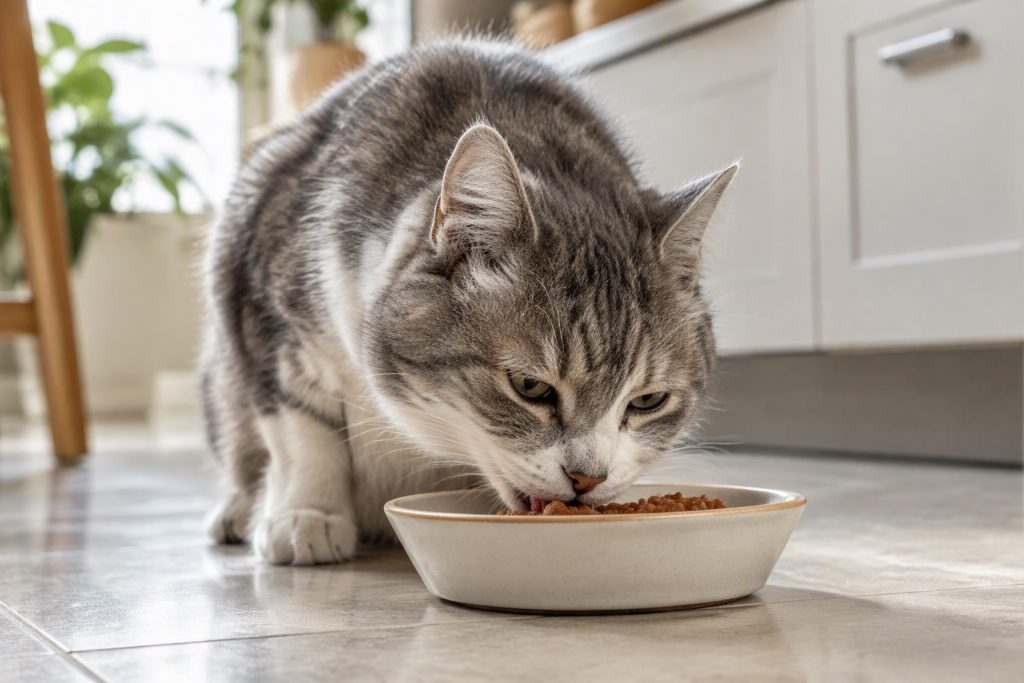
The best food for a senior cat is a complete, highly digestible diet with plenty of moisture, high-quality protein, and controlled phosphorus, adjusted to whatever health conditions she has. There is no single ideal senior food, because an older cat’s needs depend on her kidneys, thyroid, teeth, weight, and mobility. In general, wet food suits most seniors well, and any diet should be introduced gradually and matched to veterinary advice if she has a diagnosed condition.
- Wet food supports hydration, which seniors need most.
- Keep protein high-quality unless a vet advises otherwise.
- Phosphorus control matters if kidneys are affected.
- Change diets gradually, over seven to ten days.
How do a senior cat’s nutritional needs change?
Ageing changes digestion, metabolism, and organ function. Older cats digest fat and protein less efficiently, so they often need highly digestible ingredients rather than simply fewer calories. Many seniors actually need more protein than younger cats to maintain muscle, and muscle loss, not weight gain, is the more common problem in healthy older cats. Water needs rise while the thirst drive stays weak, which makes moisture-rich food valuable. Kidney function commonly declines, so phosphorus and protein levels may need adjusting if kidney disease is present. Dental problems can make hard kibble painful, favouring soft food. Appetite may fall because smell and taste dull with age, so aroma matters. Body condition should guide portions, since both weight loss and weight gain occur. Because needs vary so much, a senior diet is best chosen with your cat’s actual health status in mind, not just her age. Our article on feeding a senior cat covers the basics.
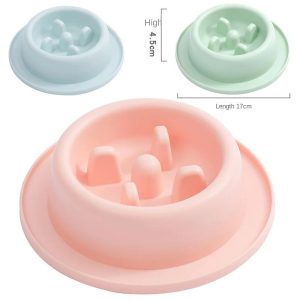
Round bowl with a removable flower insert. Made from PP. Made for daily feeding and fresh water. Keeps…
Should senior cats eat wet or dry food?
For most older cats, wet food is the better default. It provides far more water, which supports kidney health and helps prevent constipation, both common problems in seniors. It is also softer, so a cat with dental pain or missing teeth can eat comfortably, and its stronger aroma helps a cat with a dulled sense of smell. Many cats find wet food more palatable, which matters when appetite is fragile. Dry food still has a place: it is convenient, calorie-dense for a thin cat who struggles to eat enough, and useful for cats who will not accept wet food. Some owners feed a mix, using wet food as the main diet and a little dry for grazing or for dental purposes. If your cat has kidney disease or another condition, your vet may recommend a specific wet or dry therapeutic diet. Whatever you choose, transition slowly and watch her weight, coat, and energy.
What should I look for on the label?
Look for a statement that the food is complete and balanced for the cat’s life stage, which means it meets recognised nutritional standards. Protein should come from named animal sources and be highly digestible, and fat should be present but appropriate to her activity. Check the phosphorus and sodium levels, which matter for cats with kidney or heart disease. Avoid foods heavy in fillers, artificial colours, and strong flavourings, which add little nutrition. For a cat with a diagnosed condition, look for a veterinary therapeutic diet rather than a general senior product, because these have controlled levels of protein, phosphorus, and other nutrients. Check the calorie content and measure portions, since senior foods vary widely in energy density. Finally, consider texture and aroma, because a nutritionally perfect food that she refuses is no use. Buy small quantities first, and be prepared to try more than one option.
How do I switch my senior cat to a new food?
Slowly, because older cats are often set in their ways and abrupt changes cause digestive upset. Over seven to ten days, mix a small amount of the new food into her current food and gradually increase the proportion, watching for vomiting, diarrhoea, or refusal. If she resists, slow down further or hold at the current ratio for a few extra days. Warm wet food slightly to release aroma, which helps a cat with a reduced sense of smell, and offer it in a clean, shallow bowl so her whiskers are not squashed. Feed at consistent times in a quiet place, and remove uneaten wet food after about thirty minutes. If she has a medical condition, follow your vet’s transition plan, which may differ. Keep a note of what she eats and how she responds. Never withhold food to force a switch, because a cat who stops eating can become seriously ill. Our guide on senior cat care basics puts diet in context.
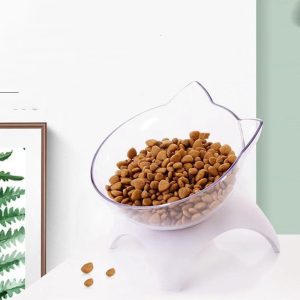
Clear glass bowl holding dry food. Made from plastic. Made for daily feeding and fresh water. Keeps food…
What if my senior cat has a health condition?
Diet becomes part of treatment, so veterinary guidance is essential. Cats with chronic kidney disease often need restricted phosphorus and controlled, high-quality protein, and specific kidney diets have been shown to help. Hyperthyroid cats may need a diet low in iodine or, more commonly, medication alongside a normal diet. Diabetic cats need a consistent, measured feeding plan, often high in protein and low in carbohydrate, timed with insulin. Cats with heart disease may need restricted sodium, and those with food allergies need a hydrolysed or novel-protein diet. Cats with arthritis benefit from joint-supportive nutrients and, most importantly, an appropriate weight, since extra pounds worsen joint pain. Never start a therapeutic diet on your own, and never combine supplements with prescription food without asking, because interactions and nutrient imbalances are real risks. Your vet can also advise on appetite stimulants or feeding tubes if she will not eat enough.
How do I manage appetite and weight in an older cat?
Older cats can lose weight for many reasons, so a declining appetite deserves investigation rather than coaxing alone. Have her teeth and mouth checked, since dental pain is a common cause, and ask about kidney disease, thyroid problems, cancer, and inflammatory bowel disease. Make food more appealing with warmth, stronger-smelling wet food, and a variety of textures, and feed small, frequent meals in a calm, private spot. Raise the bowl slightly if bending is hard, and keep it clean. Weigh her every few weeks and track the trend, because muscle loss is easy to miss under fur. If she is losing weight despite eating, that is a vet matter. If she is gaining, reduce portions and increase activity gently. Never let a cat go without food for more than a day, as this can trigger serious liver problems. With attention and veterinary support, most seniors can stay comfortable and well nourished.
Frequently asked questions
- What is the best food for an older cat? A complete, highly digestible, moisture-rich diet suited to her health, ideally chosen with veterinary input.
- Is wet food better for senior cats? Usually yes, because of its water content and soft texture, though some cats do well on a mix.
- Do senior cats need less protein? Healthy seniors often need more, not less, but cats with kidney disease may need a controlled amount.
- How do I switch my old cat’s food? Gradually over seven to ten days, mixing increasing amounts of the new food.
- Why is my senior cat losing weight? Common causes include dental pain, kidney disease, thyroid problems, and cancer. See your vet.





