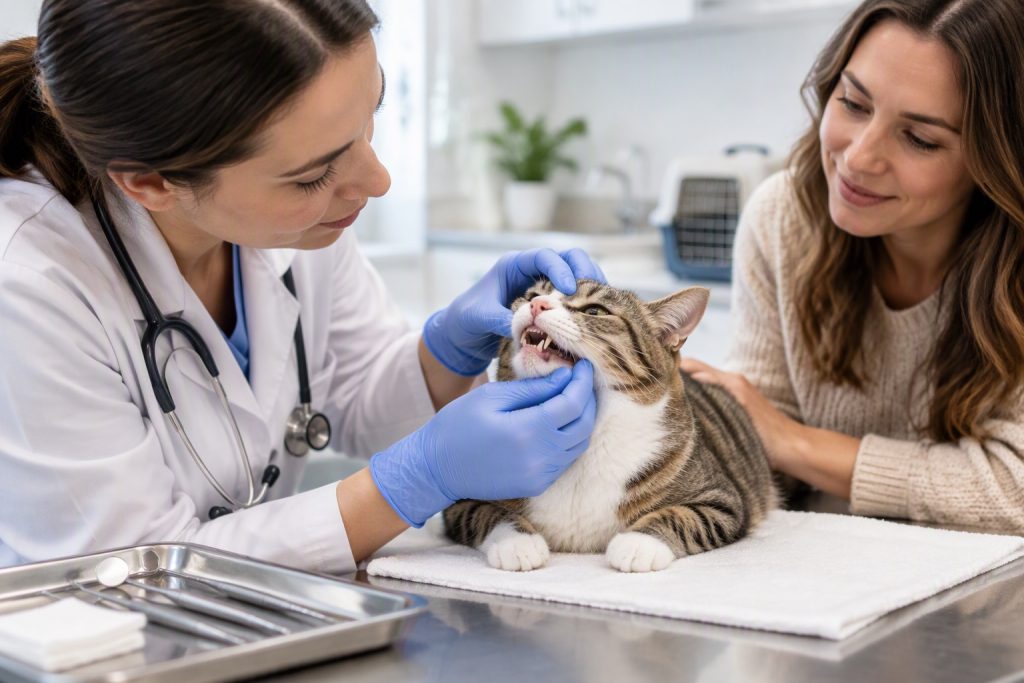
A professional cat dental cleaning is a procedure performed under general anaesthesia in which a vet scales plaque and tartar from above and below the gumline, polishes the teeth, and takes dental X-rays to check for problems hidden below the surface. It is the only way to treat established dental disease, because brushing and dental treats cannot remove tartar that has hardened or address infection under the gum. Expect a pre-anaesthetic assessment, a day at the clinic, and a few days of soft food afterwards.
- Cleaning happens under general anaesthesia, never awake.
- It includes scaling, polishing, and dental X-rays.
- Blood work and an exam come first to check safety.
- Home brushing afterwards protects the result.
Why does a cat need a professional dental cleaning?
Dental disease is extremely common in cats, and by middle age most have some degree of it. Plaque forms daily on the teeth, and if it is not removed it hardens into tartar within days, providing a surface for bacteria that inflame the gums and erode the bone supporting the teeth. This is periodontal disease, and it is painful, progressive, and irreversible once bone is lost. Brushing at home slows plaque formation but cannot remove tartar or clean below the gumline, and dental treats only reach the chewing surfaces. A professional cleaning is the only way to remove deposits thoroughly, assess each tooth, and treat infection. It also matters beyond the mouth: chronic dental infection burdens the kidneys, heart, and liver, and it makes eating painful, which can lead to weight loss. Cleaning is a health procedure, not a cosmetic one. Our guide on cat gingivitis signs explains the early warning signs.

A plastic dematting comb clears the loose hair before it lands on the furniture. Use it before the…
What happens during the procedure?
Your cat is anaesthetised, which is essential, because no cat will tolerate scaling below the gumline awake, and doing it without anaesthesia would be painful and ineffective. Once asleep, the vet examines the whole mouth, including under the tongue and at the back of the throat, and takes dental X-rays, which reveal problems that are invisible from the surface, such as root abscesses and bone loss. Using an ultrasonic scaler, they remove plaque and tartar from above and below the gumline, then probe around each tooth to measure pockets and check for mobility. Teeth that are too damaged to save may be extracted, and the remaining teeth are polished to smooth the surface and slow future plaque. Finally, the mouth is flushed and, if needed, a fluoride or sealant treatment is applied. The whole procedure usually takes under an hour, and your cat recovers from anaesthesia over a few hours.
How do I prepare and what about anaesthetic risk?
Preparation usually means withholding food from the night before, because anaesthesia is safer on an empty stomach, and your vet will give exact instructions. A pre-anaesthetic assessment typically includes a physical exam and blood work to check organ function, and sometimes chest X-rays or an ECG for older cats. Modern anaesthesia for cats is very safe, but risk exists and is higher in cats with heart, kidney, or lung disease, which is exactly why the assessment matters. Your vet may adjust the anaesthetic protocol, use intravenous fluids, and monitor blood pressure, oxygen, and heart rate throughout. Age alone is not a reason to avoid a needed cleaning, because untreated dental disease is often the greater risk, but a senior cat should be assessed carefully. Ask questions about who monitors the patient and what monitoring is used, and be honest about any medications or previous reactions. If you are worried, discuss it openly with your vet beforehand.
What should I expect afterwards?
Most cats go home the same day, still a little sleepy and unsteady, and should be kept quiet and indoors, away from stairs and other pets, until fully alert. Offer water first, then a small meal of soft food, and expect some drooling, a slightly sore mouth, or mild bleeding for a day or two. If teeth were extracted, your vet may prescribe pain relief and sometimes antibiotics, and you will need to feed soft food and avoid hard toys for a week or so. Follow any medication instructions exactly, and never give human painkillers, which are toxic to cats. Watch for persistent bleeding, swelling, a bad smell, refusal to eat for more than a day, or lethargy, and call your vet if these occur. Most cats eat better and seem happier within a few days, because the pain of dental disease has gone. Our article on how to brush cat teeth explains home care.
Nail scissors, bath brush, de-shedding glove and a drying towel — the full groom in one box. Cuts…
How often does a cat need a dental cleaning?
There is no fixed schedule, because it depends on the cat’s mouth, age, diet, and home care. Many cats need a professional cleaning roughly every one to three years, while cats with severe periodontal disease or those who have had extractions may need more frequent monitoring. Your vet will assess the mouth at every annual check and recommend timing based on what they see, along with dental X-rays when needed. Daily or near-daily brushing at home is the single most effective way to lengthen the interval between cleanings, because it keeps plaque from hardening. Dental treats, chews, and diets designed for dental health add some benefit but do not replace brushing or professional care. Do not wait for obvious signs such as bad breath, drooling, or dropping food, because by then disease is usually advanced. Regular check-ups catch problems earlier, when treatment is simpler and less costly, and when your cat suffers less.
How do I keep her teeth cleaner between visits?
Brush her teeth with a cat toothbrush and cat-specific toothpaste, ideally daily, or at least several times a week. Human toothpaste is toxic to cats because of fluoride and other ingredients, so never use it. Start slowly, letting her lick the toothpaste first, then work up to brushing a few teeth at a time with plenty of praise, so it becomes a routine rather than a battle. Dental treats and chews that carry a veterinary oral health claim can help between brushings, and some cats benefit from a dental diet. Offer a dental-friendly texture, avoid sticky, sugary human foods, and keep up regular veterinary checks so problems are caught early. If your cat will not tolerate brushing, ask your vet about alternatives. Prevention is far easier, cheaper, and kinder than treating advanced disease, and a clean mouth supports her whole body, not just her smile.
Frequently asked questions
- Is anaesthesia safe for my cat’s dental cleaning? Modern anaesthesia is very safe, and pre-anaesthetic blood work and monitoring reduce risk further.
- Can a cat’s teeth be cleaned without anaesthesia? No. Proper cleaning requires scaling below the gumline and X-rays, which cannot be done safely awake.
- How long does a cat dental cleaning take? The procedure itself usually takes under an hour, plus recovery time at the clinic.
- Will my cat be in pain afterwards? Mild soreness and drooling are common for a day or two. Your vet can provide pain relief if needed.
- How often should cats have dental cleanings? Often every one to three years, but your vet will advise based on your cat’s mouth and home care.