

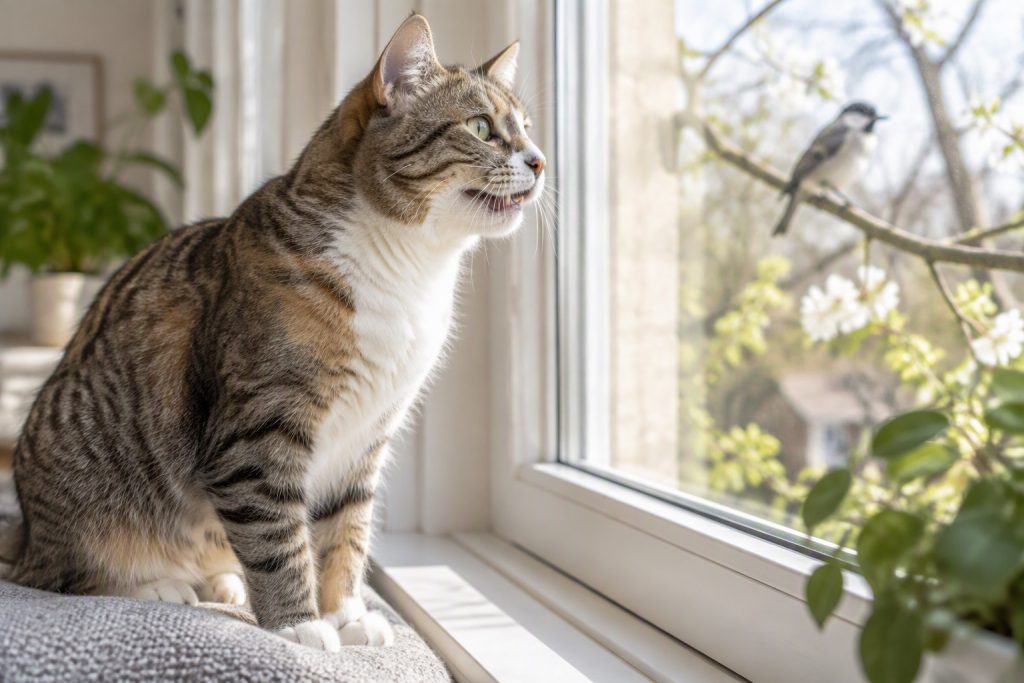
A cat chirps, or trills, as a friendly greeting and a way of getting attention, most often when she is happy to see you or when she wants you to follow her. It is a short, high, rolling sound, different from a meow, and it usually means something positive rather than a complaint. Cats also chirp at birds through windows, and some chirp when they are excited, anticipating food, or inviting another cat to play.
- A chirp or trill is usually a friendly greeting.
- It often means “follow me” or “hello, I am pleased to see you”.
- Many cats chirp at birds through the window.
- It is normally positive, not a distress sound.
What does a cat chirp actually mean?
A chirp, also called a trill or a chirrup, is one of the friendliest sounds a cat makes. It sits between a purr and a meow: a short, high-pitched, rolling note that rises and falls quickly. Cats most often produce it as a greeting when a familiar person enters the room or comes home, or as an invitation for you to follow them somewhere, usually toward a bowl, a door, or a toy. Mother cats use a similar sound to call their kittens, and adult cats often retain it as a way of getting attention in a non-threatening manner. Because it is used with people and familiar cats, a chirp usually signals trust and a relaxed, positive mood. If your cat chirps at you and then walks away, she is almost certainly asking you to come along, which is one of the clearest pieces of feline communication you will ever see. Our article on why cats purr covers another friendly sound.

Rainbow-striped plush cylinder. Keeps a bored indoor cat busy and burns off restless energy. Made from fleece and…
Why do cats chirp at birds?
Chirping at birds is a different version of the sound, sometimes described as chattering, and it appears when a cat is watching prey she cannot reach through a window. There are a few explanations. One is excitement and frustration at seeing prey that is out of reach, and the jaw movement and rapid sound may reflect a cat’s anticipation of a bite. Another is that the sound may mimic a bird or insect call, though this is debated. A third is simply that the cat is highly aroused by the sight of prey, and the vocalisation is part of that arousal. It is not usually a sign of distress, though a cat who becomes obsessive at the window may benefit from more indoor play. Chattering is common even in cats who have never hunted, which suggests it is instinctive. Our article on why cats chatter at birds explores the behaviour in more depth.
Is chirping different from meowing?
Yes, and the difference is meaningful. A meow is a sound cats largely develop to communicate with people, and it is used for a wide range of requests and complaints, from hunger to boredom to discomfort. A chirp is shorter, higher, and more musical, and it is nearly always friendly or inviting rather than demanding. Cats also produce purrs, trills, and chirrups that blend elements of both. The context tells you most of what you need to know: a chirp at the door as you arrive, followed by a walk toward the kitchen, is an invitation; a long, low meow at night is more likely a complaint. Some cats chirp almost constantly and are simply talkative, while others rarely make the sound. Neither is a problem. What matters is the pattern: a sudden change in vocal behaviour, such as a previously quiet cat chirping or meowing constantly, is worth noting.
Why does my cat chirp and then run away?
This is one of the most charming and easily misread behaviours. When a cat chirps and then trots off, she is usually asking you to follow her, not leaving the conversation. The chirp is a summons, and the walking away is the invitation: she has somewhere to show you, most often her food bowl, a door she wants opened, a toy she wants you to throw, or a spot where she wants company. It is the same behaviour a mother cat uses to move her kittens, repurposed to direct a human. If you follow, she will often stop, look back, and chirp again to make sure you are coming. Answering the chirp by following is exactly what she wants, and it strengthens your bond. If you cannot follow, a chirp back and a calm word is usually enough. This behaviour shows how well cats adapt their natural communication to live with us.
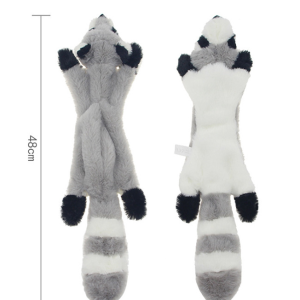
Made from cloth Key features 【Name】 : cat simulation animal sound shell toy[Fill]: No fill, 2 built-in BB…
Do all cats chirp?
No, and the amount varies widely between individuals. Some cats chirp constantly and use the sound for greetings, requests, and play, while others rarely make it at all and rely on meows, purrs, or body language instead. Kittens chirp to their mothers, and cats who are well socialised as kittens tend to be more vocal with people. Breeds known for being talkative, such as Siamese, Burmese, and Maine Coons, often chirp and trill a lot, but plenty of mixed-breed cats are just as chatty. Personality matters as much as breed, and a cat’s history can shape how much she vocalises. A quiet cat is not unhappy, and a chatty one is not anxious. What is worth noticing is change: if a cat who never chirped suddenly starts, or a chirpy cat goes silent, that shift can reflect stress, hearing loss, or illness. For anything persistent, ask your vet.
When should I worry about chirping or other vocal sounds?
Chirping itself is not a concern, because it is a friendly, normal sound. Pay attention to changes in the overall pattern instead. Increased vocalisation, especially at night, in an older cat can indicate hyperthyroidism, high blood pressure, pain, or cognitive change. A cat who meows loudly and constantly, who seems disoriented, or who has stopped using the litter tray normally needs a vet check. Watch for weight loss, increased appetite or thirst, poor grooming, hiding, or changes in activity alongside the vocal change. A cat who vocalises when being handled may be in pain, and one who chirps or meows while straining in the litter tray needs urgent care. Hearing loss often makes cats louder, because they cannot judge their own volume. If your cat’s vocal behaviour changes suddenly and persistently, get it assessed rather than assuming it is just her personality. For anything persistent, always speak to your vet.
Frequently asked questions
- What does it mean when a cat chirps at you? Usually a friendly greeting or an invitation for you to follow her somewhere.
- Why does my cat chirp at birds? It is a form of excitement and frustration at seeing prey she cannot reach through the window.
- Is chirping the same as meowing? No. A chirp is short, high, and friendly, while a meow is more varied and often a request.
- Why does my cat chirp then walk away? She is asking you to follow her, often to her food bowl, a door, or a toy.
- Do all cats chirp? No. It varies with personality, socialisation, and breed. Chatty breeds chirp more.





