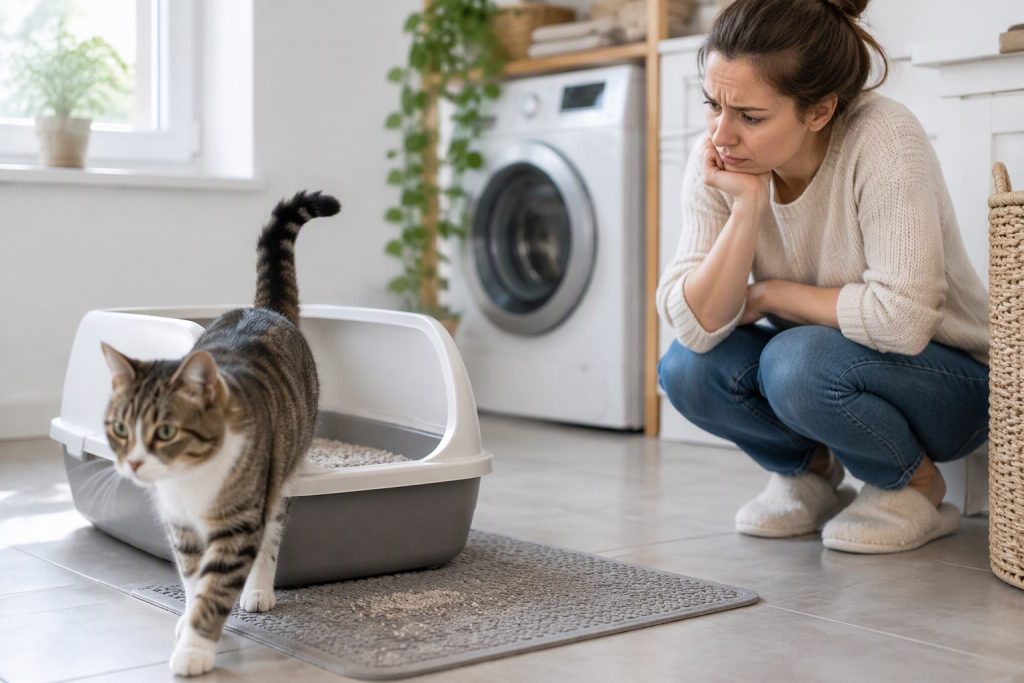
Blood in a cat’s urine, called haematuria, is always a reason to contact your vet, because it usually means inflammation, infection, crystals, or stones somewhere in the urinary tract. It can appear as pink, red, or brown urine, or as small spots of blood in the litter tray, and it may come with straining, frequent trips to the tray, or urinating outside the box. In male cats, straining with little or no urine is a life-threatening emergency that needs immediate care.
- Blood in urine always needs a vet visit.
- Common causes are infection, crystals, stones, and inflammation.
- Straining with no urine in a male cat is an emergency.
- Collect a urine sample if you safely can.
Why is there blood in my cat’s urine?
Blood in urine means the lining of the urinary tract is inflamed or damaged somewhere between the kidneys and the urethra. The most common cause in cats is feline lower urinary tract disease, a broad term covering inflammation of the bladder, which may involve crystals, stones, infection, or stress. Urinary tract infections cause bleeding and are more common in older cats and those with diabetes or kidney disease. Bladder stones and crystals irritate the lining and can partly block the flow. Less commonly, trauma, tumours, blood-clotting problems, and kidney disease cause blood in the urine. Stress is a significant trigger for bladder inflammation in cats, which is why flare-ups often follow changes in the household. Because the causes range from mild to serious, and because a blockage can be fatal within a day or two, you cannot safely wait to see whether it resolves. A vet visit is always the right first step.

Round bowl with a removable flower insert. Made from PP. Made for daily feeding and fresh water. Keeps…
What are the other signs to watch for?
Blood is often only one part of the picture. Watch for straining to urinate, squatting for long periods, or passing only small amounts. Frequent trips to the litter tray, licking at the genitals, and crying out while urinating are common. A cat may urinate outside the box, often on cool, smooth surfaces such as a sink or bathtub, because she associates the tray with pain. You may notice a strong smell, cloudy urine, or a change in the size and number of urine clumps. Some cats become quiet, hide, or stop eating. A cat who is vomiting, lethargic, or has a hard, painful abdomen may be blocked and needs urgent care. If your cat is male and is straining with little or no urine, treat it as an emergency and go to a vet immediately, because a urethral obstruction kills quickly. Our guide on urinary tract signs covers the full list.
What will my vet do?
Your vet will examine your cat, feel her bladder, and ask about her history, including diet, water intake, and any recent stress. They will usually test a urine sample for blood, crystals, infection, and concentration, and may send it for culture to identify bacteria. Blood work checks kidney function and overall health, and imaging such as X-rays or ultrasound can detect stones, sludge, or tumours. If a male cat is blocked, the vet will relieve the obstruction urgently and may hospitalise him on fluids. Treatment depends on the cause: antibiotics for infection, a prescription diet to dissolve certain crystals or prevent recurrence, pain relief, medication to relax the bladder, and sometimes surgery to remove stones. Increased water intake and stress reduction are part of most plans. Follow-up testing is common, because recurrence is frequent and monitoring matters. For anything persistent, your vet will guide you.
How can I help at home while I wait for the appointment?
Do not give any medication, and do not try home remedies, because many are ineffective or harmful. Offer fresh water in several places and consider wet food to increase moisture intake, but do not change her diet in a way your vet has not advised. Keep her litter tray clean so you can monitor urine output and appearance, and note the size and number of clumps, since this information is genuinely useful. Keep her indoors so you can observe her, and reduce stress by keeping the house calm and giving her quiet spaces. If you can collect a urine sample safely, using a clean, non-absorbent litter or a special collection kit, bring it to the appointment, but never delay emergency care to collect a sample. If she is straining without producing urine, seems in pain, vomits, or becomes weak, go to the vet immediately rather than waiting.

Clear glass bowl holding dry food. Made from plastic. Made for daily feeding and fresh water. Keeps food…
How do I prevent urinary problems from coming back?
Recurrence is common, so prevention matters. Increase water intake by feeding more wet food and offering a fountain, because dilute urine is less irritating. Keep the litter trays clean, plentiful, and in quiet, accessible spots, and use a litter your cat likes, since stress and tray aversion both contribute. Reduce household stress by keeping routines predictable, providing enough resources in multi-cat homes, and giving her hiding and climbing spaces. Maintain a healthy weight, since obesity increases the risk. Your vet may recommend a prescription urinary diet, which can dissolve certain stones and reduce the chance of new ones forming. Encourage activity and play. Weigh her regularly and watch for early signs such as more frequent trips to the tray or smaller clumps. If she has had one episode, ask your vet about a monitoring plan. Our article on when a cat is not drinking enough explains why hydration matters so much.
When is blood in urine an emergency?
Some situations cannot wait. If your cat is straining to urinate with little or no urine coming out, go to an emergency vet at once, especially if he is male, because a blocked urethra is fatal within a day or two. Seek urgent care if she is crying out in pain, vomiting, collapsed, or has a hard, swollen abdomen. Bleeding that is heavy, that comes with weakness or pale gums, or that follows a fall or trauma is also an emergency. A cat who stops eating and becomes lethargic alongside the blood needs prompt assessment. Even if the signs seem mild, blood in the urine always warrants a call to your vet, because only testing can tell you whether the cause is a simple infection or something more serious. Do not wait to see if it clears up on its own. If you are unsure, phone your vet and describe exactly what you are seeing, including how often she is urinating and how much.
Frequently asked questions
- Is blood in cat urine always serious? It always warrants a vet visit. Causes range from treatable infection to dangerous blockage.
- What does blood in cat urine look like? Pink, red, or brown urine, or spots of blood in the litter tray. Sometimes it is only visible on testing.
- Can stress cause blood in cat urine? Stress can trigger bladder inflammation, which may cause blood. It still needs veterinary assessment.
- When is it an emergency? Straining with little or no urine, especially in male cats, plus vomiting, pain, or collapse, needs immediate care.
- How is it treated? It depends on the cause: antibiotics, prescription diet, pain relief, or surgery, with more water and less stress.