

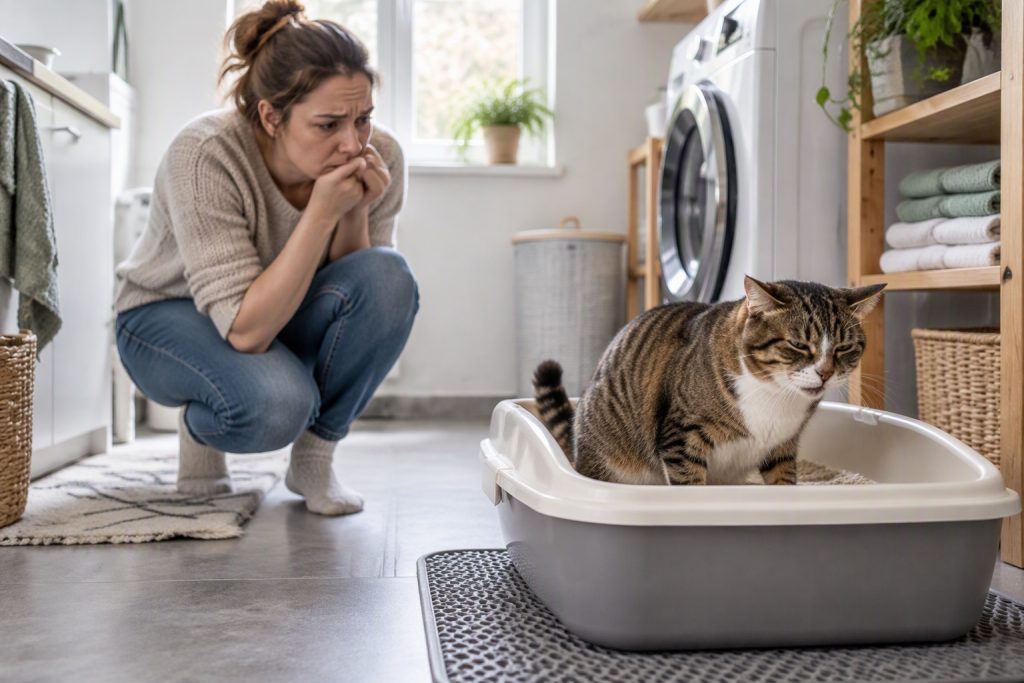
The earliest signs of a urinary problem in a cat are usually small, frequent trips to the litter box, straining to urinate, licking the genital area more than usual, and urine that smells stronger or appears bloody. Cats hide these signs well, so the first clue is often a change in litter box habits rather than obvious distress. Any cat who strains without producing urine needs urgent veterinary care, because a blockage can be fatal within a day.
- Watch for frequent, small, or strained urination.
- Blood in urine or strong odour needs a vet.
- Straining with no urine is an emergency.
- Male cats block more easily and are most at risk.
What are the early signs of a urinary problem in cats?
Early signs are subtle and easy to miss, which is exactly why they matter. Watch for a cat who visits the litter box more often but produces only small amounts, who squats for a long time, or who cries out while urinating. She may lick her genital area repeatedly, seem restless, or start urinating outside the box, often on cool surfaces such as a sink or tile floor. Urine may look cloudy, smell unusually strong, or carry a pink or red tinge. Some cats urinate in new places as a form of communication, because the box has become associated with pain. Others become quieter or hide. In many cats, the first sign is simply that something about the litter box routine has changed, so paying attention to that daily pattern is the single best way to catch a problem early.

Round bowl with a removable flower insert. Made from PP. Made for daily feeding and fresh water. Keeps…
Why do cats hide urinary problems so well?
Cats are descended from small predators who also served as prey, so showing weakness is a survival risk. Hiding illness is instinctive, and a cat in discomfort will often withdraw rather than cry out. Urinary problems also develop gradually, so a cat can compensate for a long time before the signs become obvious. She may simply urinate more often, or hold on longer, without any dramatic change you would notice unless you watch the box. This is why litter box monitoring is so valuable: it gives you a daily, objective measure of how she is doing. Changes in volume, frequency, colour, and odour are the earliest data you have. Older cats, cats with existing kidney issues, and cats on certain medications need closer watching. If you have more than one cat, consider whether you can tell who is producing what, since shared boxes can mask a problem. It also helps to note whether the change is sudden or gradual, because a slow drift in habits is easy to attribute to age when it may be something treatable.
When is a urinary problem an emergency?
A cat who repeatedly strains to urinate and produces little or no urine is in a life-threatening emergency, and this is especially true for male cats, whose narrower urethra blocks more easily. A complete blockage stops urine leaving the body, and toxins build up quickly; a cat can deteriorate within twenty-four hours and die. Other emergency signs include crying out in pain, a hard or swollen abdomen, vomiting, lethargy, collapsing, or a cat who is unable to settle at all. Do not wait to see if it improves, and do not try home remedies. Contact an emergency vet immediately. For females, urinary problems are usually less likely to cause a full blockage, but severe infection or stones still need prompt care. If you are ever unsure whether it is urgent, treat it as urgent, because the cost of waiting is far higher than the cost of a check.
How does water intake affect urinary health?
Water intake matters enormously, because dilute urine is less likely to form crystals and concentrates and is less irritating to the bladder lining. Cats evolved from desert ancestors and have a naturally low thirst drive, so many drink less than they should, particularly on dry food. Encouraging drinking is one of the most effective things you can do at home. Our article on a cat not drinking enough water covers practical ways to raise intake, including offering multiple water stations, using wide ceramic bowls, and adding water or wet food to the diet. A cat fountain can help, since many cats prefer moving water. Keeping the box clean also encourages normal urination habits rather than holding on. If your cat has been diagnosed with a urinary condition, your vet may recommend a specific diet, so follow that advice closely.

Clear glass bowl holding dry food. Made from plastic. Made for daily feeding and fresh water. Keeps food…
What does a vet do about urinary issues?
Your vet will start with a history of the changes you have noticed, then examine your cat, including palpating the bladder to check whether it is full, painful, or blocked. A urine sample is usually next, collected by free catch or by cystocentesis, a fine needle into the bladder, which gives the cleanest sample. Testing looks for blood, crystals, infection, and the urine concentration. Blood tests may check kidney function, and imaging such as ultrasound or X-ray can reveal stones. Treatment depends on the cause: infection is treated with antibiotics, crystals and stones with a prescription diet and increased water intake, and stress-related bladder inflammation with environmental changes and sometimes medication. A full blockage is treated as an emergency with catheterisation. Our overview of cat kidney disease basics explains why kidney and urinary health are closely linked, and why follow-up testing is often needed. If your cat is diagnosed with a urinary condition, expect to return for repeat checks, since the first result tells your vet where things stand and the follow-up tells them whether the plan is working.
How can I reduce the risk at home?
Several practical steps help. Increase water intake by offering multiple bowls, a fountain, and wet food, and keep the water fresh and away from the litter box. Feed a complete, balanced diet, and if your vet has recommended a urinary formula, stick to it rather than mixing in other food. Keep the litter box clean and generous: one box per cat plus one, scooped daily, with a litter your cat accepts. Reduce stress, since stress is a genuine trigger for bladder inflammation in cats, by providing hiding spots, vertical space, predictable routines, and enough resources for every cat in the house. Encourage activity and play, and help your cat maintain a healthy weight, because obesity raises the risk. Watch the box daily and act early on any change. Regular vet check-ups catch problems before they become emergencies, and are especially important for older cats.
Frequently asked questions
- What is the first sign of a urinary problem in cats? Often more frequent trips to the litter box with smaller amounts of urine, or straining.
- Can a urinary blockage kill my cat? Yes. A complete blockage is fatal within about a day or two, so it is always an emergency.
- Are male cats more at risk? Yes, their narrower urethra makes them far more prone to dangerous blockages.
- Does wet food help urinary health? It increases water intake, which dilutes urine and reduces crystal formation.
- Should I wait to see if it improves? No. If your cat is straining, crying, or producing no urine, contact an emergency vet immediately.





