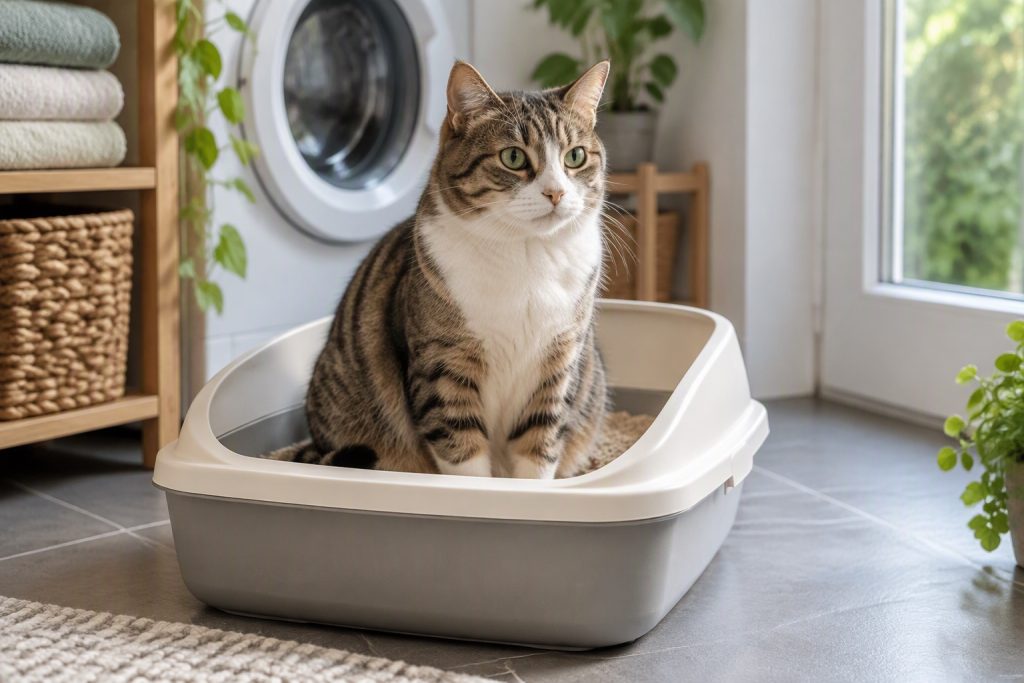
A cat who sleeps in the litter box is usually not being quirky — she is telling you that something feels wrong. The box is small, enclosed, and saturated with her own scent, which makes it feel like a safe den to a cat who is worried, unwell, or cold. Most often the cause is a medical problem such as a urinary or digestive issue, or stress and a shortage of safe resting places. Take it seriously and book a vet check, especially if she is also straining, crying, or toileting outside the box.
- The box feels safe, enclosed, and smells like her.
- Pain or illness is the most common cause.
- Stress, cold, or too few resting spots also drive it.
- Any change in litter habits deserves a vet visit.
Why would a cat sleep in the litter box?
The litter box is small, dark, walled, and full of your cat’s own scent, which makes it feel like a secure den to a cat who is anxious. Cats are both hunters and prey, so a narrow space with one clear exit feels defensible. When something is off — pain, illness, stress, or cold — a cat often retreats to the spot that feels most familiar and most hers. The litter is also absorbent and holds warmth, and some cats simply like the texture under their paws. Sleeping in the box is never a normal, healthy habit, so read it as a signal rather than a quirk. Think of it as your cat choosing the safest corner she can find, then ask what has made the rest of the house feel unsafe. Our guide to litter box placement explains where a box should sit so it never becomes a hangout. A urine sample or scan at the clinic often explains the behaviour in a single visit.

Tray, scoop, anti-splash mat and clumping litter. The whole litter corner, one box. Keeps the litter area contained,…
Is illness the most likely cause?
Yes, and it should be the first thing you rule out. Cats in pain seek small, quiet, enclosed places, and a litter box fits that description perfectly. Urinary problems, kidney issues, bladder inflammation, constipation, and intestinal upset are common reasons a cat lingers in the box, because she associates the box with the discomfort and stays close to it. A cat with a fever or stiff joints may also choose it for warmth and cushioning. Watch for other clues: straining, crying out, licking the genital area, passing only small amounts, blood in the urine, vomiting, or going off food. Any of these alongside box-sleeping points to a vet visit rather than a behaviour fix. If she seems otherwise well but the habit continues for more than a day or two, still get her checked rather than waiting it out. Adding extra boxes, feeding stations, and high perches in separate rooms gives her choices and lowers the pressure she feels day to day.
Could stress or anxiety be the reason?
Very often, yes. Cats who feel unsafe at home pick the smallest, most enclosed spot available, and if the box is the only place like that, that is where they go. Common triggers include a new pet or baby, moving house, building work, a new person in the home, a change in routine, or tension with another cat. A cat who is being blocked from food, water, or resting spots may also retreat to the box simply because no one else wants it. Multi-cat conflict is a frequent cause: if she is being stared at, chased, or ambushed, the box may be the one space she controls. Look at the wider picture, count how many safe high perches and hiding places she has, and work on reducing competition before blaming the box itself.
Why does she pick the box over her bed?
If she has a soft, warm bed and still chooses the box, something about the bed is failing her. It may sit in a spot with poor visibility, on a busy walkway, near a window where another cat patrols, or simply too exposed. Some cats also dislike bedding that smells strongly of detergent or of another animal. A senior or arthritic cat may avoid a bed she has to climb into, and a thin or cold cat may find the litter warmer and better insulated. Cats who are unwell often prefer hard, cool surfaces or enclosed nooks too. The fix is to offer several options: a covered, cave-style bed in a quiet corner, a raised perch with a view, and a plain mat near a warm radiator. Then let her choose, and notice which one she settles into. If none of the beds get used, the room itself may be the problem, so try moving them to a busier, warmer, or higher spot.

A large plastic scoop takes the daily pass, which is the one that keeps the smell down. Keep…
What should I change about the box itself?
Make the box less appealing as a bed while keeping it easy to use. Scoop it at least once a day, ideally twice, so it never smells like somewhere to curl up, and change the litter regularly. If you use a very soft, fine litter she may find it comfortable, so a different texture can help, though never switch abruptly if she is fussy. Keep the box clean but avoid harsh scented cleaners, which can put her off entirely. Add more boxes in different rooms so she always has a clean one, and make sure at least one is uncovered, since a hooded box can feel like a trap to a nervous cat. Also check the size: an extra-large box is easier to use, but to a determined cat it can look like a bed. A box with slightly higher sides and a firmer, less cosy base is often less tempting to sleep in.
When should I call the vet?
Call your vet promptly if box-sleeping appears with any other change: straining, crying, blood in the urine, accidents outside the box, vomiting, diarrhoea, hiding, appetite loss, weight loss, or lethargy. Even without those signs, a cat who suddenly starts sleeping in the box should be examined, because urinary and digestive conditions are far easier to treat early. Our guide to urinary tract signs in cats explains what to watch for. A vet can check for infection, crystals, kidney problems, and pain, and can tell you whether the behaviour is medical or behavioural. If she is medically clear, a behaviour plan is the next step. Never punish her for using or sleeping in the box — that only adds stress. Regular weight checks and a written note of any changes will help your vet spot patterns quickly.
Frequently asked questions
- Is it normal for a cat to sleep in the litter box? No. It is a signal that something is off, usually pain, illness, stress, or a lack of safe resting spots.
- Can stress alone make a cat sleep in the litter box? Yes. Anxiety, conflict with another cat, or a recent change can send a cat to the box as a safe den.
- Should I take the box away to stop it? No — removing it can cause accidents and more stress. Fix the underlying cause and add better resting spots instead.
- How do I stop my cat sleeping in the litter box? Rule out illness with a vet, keep the box very clean, add safe beds and perches, and reduce household stress.
- Could it be a urinary infection? It can be. Urinary and kidney problems commonly cause cats to linger in the box, so get her checked.