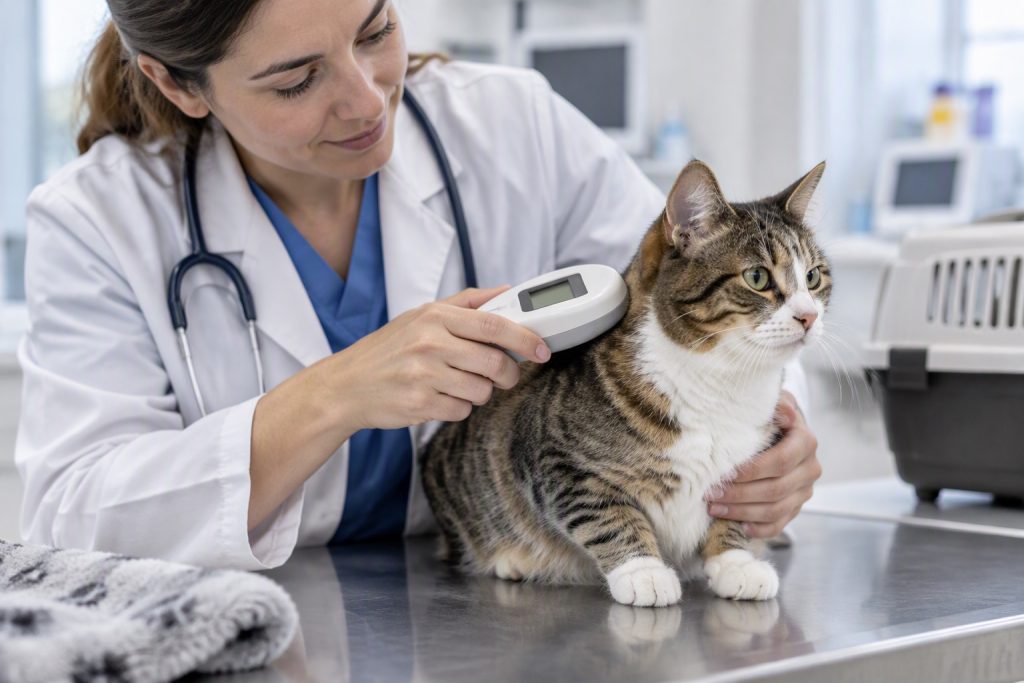
Microchipping a cat is a modest one-off cost, typically falling somewhere in the tens of dollars at a vet clinic, and often included in the adoption fee from a shelter or rescue. On top of the chip and implant you may pay a small fee to register your details with the database, and a little more to update them if you move. Implanting takes only seconds, needs no anaesthetic, and is no more uncomfortable than a vaccination.
- Typically a modest one-off fee at a vet clinic.
- Adoption and shelter fees often include it.
- Registration and updates cost a little extra.
- Implanting takes seconds and needs no anaesthetic.
What does microchipping actually involve?
A microchip is a tiny capsule, about the size of a grain of rice, that contains a unique number readable by a scanner. It is implanted under the loose skin between the shoulder blades with a needle, a process that takes only a few seconds and is usually done without sedation. The chip itself is passive, meaning it has no battery and transmits nothing on its own; it only reveals its number when a scanner is passed over it. That number is linked in a database to your contact details. The vet or clinic then registers the chip, and you should confirm the registration has gone through and that your details are correct. Our guide to how cat microchips work explains the technology in plain terms. Ask the clinic to let you watch and to confirm the chip number before you leave, so you can check it against the paperwork. The appointment is quick, and many cats do not even flinch.
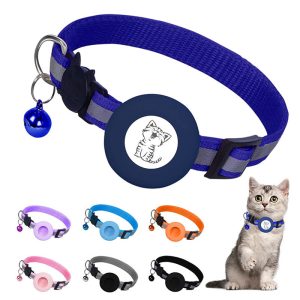
A reflective fabric and polyester collar is for the trips a cat actually takes, not a full day…
Why does the price vary so much?
Prices differ because clinics bundle different things. Some quote only the chip and implant, while others include a consultation, a health check, or a vaccination at the same visit, which raises the total. Location matters too: urban clinics, after-hours vets, and emergency hospitals generally charge more than rural practices or low-cost services. Some vets discount microchipping during a routine appointment or as part of a kitten package, and shelters and councils often run subsidised events. The chip brand and database also affect the ongoing cost, since some registration schemes charge more than others. The best approach is to ask exactly what is included, rather than comparing a bare chip price against a full consultation. Ask whether registration is included and which database will hold your details. Some clinics charge a lower fee if you book the chip alongside a vaccination or a routine check, so ask what bundles are available. Comparing prices is sensible, but always compare what is actually included, not just the headline number.
Is there a cheaper way to get it done?
Yes. Shelters, rescue groups, and animal welfare organisations frequently run low-cost or free microchipping days, and some veterinary schools and mobile clinics offer reduced rates. If you adopted your cat, check whether the chip was already implanted and registered, because many rescues include it and only need you to update the contact details to your own. Some councils and community programmes subsidise microchipping to encourage responsible ownership. If cost is the barrier, call local shelters and ask what they offer before booking a private clinic. Do not be tempted to buy a chip online and implant it yourself, because it must be done by a trained professional, and a badly placed chip may migrate or be unreadable. The savings from a subsidised event are worth the phone call. If you adopt, confirm in writing whether the chip is registered to the rescue or to you, and update it if needed. Some councils offer free chipping days, so it is worth checking your local authority website.
What ongoing costs are there?
The main ongoing cost is registration and updating. When the chip is implanted, it must be entered into a database with your name, address, and phone number. Some databases charge a one-off registration fee, others an annual or lifetime fee, and updating your details after a move is often free but sometimes carries a small charge. Keep your contact details current, because an unregistered or out-of-date chip is almost useless if your cat goes missing. Some countries also require the chip to be registered in a national database, and there may be a small fee for that. Beyond registration, there are no consumable costs — the chip never needs replacing, recharging, or maintaining, so the long-term cost is very low. Keeping your phone number and address current is the part owners most often forget, and it is the part that matters most. A single lifetime registration fee is usually cheaper than years of annual charges, so ask which model applies.
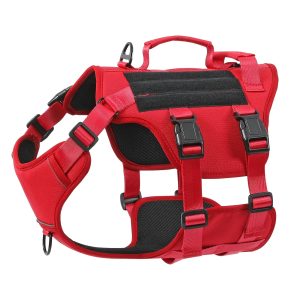
A fabric and Oxford cloth harness stays close enough that a cat cannot back out of it. Take…
Is it worth the money?
For almost every cat, yes. A microchip is the single most reliable way to prove ownership and reunite a lost cat with her family, because a collar and tag can fall off while a chip cannot. It matters even for indoor cats, who slip out through an open door or window more often than owners expect. If your cat is ever stolen, found injured, or taken to a shelter, a chip is what links her back to you. Compared with the cost of replacing a lost cat, or the heartbreak of never finding her, the fee is small. Combine the chip with a breakaway collar and an ID tag so she is identifiable both visually and electronically. Our guide to the first 30 days with a rescue cat covers what else to sort out early. A chip is also useful if your cat is stolen or if you need to prove ownership in a dispute. For a cat who goes outdoors, the chip is close to essential.
What does the chip NOT do?
A microchip is not a GPS tracker. It contains no battery, no transmitter, and no location data, so it cannot tell you where your cat is. It only works when someone scans it and looks up the number in the database. It also does not replace a collar and tag, because a member of the public who finds your cat may not have a scanner and will look for a tag first. The chip does not store medical records or proof of vaccination, and it does not expire, but the registration can lapse if you do not keep your details current. Finally, a chip is not a substitute for identification by behaviour or appearance, so keep good photos of your cat. Understanding these limits stops owners from relying on the chip alone, which is a common and costly mistake. Some owners assume the chip will let them track their cat by phone, which leads to real disappointment if she goes missing.
Frequently asked questions
- How much does it cost to microchip a cat? Usually a modest one-off fee at a clinic, often less at subsidised events, plus a small registration fee.
- Does microchipping hurt? It is a quick injection, no more painful than a vaccination, and needs no anaesthetic.
- Is a microchip a GPS tracker? No. It only stores a number that must be scanned and looked up in a database.
- Do I still need a collar and tag? Yes. A tag helps someone identify your cat before a chip can be scanned.
- Do I have to update my details? Yes. An out-of-date registration can stop your cat being returned to you.