

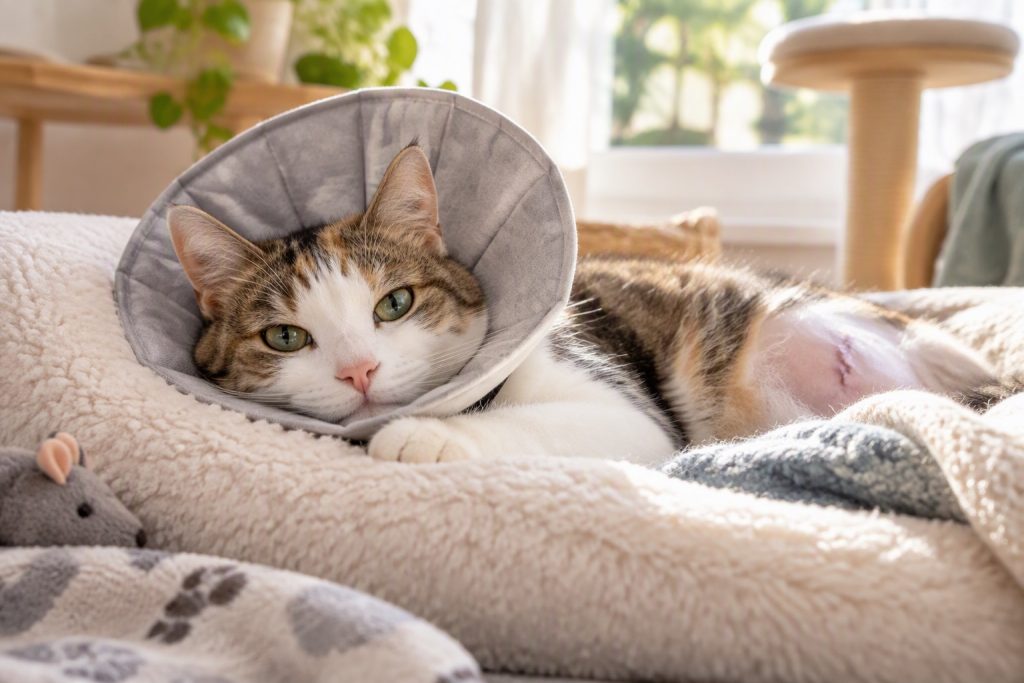
Most male cats recover from neutering quickly, usually within a day or two, and are back to their normal selves within about a week. The main job is to keep the incision clean and dry, stop him licking or chewing at it, and limit jumping and rough play while it heals. Follow your vet’s discharge instructions exactly, and call them if you see swelling, discharge, bleeding, or signs of pain.
- Most cats bounce back within 24–48 hours.
- Keep the incision clean, dry, and untouched.
- Limit jumping and rough play for about a week.
- Call the vet for swelling, discharge, or pain.
What does normal recovery look like?
Neutering is a routine, relatively minor operation, and most cats recover fast. On the day of surgery he will be sleepy and unsteady from the anaesthetic, and he may be a little grumpy or clingy. By the next morning he is usually much brighter and eating again, and within a day or two he is behaving normally. The scrotal area may look slightly swollen or bruised for a few days, which is normal, and there may be a small amount of dried blood. Some cats are quiet for a day or two longer than others, which is also fine. The key is that recovery should move in one direction: steadily better. If he seems to be getting worse rather than better, that is your signal to call the vet. Our guide to telling if a cat is in pain helps you read the subtle signs. A cat who is eating, drinking, and using the litter box normally is usually recovering well. Some cats sleep heavily for the first day and then bounce back quickly.
A breathable plastic grooming tool takes the undercoat first, which is where matting starts. Try it after a…
How do I protect the incision?
Keep it clean and dry, and above all keep him from licking it. Licking can introduce infection, pull at the tissue, and delay healing. Your vet may send him home with a cone, a soft collar, or a recovery suit, and you should use it as directed, even if he protests. Check the incision once or twice a day by looking, not touching, and note any redness, swelling, discharge, or opening of the wound. Do not apply creams, ointments, or home remedies unless the vet has approved them. Keep him away from litter that clumps or tracks heavily for a few days, and use paper-based or dust-free litter if your vet suggests it, because dusty litter can irritate the wound. If he is determined to lick, a recovery suit is often tolerated better than a cone. Check the wound in good light, and photograph it daily so you can compare it over time. If he will not leave the wound alone despite the suit, ask your vet about a different barrier.
How much activity should I allow?
Keep him quiet for the first few days and restrict jumping, running, and rough play for about a week, or as long as your vet advises. Sudden leaps can pull at the healing tissue and cause swelling or bleeding. That said, he does not need to be shut in a tiny box; a quiet room with his bed, litter box, food, and water within easy reach is ideal. Remove cat trees and high shelves from his access, or block them, and put ramps or steps in place if he insists on getting up somewhere. If he has a feline friend who likes to wrestle, separate them when you cannot supervise. Gentle walking around the house is fine and helps circulation. By the end of the first week most cats can return to normal activity, but always follow your vet’s specific guidance. A quiet room with low furniture and soft bedding prevents most accidental jumps. Short, supervised walks around the house keep him from getting bored without stressing the wound.
What should I feed him afterwards?
Offer a small amount of water and a light meal once he is fully awake and steady, and let him eat at his own pace. Anaesthetic can cause nausea, so he may not want food immediately, but he should be eating normally within a day. If he vomits once after the anaesthetic, that is not unusual, but repeated vomiting needs a vet call. Do not change his diet while he is recovering, because a new food can upset his stomach and confuse the picture. Keep his usual food and fresh water available. If he is reluctant to eat for more than a day, or refuses water, contact your vet. For older cats, recovery may be slower and any underlying conditions should be managed carefully, so our guide to senior cat care basics is a useful companion. If he is reluctant to eat, warming his usual food slightly can make it more appealing. Fresh water should always be within easy reach while he recovers.

Cervical pillow, plush hammock, floor mat and paw cushion — four places to nap. Gives a cat a…
What signs mean something is wrong?
Contact your vet if you see heavy or persistent bleeding, a lot of swelling, redness spreading around the incision, pus or a foul smell, or a wound that has opened. Also call if he is lethargic beyond the first day, refuses food and water, vomits repeatedly, strains to urinate, or cries and seems in real pain. Difficulty breathing, pale gums, or collapse are emergencies and need immediate attention. A small amount of swelling and a bit of dried blood are normal; a growing, hot, painful swelling is not. Trust your instincts — if something looks wrong, it is worth a phone call rather than waiting. A little bruising and mild swelling are expected, but a wound that looks worse each day is not. Keep the clinic’s number and your after-hours emergency contact handy before the surgery, so you are not searching for them in a panic.
When can he go back to normal?
Most cats can return to normal activity about seven to ten days after surgery, once the incision has healed and any swelling has settled. Your vet will confirm the timeline at the discharge appointment or a follow-up check. Keep using the cone or suit until they say otherwise, because the wound is most vulnerable while it is closing. Once he is cleared, you can reintroduce jumping, rough play, and outdoor access if he has it. Neutering also reduces roaming, spraying, and fighting, though those behaviour changes may take a few weeks to appear as his hormones settle. If he was neutered as an older cat, recovery can take a little longer, so keep him warm, quiet, and well fed while he heals. Most cats are fully themselves again within a week, though the incision takes a little longer to heal completely. A follow-up check gives your vet a chance to confirm everything has healed as expected.
Frequently asked questions
- How long does it take a cat to recover from neutering? Most are back to normal within a week, with the first day or two being the sleepiest.
- Do I need to use a cone after neutering? Often yes, or a recovery suit, to stop licking. Follow your vet’s advice.
- Is swelling normal after neutering? Mild swelling and bruising are normal for a few days. Growing, hot, or painful swelling is not.
- When can my cat jump again after neutering? Usually after about a week, once your vet confirms the incision has healed.
- What if my cat won’t eat after neutering? A short loss of appetite is normal, but if he refuses food or water for more than a day, call the vet.



