A cat avoids the litter box for two broad reasons: something about the box or its location puts her off, or something medical makes using it painful. The most urgent possibility is a urinary problem, which can become life-threatening in male cats within hours, so that comes first. Rule out illness with a vet, then work through the box, the litter, and the location until she is using it reliably again.
- Pain or illness is the first thing to rule out.
- A dirty, scented, or small box causes avoidance.
- A box in a busy or trapped spot gets skipped.
- Male cats straining need urgent vet care.
Could a medical problem be the cause?
Yes, and it must be checked before anything else. A cat who associates the box with pain will avoid it, and the most common culprits are urinary tract problems, bladder inflammation, crystals or stones, kidney disease, and constipation. In male cats, a blocked urethra is a genuine emergency that can be fatal within a day, so a male cat who strains, cries, or produces little or no urine needs a vet immediately. Other medical causes include arthritis, which makes climbing into a box painful, and conditions that cause diarrhoea or urgency. Watch for blood in the urine, frequent small trips, licking the genital area, crying while toileting, or going outside the box. Our guide to urinary tract signs in cats explains what to look for and when to act. If she is also crying, straining, or passing blood, treat it as urgent rather than waiting to see if it settles. A cat who avoids the box and also hides or eats less may be in pain.

Tray, scoop, anti-splash mat and clumping litter. The whole litter corner, one box. Keeps the litter area contained,…
What makes a litter box unpleasant to use?
Many cases are pure box management. Cats are fastidious, and a dirty box is the single most common reason for avoidance. If the box is scooped only every few days, or the litter is never fully changed, she may refuse it. Scented litter, harsh chemical cleaners, and strong deodorisers are common turn-offs because cats have sensitive noses. A box that is too small makes turning and squatting awkward, and a deep layer of litter can feel unstable under her paws. Hooded boxes trap odour and can feel like a trap to a nervous cat. Liner bags can catch her claws and rustle. The fix is usually simple: scoop daily, use a gentle unscented litter, choose a large open box, and clean with plain, pet-safe products. Try changing one thing at a time, so you can tell which fix actually worked. Scented liners and deodorisers are a common and easily fixed culprit.
Does location really matter?
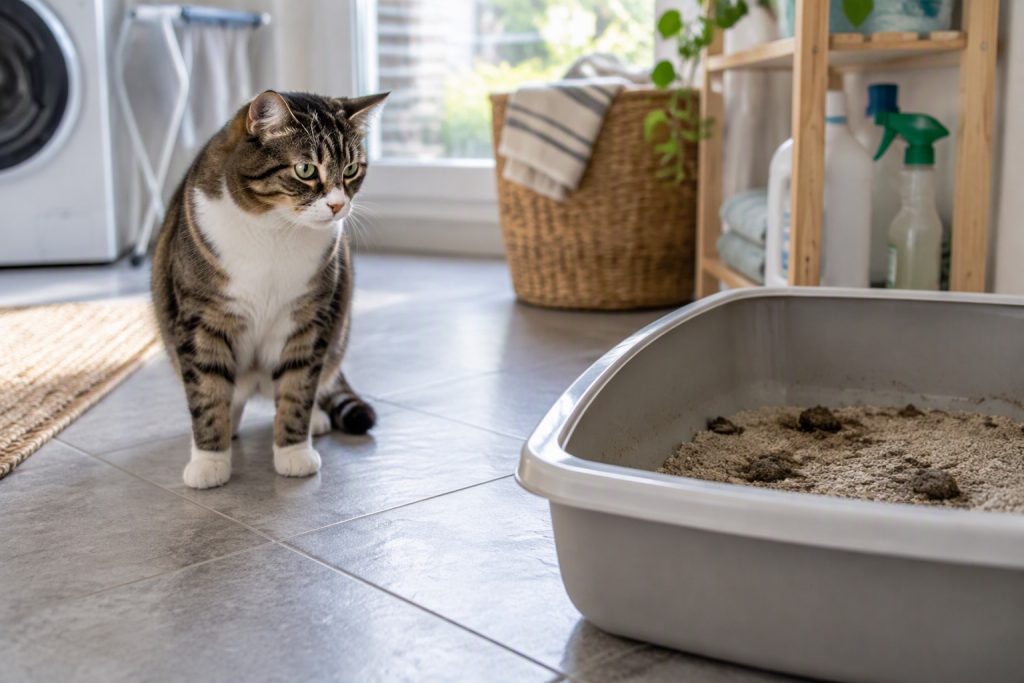
Enormously. Cats are vulnerable while toileting, so they avoid any box that feels exposed, noisy, or hard to reach. A box beside a washing machine, in a busy hallway, or next to the food bowls is likely to be skipped. So is one in a far corner she must pass a dog or another cat to reach, or behind a door that sometimes closes. She also needs to be able to get to the box at all hours, which matters for kittens, seniors, and cats with mobility problems who cannot manage stairs. The ideal spot is quiet, private, easy to reach, and away from where she eats and drinks. Our guide to litter box placement explains how to find the right spot in a small home. A box she can reach in seconds, without crossing another cat’s path, is far more likely to be used. A box next to a noisy appliance is a frequent and simple cause of avoidance.
Could it be stress or another cat?
Stress is a major cause of litter box avoidance, especially in multi-cat homes. If she is being blocked from the box, ambushed on the way, or stared at while using it, she will find somewhere safer, and that is usually a carpet or a bed. Even subtle tension — a new cat, a move, a new baby, building work, or a change in routine — can trigger it. Cats also avoid a box that another cat has claimed, particularly if that cat is more confident. Signs include her waiting until the other cat is away, sprinting from the box, or using it only at quiet times. Adding more boxes in separate locations, with clear exits and no dead ends, reduces competition, and a vet check rules out the medical causes you should never ignore. Feeding cats in separate rooms and adding high perches can lower tension enough to bring her back to the box.

A large plastic scoop takes the daily pass, which is the one that keeps the smell down. Keep…
How many boxes should I have?
The standard rule is one box per cat, plus one extra, placed in different rooms rather than lined up together. Two boxes side by side count as one in the cat’s mind, because they are in the same spot with the same risks. If you have two cats, aim for three boxes spread through the home, ideally so no cat has to pass another to reach one. Each box should be large, open, and kept clean. In a multi-storey home, put at least one box on each floor, because an older or unwell cat may not manage the stairs. If space is tight, use the largest boxes you can fit in separate quiet corners. More boxes, spread out, is one of the most effective fixes for avoidance in a multi-cat household. If space is tight, the largest boxes in separate quiet corners still beat several small ones side by side. Seniors and cats with arthritis need a box on every floor they use.
How do I rebuild her trust in the box?
Go back to basics and make the box the most appealing place in the house. Clean it thoroughly with a pet-safe product to remove any scent of past stress, refill it with a soft unscented litter she has used before, and place it in a quiet, accessible spot. Add more boxes elsewhere so she has choices. Never punish her for accidents, because that increases fear and makes the problem worse. Clean accidents with an enzymatic cleaner that removes the scent completely, or she will return to the same spot. Reward her calmly whenever she uses the box. If she was avoiding it because of pain or stress, address that cause directly. Give it a week or two of consistent management, and if she is still avoiding the box, see your vet again to rule out anything that was missed. Enzymatic cleaners are essential, because ordinary soap leaves behind the scent that draws her back to the same spot. Give any change at least a week before deciding it has not worked.
Frequently asked questions
- Why is my cat suddenly avoiding the litter box? Common causes are a medical problem, a dirty or scented box, a bad location, or stress from other cats.
- When is litter box avoidance an emergency? A male cat straining with little or no urine needs immediate vet care, as a blockage can be fatal.
- Can stress make a cat avoid the litter box? Yes, especially in multi-cat homes where she is blocked, ambushed, or stared at while using it.
- How many litter boxes should I have? One per cat plus one extra, placed in separate quiet locations around the home.
- Should I punish my cat for going outside the box? Never. Punishment adds fear and makes avoidance worse. Fix the cause instead.