

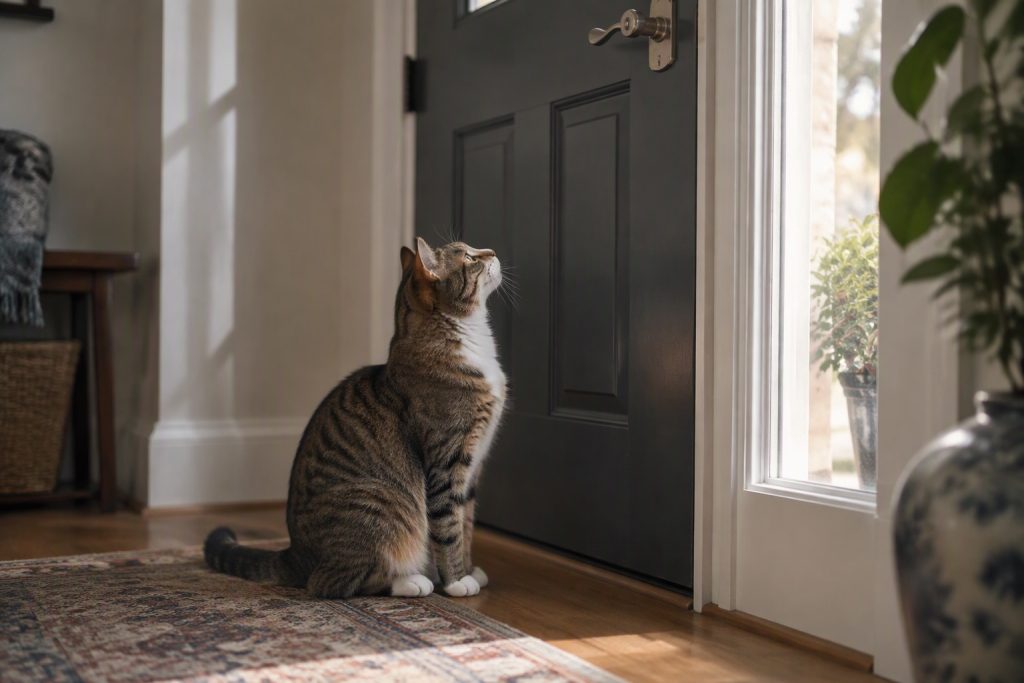
Separation anxiety in cats is real, but it is rarer than the internet suggests, and it does not look like the dog version. A cat that shreds the curtains while you are out is more often bored, under-stimulated or reacting to a change in routine than grieving your absence. The genuine version has a specific shape: distress that begins within minutes of the door closing and eases as soon as you return. That pattern is worth treating properly, and it responds far better to predictability and enrichment than to a second cat or a radio left on.
- True separation anxiety starts within minutes of your leaving and eases when you return.
- Boredom looks similar and is far more common; timing and targets are the difference.
- A second cat is not a reliable cure and often adds stress to an anxious adult.
- Sudden new clinginess in an older cat is a health question first — ask a vet.
How do I tell separation anxiety from ordinary boredom?
Timing is the clearest signal. Boredom tends to build through the day: a cat that has slept all afternoon and wakes up destructive at four o’clock is usually under-stimulated, not distressed. Separation anxiety is front-loaded — the damage, the meowing or the house-soiling happens in the first half hour after you leave, and the cat is often calm by the time you get home. A camera left running for a day or two settles the question quickly, and it is worth doing before you change anything. The second clue is the reunion: a bored cat greets you normally, while an anxious cat is often unusually clingy for ten or twenty minutes and then settles. Record first, then plan. If the pattern is daytime restlessness rather than distress at the door, the boredom checklist is the better starting point.

Teaser wand designed to turn a few minutes into a full hunt — a cat needs to finish…
What does separation anxiety actually look like in a cat?
The classic signs are vocalising that starts soon after you leave — often a long, low, repetitive meow rather than the usual chatter — pacing, and destructive behaviour aimed at exits: door frames, window blinds, curtain edges. Some cats urinate or defecate on your bed or on clothing that carries your scent, which owners often read as spite and which is almost certainly not. Others over-groom a patch on a foreleg during the day, and a few will not eat while alone but eat normally the moment you are back. None of these signs is unique to anxiety, so the pattern matters more than any single item. A cat that does one of them occasionally is not a case; a cat that does two or three every time you leave, and stops when you return, is.
Why does my cat follow me to the bathroom but ignore me otherwise?
Following is usually about access to resources rather than emotional dependence. The bathroom is a small, enclosed room with a door, and a cat that follows you in is often checking that a space it considers part of its territory is not being closed off, or is simply curious about a room it is normally excluded from. Cats also shadow whoever controls food, doors and play, which is a habit rather than a disorder. Watch whether the following is new and intense, and whether it comes with pacing at the door when you leave. A cat that has always been a shadow is fine; a cat that became one in the last fortnight may be telling you something changed. If it comes with a drop in appetite or grooming, treat it as a health question and book a check-up.
Do I need a second cat to fix this?
Usually not, and it can backfire. A second cat is a reasonable idea for a young, sociable kitten that needs a play partner, but it is a poor treatment for an anxious adult cat. Adding a cat means adding a new territory negotiation, a shared litter box and a new set of resources to defend, and for a cat already prone to stress that can make things worse rather than better. The exception is a single kitten under about a year old, where a well-matched companion genuinely solves a welfare problem. For an adult cat, the reliable levers are routine, enrichment and predictable departures — not another animal. If you do add a kitten, plan the introduction properly, because a badly managed one is worse than no second cat at all.
A teaser wand built to turn a few minutes into a full hunt — a cat needs to…
What actually helps a cat with separation anxiety?
Make departures boring and arrivals calm. The dramatic goodbye and the excited reunion are the two most rewarding moments in an anxious cat’s day, and they teach the cat that your leaving is a big event. Instead, leave without ceremony and greet the cat quietly a minute or two after you are home. Build a predictable daily rhythm around feeding and play, because predictability is the single most calming thing a home can offer. Give the cat something to do while you are out: a window perch, a puzzle feeder holding part of the day’s ration, or a food-dispensing toy. Play a solid session before you leave so the cat is tired and settles rather than watching the door. For more ideas, see indoor enrichment that actually works.
When should a vet be involved?
Any sudden change in behaviour deserves a health check, because cats show pain and illness as behaviour change long before they show it any other way. Over-grooming can be skin disease, parasites or allergies. House-soiling can be cystitis, arthritis or kidney trouble. Night vocalising in an older cat can be high blood pressure or thyroid disease. A vet should also be consulted if the distress is severe enough that the cat injures itself, stops eating while alone, or cannot be left for a normal working day. Anxiety at that level is a welfare problem, and a vet can advise on whether a referral or medication is appropriate. Do not start any supplement or remedy without asking a vet first.
Frequently asked questions
- Can a cat really get separation anxiety? Yes, though it is less common than in dogs. The reliable sign is distress that starts soon after you leave and eases when you return.
- Should I get another cat to keep mine company? Only if the cat is a young, sociable kitten. For an anxious adult, a new cat usually adds stress rather than removing it.
- Does leaving the TV or radio on help? It can take the edge off silence for some cats, but it is not a treatment. Routine, play and something to do matter far more.
- Why does my cat pee on my bed when I am out? This is a common anxiety sign rather than spite, but it still warrants a vet check, because urinary problems cause the same behaviour.
- Can I train a cat out of it? You can reduce it substantially by making departures uneventful and building a predictable routine, and most cats settle noticeably within two to four weeks. Severe cases need a vet’s help.


