

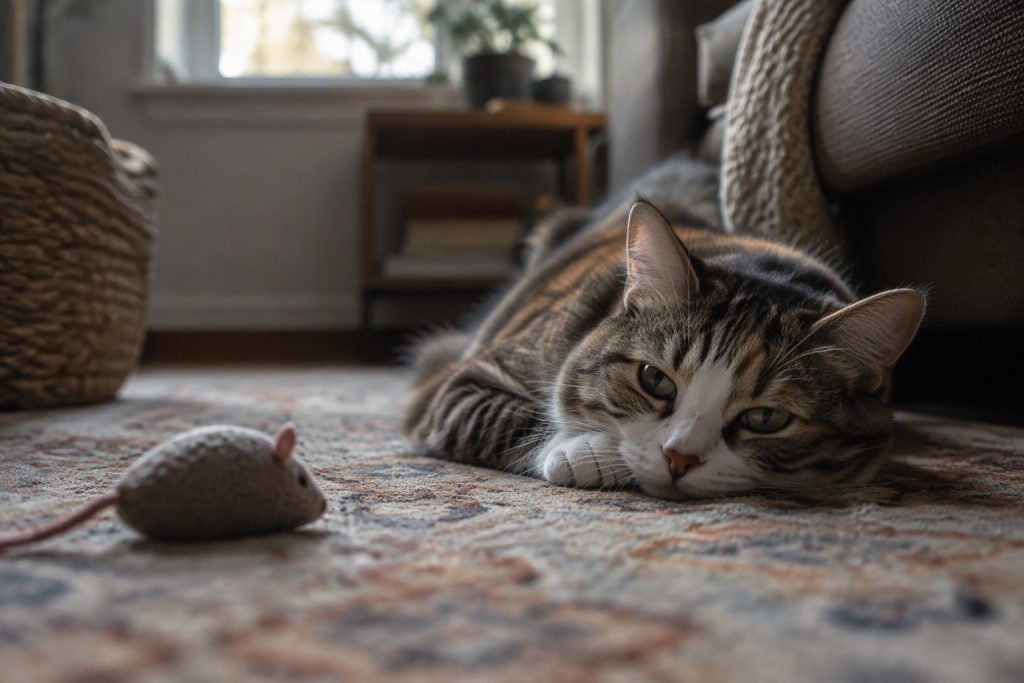
A bored cat is not a cat that lies around — cats sleep twelve to sixteen hours a day, and that is normal. Boredom shows up as behaviour instead: furniture scratching, curtain climbing, ambushing ankles, meowing at you at the same hour every evening, and a restless pacing that owners often mistake for hunger. The five-minute rule is a simple test. If five minutes of genuinely active, interactive play does not settle the cat, the problem is probably not boredom alone, and it is worth looking at stress, health or the environment before buying another toy.
- A bored indoor cat shows it through behaviour, not through lethargy.
- Five minutes of real interactive play, twice a day, is a sensible minimum for most adult cats.
- Play should mimic a hunt: stalk, chase, pounce, catch, then eat.
- A cat that hides, stops eating or changes routine needs a vet, not a new toy.
How much play does an indoor cat actually need?
More than most owners assume, and it is measured in quality rather than minutes. A cat that bats a toy for ten minutes while you scroll on your phone has had almost no enrichment; a cat that stalks, chases and finally catches something in four focused minutes has had a real hunt. Two short sessions a day is the usual recommendation, one in the morning and one in the evening, and the evening session matters most because it imitates hunting at dusk followed by eating. Kittens and young cats need considerably more. If you are unsure where to start, the enrichment basics cover the setup that makes play sessions work. Put play on the schedule the way you would a meal, because a cat that knows a hunt is coming is not inventing one of its own at your ankles.
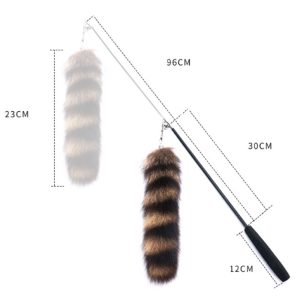
Teaser wand designed to turn a few minutes into a full hunt — a cat needs to finish…
What does boredom look like in a cat?
It rarely looks like a sad animal staring into space. It looks like an animal that has found its own entertainment. The most common signs are scratching furniture rather than the post, climbing curtains or shelving, attacking ankles and hands as you walk past, knocking objects off surfaces, and vocalising at the same time each evening. Some cats over-groom a patch on a leg or belly when they have nothing else to do. Others simply sleep more and interact less, which is the quietest version and the easiest to miss. The pattern that points to boredom rather than something else is that the behaviour is repetitive, happens at predictable times, and stops when the cat is given something engaging to do.
What is the five-minute rule and how do I use it?
The rule is a diagnostic, not a prescription. Take five minutes, pick up a wand toy, and play with real intent — move it like prey, let the cat stalk it, let it escape, then let the cat catch it. If the cat engages fully and then walks away to eat, groom or sleep, boredom was the issue and you have solved it for that evening. If the cat stays restless, stalks the room afterwards, or ramps up rather than winding down, something else is going on. That might be hunger, a stressor such as a new smell or a visiting guest, or a health problem. Five minutes is also a realistic minimum when you are tired, which makes it a rule people actually keep.
Why does my cat only want to play at bedtime?
Because that is when cats are built to hunt. Cats are crepuscular, meaning their natural activity peaks around dawn and dusk, and a house cat with a full bowl of food and no hunting to do often sleeps through the day and wakes up ready at exactly the wrong hour. This is the same energy that produces the classic late-night dash around the house. The practical answer is to shift the cat’s clock rather than fight it: a proper play session followed by the last meal of the day, ideally within half an hour of your bedtime, does more than almost anything else. It closes the hunt-eat-groom-sleep sequence the cat is wired for, and many cats will settle afterwards. Night zoomies follow the same logic and respond to the same routine.
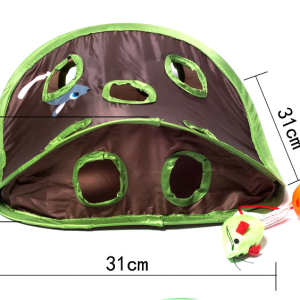
This rolling toy rolls and moves the way a cat's prey does — movement is the whole point.…
Do toys matter, or does the owner matter more?
The owner matters far more, which is why a cupboard full of ignored toys is such a common complaint. A toy on the floor is scenery; a toy attached to a string and moved by a person is prey. Cats hunt movement and unpredictability, and no static object supplies either for long. A few well-chosen items do earn their place: a wand toy for interactive sessions, a puzzle feeder to make eating take effort, and one or two things the cat can use alone while you are out. Rotating a handful of toys weekly keeps them novel, which matters more than owning many. End a session with a catch and a small reward, because a hunt that never ends in prey is the feline equivalent of a story with no last page.
When is it not boredom?
When the behaviour is new, is getting worse, or comes with changes in eating, drinking, litter box use or grooming. Those are health signals, and in cats they often appear before any obvious symptom does. A cat that suddenly scratches obsessively at one spot, vocalises at night, or stops playing when it used to love it may be in pain — dental disease and arthritis are both common and both easy to miss. Stress also mimics boredom closely: a move, a new baby, building work or a neighbourhood cat at the window can all produce the same restlessness. If enrichment does not help within a week or two, and especially if anything else has changed, ask a vet to check the cat over before assuming it is simply under-stimulated.
Frequently asked questions
- Can an indoor cat be happy without going outside? Yes. What matters is whether the indoors offers climbing, hiding, scratching, hunting and watching. A cat with all five is generally well catered for.
- My cat ignores every toy. What now? Try different types rather than different brands — some cats want feathers, some want a laser, some want a rolling ball they can chase alone. Also try shorter sessions at the cat’s active times.
- Should I get another cat so mine is not bored? Only for a young, sociable kitten. For an adult cat, a new housemate is a stressor as often as a solution.
- Does a laser pointer count as play? It provides chasing but never a catch, which can leave some cats frustrated. Finish a laser session by landing the dot on a real toy or treat the cat can physically capture.
- Is it ever too late to start playing with an older cat? No. Senior cats often engage happily with a slower-moving toy, and short sessions are good for both mobility and mood. Adjust the intensity to the individual cat rather than the calendar.


