

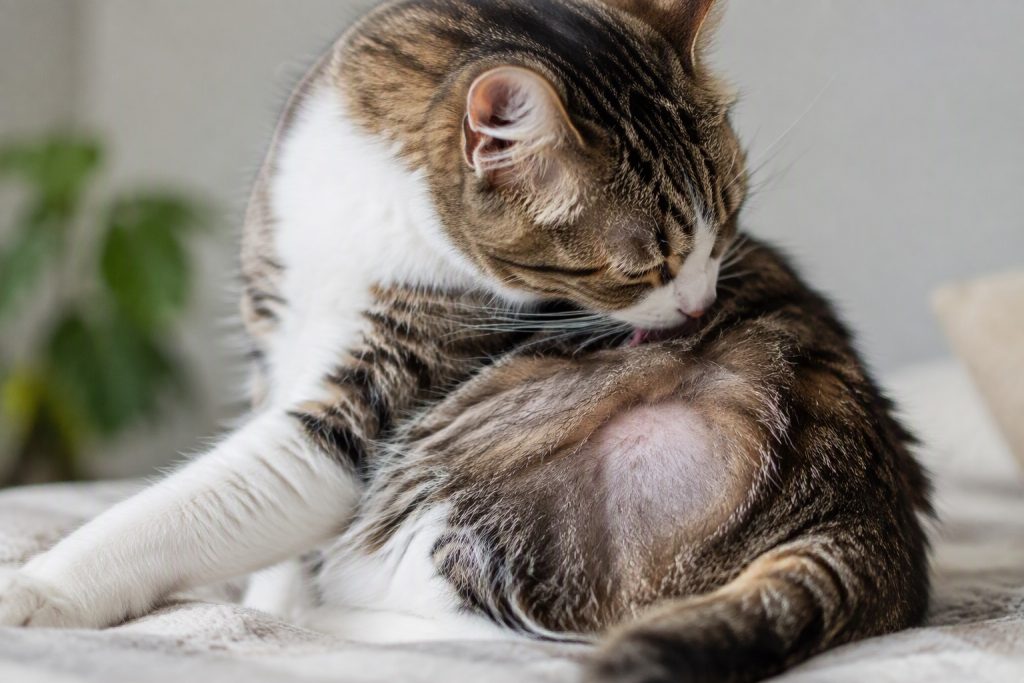
Grooming is how a cat stays clean, regulates its temperature and calms itself, so a certain amount of it is normal and healthy. Overgrooming is different: it is repetitive, it is often focused on one area, and it can progress to bald patches, broken skin or a coat that looks thin and patchy. Because the causes range from parasites and allergies to stress and pain, overgrooming is one of the clearest examples of a behaviour that should be checked by a vet before it is treated as a habit. The visible symptom and the underlying reason are frequently in completely different places.
- Overgrooming is repetitive and often concentrated on one spot; normal grooming is spread over the body.
- Bald patches, broken skin or a thinning coat need a vet, not a behaviour plan.
- Parasites, allergies, stress and pain can all look identical from the outside.
- Do not apply ointments or change the diet to treat it without veterinary advice.
How much grooming is normal for a cat?
Cats typically spend a substantial part of their waking hours on grooming, spread across the whole body in short sessions. The pattern is the useful clue. Normal grooming moves around: face, shoulders, flanks, belly, legs, tail. It happens after meals, after waking and after being handled. Overgrooming is narrow and repetitive, and it tends to concentrate on one or two places — most often the lower belly, the inside of the back legs, the flanks or the forelegs. Owners sometimes notice a barbered look before they notice a bald patch, where the coat has been nibbled down to a short, even stubble. The behaviour may also happen at particular times, such as when the house is quiet or when the cat is left alone. Check the same spots weekly in good light, because the change is gradual.

A teaser wand built to turn a few minutes into a full hunt — a cat needs to…
What does overgrooming look like?
It usually starts as a thinning rather than an obvious bald spot, which is why it is easy to miss for weeks. The classic pattern is a symmetrical or single-sided patch on the belly or inner thigh, where the coat is nibbled down and the skin looks normal or slightly pink. In more advanced cases the skin becomes red, shiny, broken or scabby. Some cats groom in a trance-like way, staring at nothing with the head turned to one flank. Others lick the air or a surface without touching themselves, which is a related stress behaviour. Photograph the area weekly so you can tell whether it is progressing. Long-haired cats are easy to misread, because a matted coat can look like a grooming problem when it is a coat-care one, and dealing with mats is a separate job.
What causes a cat to overgroom?
The list is long and the symptoms do not distinguish between the causes. Skin parasites such as fleas and mites are common and treatable. Allergies — to fleas, food, pollen or household products — are another frequent driver. Pain is a major one and is often overlooked: a cat with arthritis in a hip or a sore spine will lick the area over the joint. Urinary or anal gland discomfort can produce licking at the belly or rear. Endocrine conditions and some neurological problems can also be involved. Because the same bald patch can be caused by any of these, a veterinary examination is the sensible first step. A short examination is usually far cheaper than weeks of guessing at the wrong cause. Do not assume it is stress just because the cat seems calm.
Can stress cause overgrooming?
Yes, and it is a genuine cause rather than a catch-all. Cats use grooming as a self-soothing behaviour, and a cat under pressure may simply do more of it. Common triggers include a new pet or baby, a move, changes in the household routine, a neighbourhood cat at the window, or the loss of a companion. The behaviour often appears alongside other stress signs: hiding more, eating less, over-attachment or irritability. Stress is a diagnosis of exclusion, though, which means a vet should rule out medical causes first. If the cat is physically well, the plan is environmental: more predictability, more resources, more places to hide and perch, and structured daily play. A simple diary of when the licking happens often reveals the trigger. For coat-care basics, see how often to brush a cat.

This rolling toy rolls and moves the way a cat's prey does — movement is the whole point.…
How do I stop a cat from overgrooming?
You treat the cause, not the licking. If a vet finds fleas or mites, that is treated. If allergies are suspected, the vet will discuss diet trials or other steps. If pain is found, managing the pain usually reduces the licking. If everything medical is ruled out, the work is behavioural and environmental: a stable daily routine, more enrichment, more vertical space, more hiding places, and predictable interaction. Distraction can help in the moment, but it does not remove the reason. Never use a cone or a bitter spray on your own initiative, and never apply a human ointment to a cat’s skin. Some cats also benefit from a proper behaviour plan built with a vet or a qualified feline behaviour professional. Improvement is usually gradual, measured in weeks rather than days.
When does overgrooming need a vet?
See a vet as soon as you notice a bald patch, broken skin, redness, scabs or a coat that is clearly thinning, and sooner if the cat is also scratching, shaking its head, losing weight or behaving differently. Overgrooming is a symptom, and the underlying cause may be something that gets harder to treat the longer it goes on. Bring photographs and a rough timeline, because the vet will want to know when it started and whether it is spreading. Do not try to solve it with a change of food, a supplement, or an over-the-counter product first. If the skin is broken, there is also a real risk of infection, which is another reason to have it looked at rather than watched. A vet can also tell you whether the pattern points to a medical or a behavioural cause.
Frequently asked questions
- Is overgrooming painful for a cat? The grooming itself is often soothing, but the cause may be uncomfortable. Broken skin can also become infected, which is painful.
- Can a cat overgroom from boredom? Yes. Under-stimulation is a recognised contributor, which is why enrichment is part of the plan once medical causes are ruled out.
- Will the fur grow back? Usually yes, once the underlying cause is treated. Regrowth can take several weeks, and the coat may look different at first.
- Should I put a cone on my cat? Only if a vet recommends it. Cones are stressful and are not a treatment for the cause, though they are sometimes used short-term for skin healing.
- Can food allergies cause overgrooming? They can. Food allergy often shows as itching around the head, neck and ears, but a vet should guide any diet trial.


