

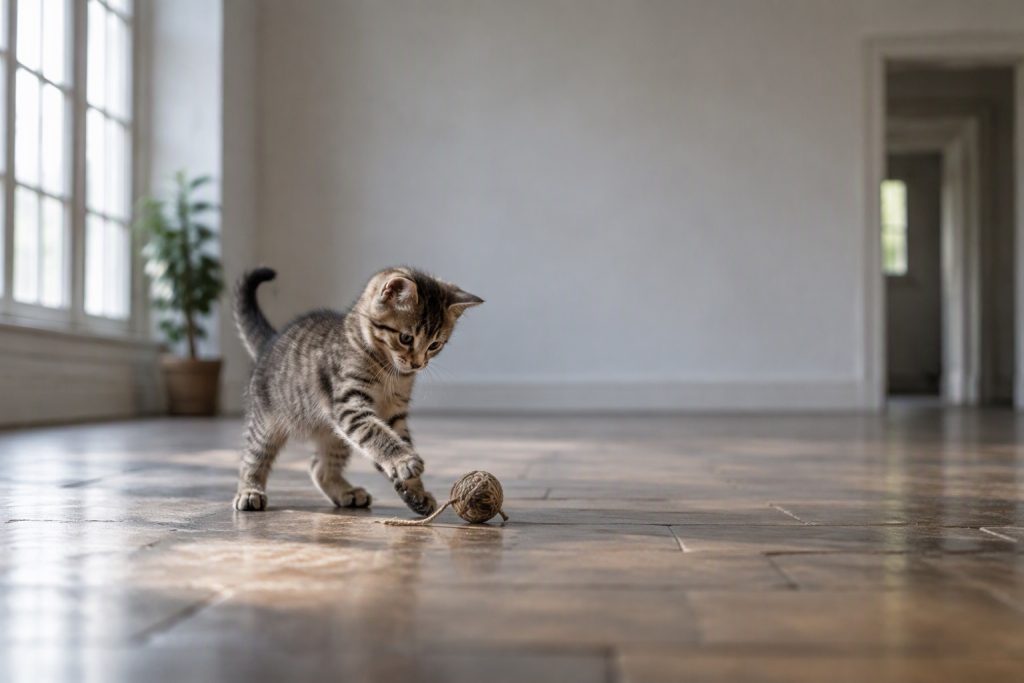
A kitten raised alone is not automatically doomed, but it does have a harder start than most people realise. Kittens learn bite inhibition, social boundaries and much of their play skill from other kittens, and a single kitten has no peer to teach it when a bite hurts or when play has gone too far. The result is often a young cat that plays roughly with hands, struggles to read other cats, and has a great deal of energy with nowhere to put it. Single kitten syndrome is not a formal diagnosis, but it describes a real pattern that owners can manage well once they understand what they are dealing with.
- Single kittens often miss the peer feedback that teaches bite inhibition and social limits.
- Common outcomes are rough play, hand-biting and high energy with few outlets.
- A well-matched kitten companion is the most effective fix if circumstances allow it.
- Without a second cat, structured play, enrichment and patience cover most of the gap.
What is single kitten syndrome?
It is a shorthand for the behavioural pattern that sometimes appears in kittens raised without littermates or other young cats. The key word is sometimes, because plenty of solo kittens grow into well-adjusted adults. What the phrase describes is a set of tendencies rather than a condition: rough play that does not stop when the other party signals, biting hands hard, difficulty moderating claws, and a low tolerance for frustration. The underlying issue is that a kitten’s main social education comes from its peers. Littermates provide immediate, proportionate feedback — a yelp, a retreat, a pause — and a human cannot easily replicate that. A single kitten therefore has to learn social limits from a species that plays very differently, which takes longer and does not always work.
Teaser wand designed to turn a few minutes into a full hunt — a cat needs to finish…
Is it really a problem to raise one kitten alone?
It can be, and it is worth weighing honestly. The kittens most at risk are those separated from their mother and littermates early, typically before about eight weeks, because they miss the crucial socialisation window. Kittens that stay with their family until at least twelve weeks generally cope better even if they are then adopted alone. The practical consequences of a solo upbringing are not catastrophic in most cases, but they are real: more hand-biting, more destructive play, more difficulty settling, and sometimes more anxiety when the owner is out. The counterweight is that a single kitten in a home where someone is around much of the day, with structured play and good enrichment, usually turns out fine. The risk is higher in a home where the kitten is alone for long stretches.
Should I get a second kitten?
For a young kitten, it is often the single most effective thing you can do. Two kittens of similar age generally entertain each other, teach each other bite inhibition, and are less demanding of the owner’s time than one kitten alone, which surprises people who assume two is double the work. The usual advice is to adopt in pairs where possible, and many shelters actively encourage it for exactly this reason. The caveat is matching: two kittens of similar age and energy usually work well, while a very boisterous kitten paired with a timid one can produce a bullied cat. If you already have an adult cat, adding a kitten is a different decision and needs a careful introduction, because the adult may not want a playmate. See resource conflict between cats for that scenario.
How do I introduce a second kitten?
Slowly, with separation at first. Keep the new kitten in its own room with food, water, litter and a bed, and let the two cats smell each other through a closed door for several days. Then swap bedding so they become familiar with each other’s scent, and feed them on opposite sides of the door so that the presence of the other predicts something good. Only after that should you allow brief, supervised visual contact, and only then short sessions together. Kittens usually move faster than adult cats, but the same principles apply. Do not rush the final stage, do not leave them alone together until the relationship is settled, and do not punish either cat for hissing. Most pairs are comfortable within a few weeks, and some within days.
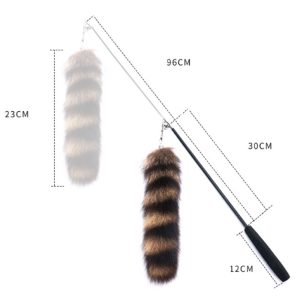
Teaser wand designed to turn a few minutes into a full hunt — a cat needs to finish…
What if I cannot get another cat?
Then compensate deliberately, because the gap is real but closable. Two or three structured play sessions a day matter more than usual, and they should be proper hunting play with a wand toy rather than a few swipes. Never use hands as toys, because a solo kitten is exactly the cat most likely to learn that biting hands is a game. Enrichment fills the rest: a window perch, a puzzle feeder, cardboard boxes, a cat tree, and rotating toys so they stay interesting. Consistent, calm responses to biting matter too, because the kitten is learning limits from you and needs the feedback to be immediate and consistent. Time and patience do a lot, and most solo kittens become perfectly sociable adults, just with more owner involvement along the way. More on the biting side is in play aggression.
Does it get better as the kitten grows up?
Usually yes. A great deal of what looks like a behavioural problem in a solo kitten is simply kittenhood: the energy, the mouthing and the poor impulse control all tend to soften as the cat matures, typically somewhere between one and two years old. What does not reliably improve on its own is hand-biting, because it is a habit that gets rehearsed and rewarded every time a hand reacts. That one needs to be actively redirected. It is also worth noting that the teenage phase, roughly six to eighteen months, is often the most difficult period, so owners who feel they have failed at six months are usually in a normal stage rather than a permanent state. If the behaviour is severe, or comes with signs of fear or distress, a vet or a qualified behaviour professional can help.
Frequently asked questions
- Is single kitten syndrome a real diagnosis? No. It is a descriptive phrase, not a medical condition, and it describes tendencies rather than a fixed outcome.
- Should I adopt two kittens instead of one? For many households, yes. Two kittens of similar age often do better than one, and the workload is not double.
- My solo kitten bites constantly. Will it grow out of it? The energy will ease with age, but hand-biting usually needs active redirection onto toys rather than waiting.
- Can an adult cat be a good companion for a kitten? Sometimes, but it depends on the adult. A calm, sociable adult can be ideal; a nervous one may find a kitten stressful.
- Is it cruel to keep only one cat? No. A single cat in an enriched home with daily play can be perfectly happy. It is about meeting the cat’s needs, not about numbers.


