

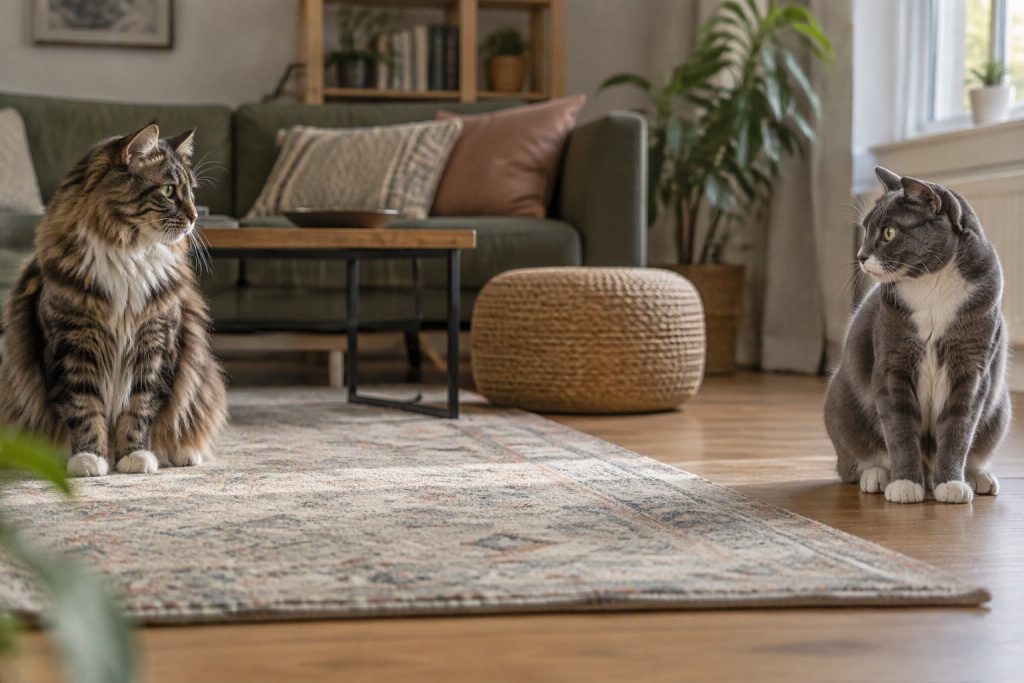
Most conflict between cats in the same house is not about personality, and it is not about dominance. It is about resources: food, water, litter boxes, resting places, high perches, and the routes between them. When two cats are relaxed on separate floors and tense in the kitchen, the kitchen is the problem, not the relationship. Fixing the layout — more boxes, more bowls, more vertical space, and clear sightlines — resolves the majority of everyday friction without any behaviour training at all, and it works faster than anything that involves trying to make the cats like each other.
- Most household cat conflict is competition over resources, not a personality clash.
- The working rule is one litter box per cat, plus one, placed in separate locations.
- Feed cats far enough apart that neither has to eat facing the other.
- New conflict between cats that previously got along is a vet question for both.
Why do two cats that used to get along suddenly fight?
Something in the environment usually changed, even if nothing about the cats did. A new piece of furniture can block a route. A litter box moved to a busier spot. A neighbourhood cat appeared at the window and one cat redirected its frustration onto the housemate. Illness is the other big cause, because a cat that feels unwell stops tolerating things it used to ignore, and the other cat senses the change. Redirected aggression is particularly common: one cat sees an intruder outside, cannot reach it, and attacks whichever cat is nearest. That is why a sudden flare-up between cats that have lived together peacefully for years should prompt two vet appointments and a careful look at what is different in the house.

A cat tree built to give a cat height to climb, perch and watch from — height is…
How many litter boxes do two cats need?
Three, ideally, and in three different places. The plus-one rule exists because cats do not like sharing a toilet, and they especially dislike being ambushed on the way to one. Boxes side by side count as one box in practice, because a cat guarding the corridor can block both. Place them in quiet, low-traffic spots with more than one exit route where possible, and keep them away from food and water. A cat that has to pass another cat to reach the box may simply stop using it. Scoop daily and change litter regularly, because a box that is unpleasant to use is a box that gets avoided, and litter box avoidance is one of the most common reasons cats end up rehomed. For placement detail, where the litter box goes matters as much as how many you own.
How do I stop one cat from guarding the food bowls?
Separate the food, and separate it properly. Two bowls a metre apart is not separation; it is a shared table. Feed the cats in different rooms with the doors closed, or at opposite ends of a corridor with a visual barrier between them, and pick the bowls up when the meal is over so there is nothing left to guard. If one cat eats fast and then pushes the other off, a slow feeder for the fast eater buys the slower cat time. Food guarding often fades once the cats stop competing for the same spot at the same moment. If it does not, and one cat is losing weight or hiding at mealtimes, treat it as a welfare problem. Feeding arrangements are covered in more depth in feeding multiple cats without conflict.
Does vertical space really reduce conflict?
It is one of the most reliable fixes available. Cats resolve tension partly by controlling distance, and height is the easiest way to do that. A cat that can get up and out of the way has an exit, which means it does not have to fight. Tall cat trees, wall shelves, the tops of wardrobes and window perches all reduce friction, because they turn a flat territory into a three-dimensional one where two cats can share a room without being in each other’s space. Aim for enough elevated spots that both cats can be high at once, and place them so a cat on the ground cannot easily stare down a cat above it. Vertical territory is usually the cheapest and fastest change you can make.

This slow feeder slows a cat down so a meal lasts longer — a meal that takes longer…
What do I do about a bully cat?
First, check the label. The cat that hisses and swipes is often the one being intimidated, not the aggressor, because a confident cat does not need to make noise. Watch the quiet one: does it stop eating when the other enters, avoid certain rooms, or sit with its back to a wall. Those are the signs of a cat under pressure. Real bullying looks like staring, blocking doorways and slow pursuit, and the target responds by hiding, avoiding or eliminating outside the box. The fix is environmental first: more exits, more resources, more height, separate feeding, and a quiet zone for the pressured cat. Punishing either cat is counterproductive. If one cat is being prevented from eating or using the litter box, that is serious and needs a proper behaviour plan.
When is conflict serious enough to get help?
Get help when a cat is being kept from basic resources, when there is blood drawn or wounds, when one cat has started hiding continuously, or when house-soiling has begun. Those are welfare problems, not personality quirks, and they rarely resolve on their own. Start with a vet, because pain and illness drive a large share of sudden aggression and both cats deserve a check. If the cats are physically healthy, a qualified feline behaviour professional can assess the layout and the cats’ history and build a reintroduction plan. Reintroduction — going back to separate rooms and slow, controlled contact — sounds drastic, but it is often faster and kinder than months of tense coexistence. Never use punishment, spray bottles or loud noises; they add fear to an already fragile situation.
Frequently asked questions
- Will my two cats ever be friends? Some become close, many settle into peaceful tolerance, and a few never do. Tolerance with no bullying is a perfectly good outcome and is worth aiming for.
- Should I let them sort it out themselves? Not if one cat is consistently losing access to food, water, litter or resting spots. Cats do not negotiate fair outcomes the way people hope.
- Do pheromone diffusers help? Some owners find them useful as a background measure. They are not a substitute for fixing resources, and they are not a treatment for a medical cause.
- Is it too late to introduce two adult cats? No. Adult introductions take longer and need more separation at the start, but they succeed regularly when done slowly.
- My cats only fight at night. Why? Often because that is when both are most active and the house is quiet. More evening play and a set meal before bed frequently reduces it.


