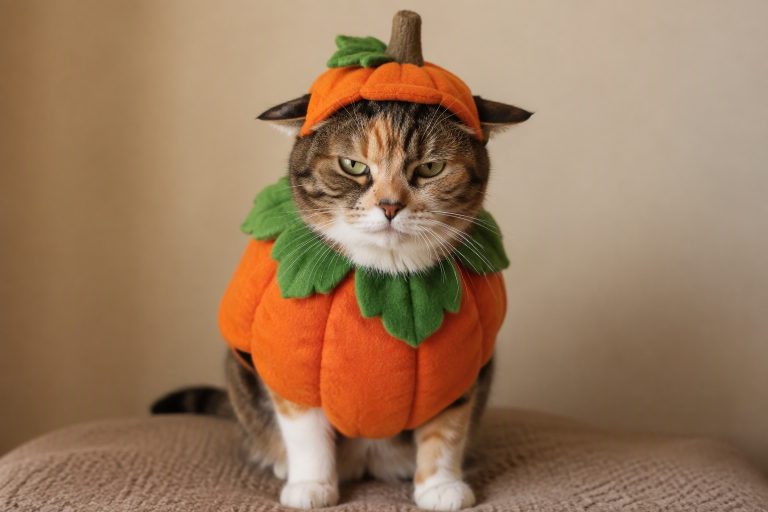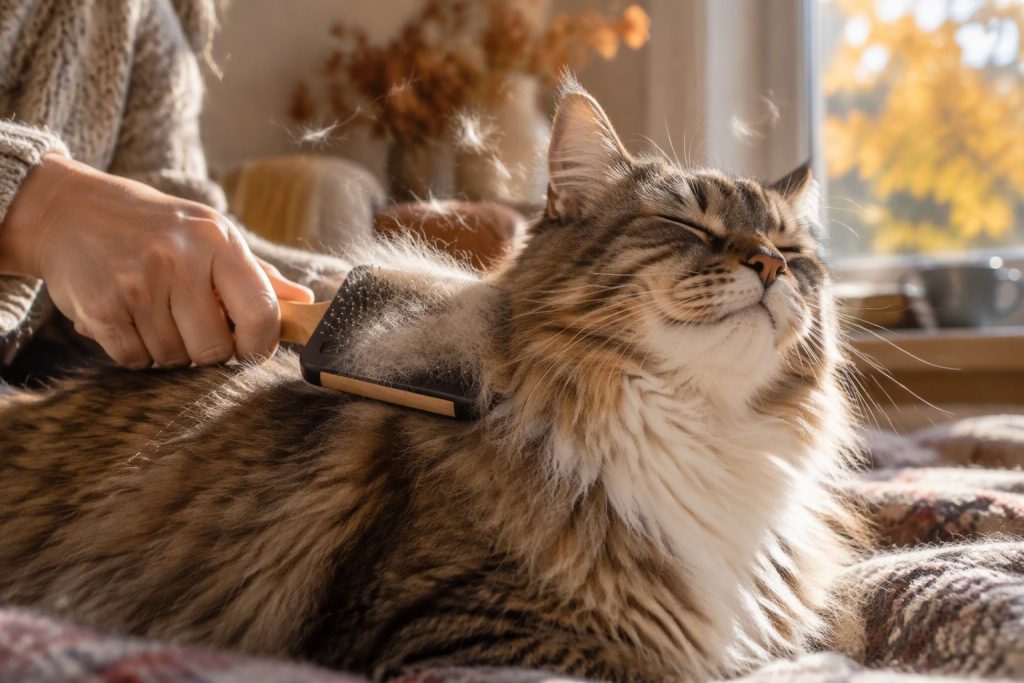
Autumn shedding is normal, and it happens because the cat’s coat is responding to changing light. As the days shorten, many cats drop the lighter summer coat and grow a denser one, and the process can leave loose fur everywhere for several weeks. Indoor cats are often less seasonal than outdoor cats because artificial light and central heating blur the signal, but most still show a noticeable shed in autumn and again in spring. The practical response is more grooming rather than less, and a routine that removes loose hair before the cat swallows it, which is where most hairball problems start.
- Autumn shedding is a normal response to shortening daylight, not a sign of illness.
- Brush more often during the shed, using a tool suited to the coat type.
- More frequent hairballs or a dull, patchy coat are reasons to see a vet.
- Sudden bald patches, scabs or intense scratching are not normal shedding and need a vet.
Why do cats shed more in autumn?
Because the coat is being replaced. A cat’s fur grows in cycles, and the amount of daylight is the main trigger that tells the body when to build up an insulating coat and when to drop it. In autumn, many cats lose the thinner summer coat and grow a denser undercoat for winter, and the old hair has to go somewhere. That transition takes weeks rather than days, which is why the shedding seems relentless for a period and then settles. Indoor cats under artificial light and steady heating may shed more evenly across the year rather than in two clear seasons, which surprises owners who expect a distinct autumn moult. It is a normal process, and it is worth responding to with grooming rather than worrying about it.

Deep red plush donut bed. Made from cloth. Supplied in light gray. Made for everyday resting. Gives a…
How often should I brush during the shed?
More than usual, and ideally daily for a few weeks. Short-haired cats generally need a quick brush every day or two during the heavy shed, while long-haired cats usually need daily attention all year round and more during a moult. The aim is to remove loose hair before the cat grooms and swallows it, which is what reduces hairballs. Use a tool suited to the coat: a rubber curry brush for short coats, a slicker for medium coats, and a wide-toothed comb plus a slicker for long coats. Work in the direction of the coat, keep sessions short, and stop if the cat objects rather than forcing it. Most cats accept grooming more readily if paired with a treat at the same time each day. A full guide is in how often to brush a cat.
How do I reduce hairballs?
Grooming is the main lever, because a hairball is swallowed fur that did not pass through the digestive system. Brushing removes much of the loose coat before the cat can swallow it, which is why daily brushing during a shed makes a real difference. Beyond that, make sure the cat is drinking well, because good hydration helps the digestive tract move hair through, and a water fountain often encourages a cat that drinks little from a bowl. Some owners find a small amount of plain cooked pumpkin or a vet-recommended hairball product helpful, but this should be discussed with a vet rather than assumed. Frequent hairballs are not simply an inconvenience: a cat that brings up hairballs regularly, or that retches without producing anything, should be checked, because it can indicate an underlying problem.
What is the difference between shedding and hair loss?
Shedding is even, gradual and produces loose hair across the whole coat. Hair loss is patchy, and it usually comes with visible changes to the skin. The signs that point to something other than normal shedding include bald patches, thinning in one area only, broken or stubby hair, redness, scabs, dandruff, or a coat that looks greasy and dull. A cat that is pulling hair out itself, or that has lost fur symmetrically along the flanks or belly, is usually over-grooming rather than shedding, which is a separate issue with its own causes. Symmetrical hair loss, thinning around the ears or neck, and hair that comes out in clumps when you stroke the cat are all reasons to see a vet rather than to brush more. For that side of things, see managing a long coat.
Round furry plush bed with cat ears on the rim. Made from velvet. Made for everyday resting. Gives…
Does diet affect shedding?
Diet affects coat condition, though it does not control the seasonal moult itself. A cat on a complete and balanced diet generally has a healthier coat, and coat quality is one of the things a vet will assess if the fur looks poor. Some owners notice better coat shine after changing foods, but that is hard to attribute to a specific ingredient, and many supplement claims are not well supported. What is worth doing is ensuring the cat eats an appropriate complete diet for its life stage and is not losing or gaining weight unexpectedly, since both show in the coat. If the coat looks dull or the cat is shedding unusually heavily alongside other changes, ask a vet rather than buying a supplement. Do not add oils, supplements or human products to a cat’s food without veterinary advice.
When should shedding worry me?
Worry when the shedding is uneven, when the coat changes in texture, or when it comes with other signs. Book a vet appointment if you see bald patches, scabs, sores, intense scratching, excessive licking, a greasy or dull coat, or hair coming out in clumps. Also see a vet if the shedding comes with weight loss, increased appetite or thirst, vomiting, or a change in behaviour, because those point to a systemic cause rather than a coat issue. A cat that suddenly loses a lot of hair outside the usual seasonal pattern, or develops a thin coat for the first time in later life, should be assessed, since thyroid and other conditions show this way. Normal seasonal shedding looks even, affects the whole coat, and settles within a few weeks. Anything else deserves a professional opinion rather than another brush.
Frequently asked questions
- Is autumn shedding worse than spring shedding? It varies by cat. Many cats shed more heavily in spring when losing the winter coat, but autumn moults are often noticeable too.
- Do indoor cats shed all year? Many do, because artificial light and heating reduce the seasonal signal. That makes regular grooming more important rather than less.
- Should I shave my long-haired cat for the summer? Generally no. A cat’s coat also insulates against heat, and shaving can cause skin problems and sunburn. Ask a vet or groomer first.
- Can stress cause shedding? Yes, some cats shed more when stressed or at the vet. It is usually temporary and stops when the stressor does.
- How do I stop hair getting on everything? Regular brushing, washing bedding weekly, and using a lint roller or a slightly damp rubber glove on furniture helps more than anything else.