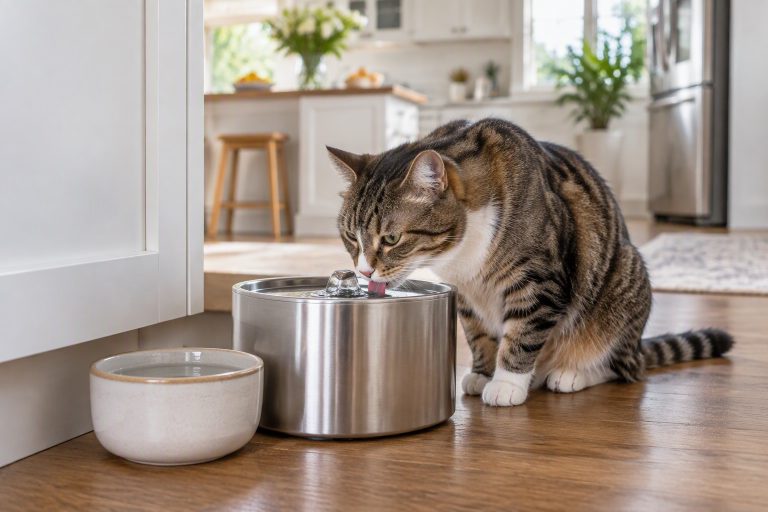
The best water fountain for cats is a quiet, easy-to-clean model with a large reservoir, a replaceable carbon filter, and a gentle flowing stream that encourages drinking without splashing. Look for stainless steel or ceramic over plastic, a low pump noise, and parts you can fully disassemble and wash each week.
- Pick stainless steel or ceramic to avoid plastic biofilm and cat acne around the mouth.
- Choose a quiet pump and a large reservoir so you refill less and it does not run dry.
- Make sure every part comes apart for weekly washing; hidden crevices grow bacteria.
- Place it away from food and litter, because cats avoid water near their toilet or meals.
Why do cats prefer moving water at all?
In the wild, still water is a suspect—puddles stagnate and hide bacteria—so cats evolved to prefer running sources, and that instinct survives in house cats who ignore a full bowl yet dash to a dripping tap. A fountain taps that preference by offering circulation and a faint sound that signals freshness. This matters because many cats are chronically under-hydrated, which our guide on cats not drinking enough water addresses directly. A good fountain can double a cat’s daily intake simply by making water feel safe and interesting. The moving surface also stays oxygenated and cooler, both of which cats like. If your cat currently drinks only from the faucet or a glass, a fountain is the compromise that protects her kidneys without you leaving a tap running all day, and most cats switch within a couple of days once they hear the gentle flow.
What material should the fountain be made from?
Stainless steel and ceramic are the best choices; plastic is the one to avoid. Plastic scratches easily, and those micro-grooves harbour bacteria and a slimy biofilm that can cause chin acne and whisker irritation. Steel and ceramic are non-porous, dishwasher-safe, and stay cleaner between washes. A cat that develops chin spots from a plastic bowl often clears up after switching to steel. Weight is a bonus—ceramic fountains resist tipping by enthusiastic paws. The trade-off is cost and fragility, but a durable steel fountain lasts years and protects health, which pays back the upfront price. If budget forces plastic, choose a BPA-free model and replace it the moment it clouds or scratches. For most owners, though, spending more once on steel or ceramic is the smarter, lower-maintenance path that keeps water genuinely clean rather than merely moving.
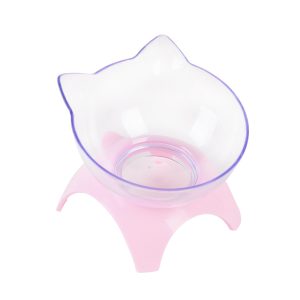
High-footed Cat Oblique Mouth Cervical Vertebra Drinking Bowl. Part of the KiKi Meow Cat Feeding and Water collection…
How important is pump noise and flow control?
Very important, because a loud fountain scares a cautious cat and she will simply stop using it, undoing the whole point. Aim for a pump rated below thirty decibels, and look for adjustable flow so you can start on the gentlest stream and increase as she grows confident. A low-noise fountain placed on a towel or mat further dampens vibration through the floor. Cats also dislike being startled mid-drink, so a soft, steady trickle beats a bubbling gush. If the motor hums or rattles, it usually means low water or trapped air, both fixable. Test the fountain overnight before committing it to her routine, because a pump that whines in a quiet flat will be rejected by a sound-sensitive cat. Quiet operation is not a luxury—it is the difference between a fountain she uses and an expensive ornament gathering dust in the corner.
How easy must it be to clean?
Cleaning ease decides whether a fountain stays healthy or becomes a bacteria farm. Choose a model where the pump, tray, and spout all separate without tools, so you can scrub every surface weekly and replace the filter on schedule. A cat drinking more water only benefits her if that water is clean, and hidden crevices defeat that. Avoid fountains with glued seals or tiny tubes you cannot reach, because slime builds exactly where you cannot see it. A fountain you can fully disassemble takes five minutes to wash and prevents the stale smell that turns cats away. Run it through the dishwasher if the material allows, and never let the reservoir run dry—a burnt pump is the most common fountain failure. The honest test is this: if you would not want to drink from it after a week, neither does she, so prioritise washability above fancy LED lights.
Where should I put the fountain?
Location follows cat logic, not human convenience. Cats refuse water placed beside food or the litter box, because in nature those should be far apart, so keep the fountain in a separate quiet room or at the far end of the kitchen counter from her bowls. A cat that under-drinks often just has water too close to her toilet or meals. Put the fountain where she already passes—a hallway, a bedroom corner, or near a window she lingers by—so drinking becomes part of her route rather than a detour. Keep it on a stable, non-slip surface away from high foot traffic where she might get startled mid-sip. In multi-cat homes, a second fountain prevents guarding and ensures the timid cat drinks. The right spot, combined with a steel body and quiet pump, is what finally gets a reluctant drinker to the fountain instead of the bathroom tap.
Do fountains really improve a cat’s health?
They do, primarily by increasing water intake, which dilutes urine and lowers the risk of urinary crystals, bladder stones, and chronic kidney disease—the three big killers of older cats. A cat drinking from a moving-water source typically consumes noticeably more than from a static bowl, and that single change supports kidney and urinary tract health for life. Pair the fountain with a higher-moisture diet for the strongest protection, since wet food already carries water into the meal. The caveat is maintenance: a neglected fountain grows biofilm and can do more harm than a clean bowl, so the health benefit depends on your diligence. Used properly, though, a fountain is one of the highest-return investments in feline preventative care, turning a daily hydration battle into a habit your cat chooses willingly because the water simply tastes and feels better to her.
Frequently asked questions
- How often should I change the filter? Every two to four weeks, or sooner if the flow slows; a clogged filter breeds bacteria.
- Will a fountain stop my cat drinking from the tap? Usually yes—the flowing stream satisfies the same instinct that draws her to faucets.
- Is a fountain safe to leave on when I travel? Yes if full and clean, but have someone top it up; a dry pump burns out fast.
- Can kittens use a fountain? Yes, once weaned; the gentle stream teaches good hydration habits early, but supervise at first.