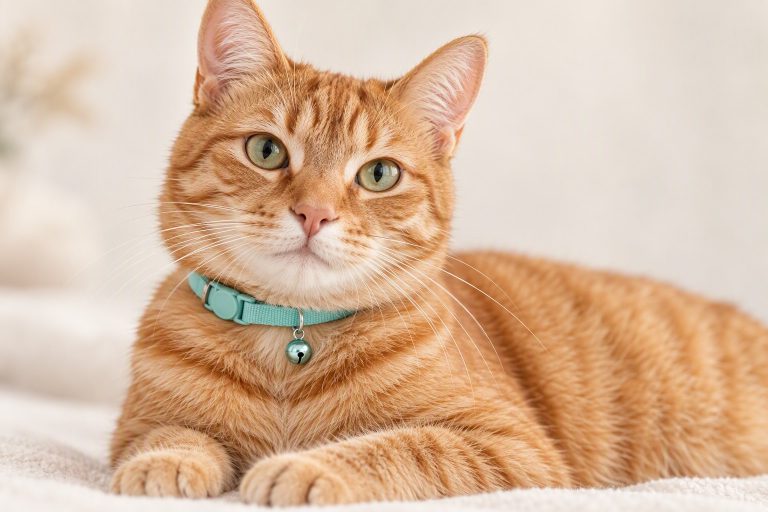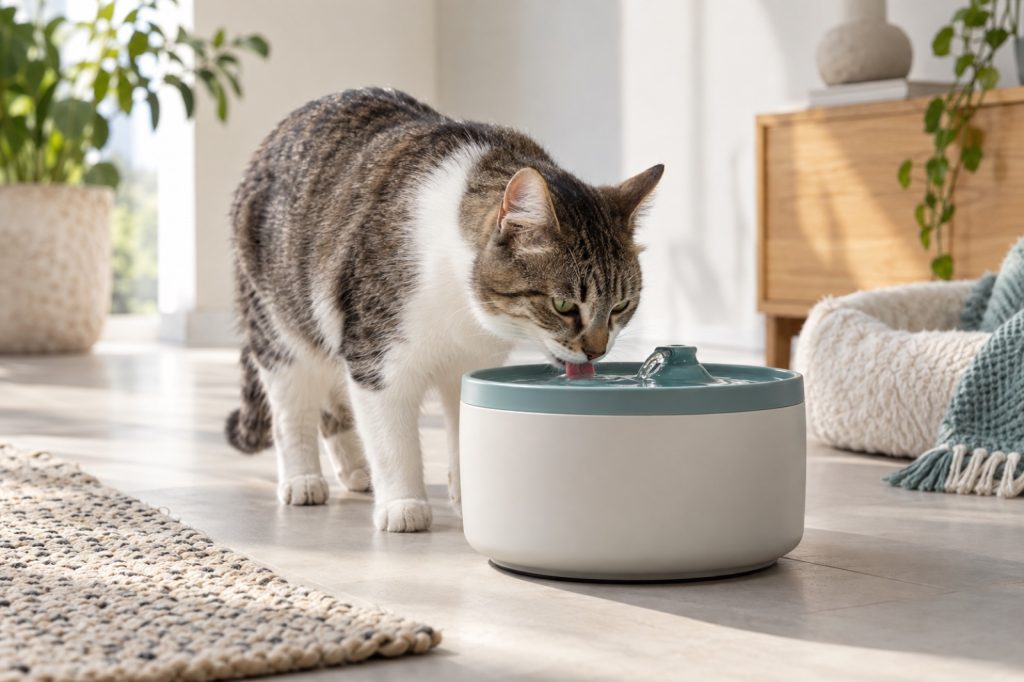
Cats evolved from desert hunters and have a naturally low thirst drive, so they often drink less than they should — especially on a dry-food diet. The practical fixes are feeding more wet food, offering moving water from a fountain, and placing several water sources away from food and litter boxes so drinking feels safe and convenient.
- Cats have a low natural thirst drive.
- Dry food alone leaves many cats under-hydrated.
- Fountains and multiple bowls encourage drinking.
- Wet food adds water with every meal.
Why do cats drink so little water?
Cats descend from wildcats that hunted in dry regions and got most of their moisture from prey, which is roughly seventy per cent water. Their bodies are built to concentrate urine and cope with limited water, so their thirst signal is weak compared with a dog’s. A cat on dry food, which is only about ten per cent water, is effectively eating a diet far drier than anything her ancestors ate. She may not feel thirsty enough to compensate, and mild dehydration becomes the norm. This is not a defect; it is an inherited survival trait that works against cats living indoors on kibble. The consequence is that many cats run on the low side of ideal hydration for years, which puts extra load on the kidneys and urinary tract. It is one of the quietest problems in cat care, because a mildly under-hydrated cat usually looks perfectly well.
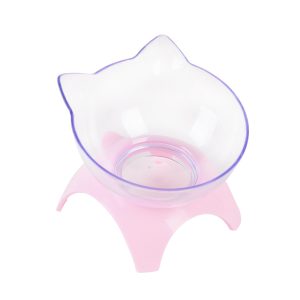
Cat Bowl Drinking Bowl Double Bowl To Protect Cervical Spine. Part of the KiKi Meow Cat Feeding and…
How much water should a cat actually drink?
There is no single number, because it depends on diet, weight, activity, and weather. As a rough guide, a healthy cat on dry food typically drinks more from a bowl than a cat on wet food, because she has to make up the difference. Rather than chasing a figure, watch the behaviour. A cat who visits the bowl often and produces normal-sized urine clumps is doing fine. Warning signs include a bowl that never seems to drop, small or hard stools, tacky gums, or skin that is slow to spring back when gently pinched. If your cat suddenly drinks a lot more or a lot less than usual, that change is more meaningful than any target number, and it is worth a vet visit. Note roughly how often you refill the bowl, so you have something concrete to describe. A cat on wet food may visit the bowl rarely and still be perfectly hydrated, so always read the drinking alongside the diet.
Does wet food help hydration?
Substantially, yes. Wet food is around seventy to eighty per cent water, so a cat eating it takes in a large share of her daily fluid with every meal, without needing to feel thirsty. For cats who barely touch the water bowl, switching even part of the diet to wet food can make the biggest difference of any single change. You do not have to go all-in: replacing one dry meal with wet is a meaningful start. Our guide to wet versus dry food covers how to balance the two. If your cat is a committed kibble eater, you can also add a little warm water to her dry food to soften it and raise her intake, as long as she eats it promptly. Never leave soggy kibble sitting out, because it spoils quickly in warm weather.
Why do cats prefer running water?
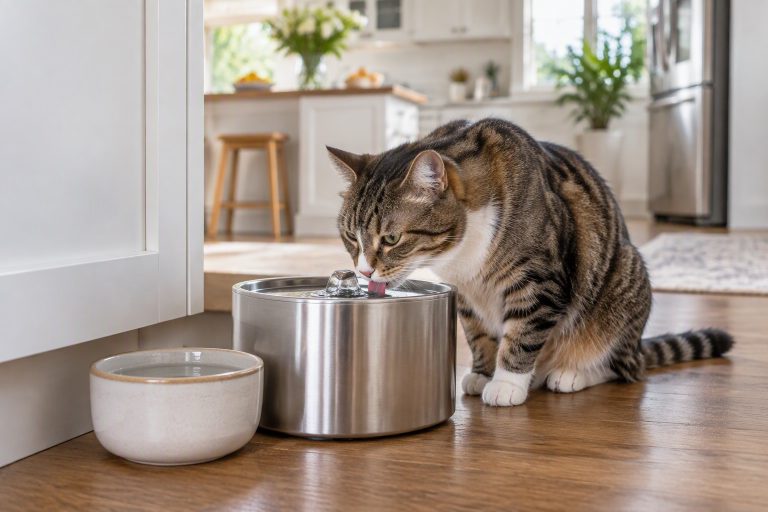
Instinct again. In the wild, still water can be stagnant and unsafe, while moving water is more likely fresh. Cats also have trouble seeing still water clearly, so a ripple or a stream catches their eye and draws them in. A fountain taps both instincts: the movement signals freshness, and the sound and motion attract attention. Many owners find their cat drinks noticeably more once a fountain is introduced, simply because it is more interesting than a static bowl. Fountains also keep water aerated, which slows the stale taste that develops in an open bowl. If your cat ignores her bowl, this is often the first change worth trying. Fountains also need cleaning, so rinse the pump and bowl weekly to keep the water genuinely fresh.
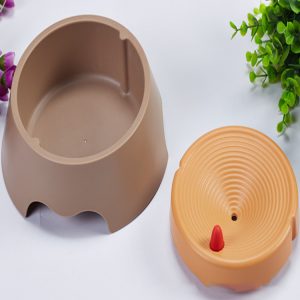
Pet drinking bowl. Part of the KiKi Meow Cat Feeding and Water collection for cats.
Where should water bowls go?
Away from food and litter — that is the main rule. Cats are instinctively wary of drinking near where they eat or toilet, because in the wild a contaminated water source is a health risk. Many owners place the bowl right beside the food dish out of habit, and the cat quietly drinks less as a result. Instead, set out two or three water stations in different rooms: one in a quiet corner, one near a favourite resting spot, and one on a different floor if you have stairs. Keep them away from loud appliances and out of direct sun, and refresh the water daily. Our guide to the best water fountain for cats covers what to look for if you go that route. Look for one that is quiet, easy to clean, and made from a material that does not hold onto odours. If you have a dog, place at least one water station where the dog cannot reach it, because many cats will not drink from a bowl a dog has used.
When is not drinking a medical emergency?
A cat who stops drinking altogether, or who shows signs of dehydration alongside other symptoms, needs a vet urgently. Watch for sunken eyes, tacky gums, skin that stays tented when gently pinched, lethargy, loss of appetite, or no urine in the litter box for many hours. Male cats who strain to urinate without producing anything may have a urethral blockage, which is life-threatening within a day. At the other end, a sudden increase in drinking can signal diabetes, kidney disease, or hyperthyroidism. In both directions, a change in drinking behaviour is a signal, not a quirk. When in doubt, call your vet rather than waiting to see if it settles. A short phone call is cheap, and with hydration problems the earlier you act the easier they are to manage.
Frequently asked questions
- Why does my cat barely drink water? Cats have a weak thirst drive inherited from desert ancestors, and dry food gives them little moisture.
- Is a water fountain better than a bowl? Often yes, because moving water attracts cats and stays fresher and better aerated. Clean it weekly, since a slimy fountain is worse than a clean bowl.
- Should water be near the food? No. Cats prefer to drink away from where they eat and toilet. Set out two or three stations in different rooms instead.
- Can I add water to dry food? Yes, a little warm water softens kibble and raises intake, as long as she eats it promptly.
- How do I know if my cat is dehydrated? Check for tacky gums, sunken eyes, and skin that is slow to spring back, and see a vet if unsure. If you are worried, a quick vet check settles it.