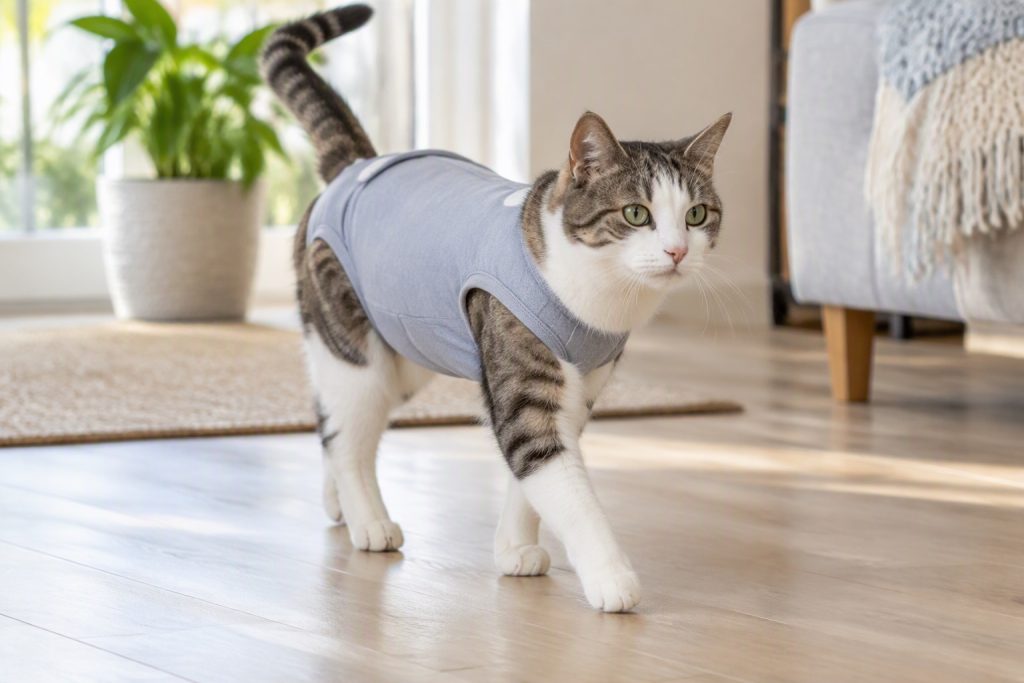
The best recovery suit for a cat is a soft, breathable, snug-fitting bodysuit that covers the incision and stops licking without a cone. It should fit closely without restricting her legs, neck, or breathing, have an opening or easy access for toileting, and be simple to put on and wash. A good suit keeps her calm and lets her eat, sleep, and move normally while she heals.
- Soft, breathable fabric that covers the wound.
- Snug but never tight around legs or chest.
- Toilet access or easy removal for bathroom breaks.
- Washable, with a spare so one is always clean.
Why choose a suit over a cone?
A recovery suit solves the biggest problem with a cone: the cat hates it. Because a suit hugs the body rather than encircling the head, it leaves her vision, whiskers, and hearing clear, so she can eat, drink, groom, and move without banging into furniture. Most cats settle into a suit within a day, which means less stress and better rest, and both help healing. The suit also covers the incision directly, so she cannot reach it with her tongue or claws, which is exactly what the wound needs. It is less noisy, less bulky, and much easier for you to manage than a rigid collar. There are limits, though: a suit works best for body incisions and cannot protect the eyes, ears, or face. Our guide to the best cone alternatives compares suits, padded collars, and soft cones. For a cat who is already nervous, a suit can mean the difference between rest and constant struggling. A suit also keeps hair and litter out of the wound, which reduces irritation.
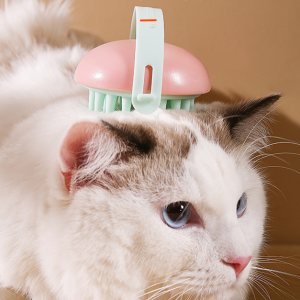
A breathable plastic grooming tool takes the undercoat first, which is where matting starts. Try it after a…
How should a recovery suit fit?
Fit is everything. The suit should be snug enough that she cannot wriggle out or lick through it, but loose enough that she can breathe, walk, jump gently, and use the litter box comfortably. Check that the neckline is not too tight, that the leg openings do not rub or restrict movement, and that the tail and rear are free so she can toilet without soiling the fabric. If the suit bunches or twists, it is the wrong size or shape. Measure your cat’s length from neck to tail base and her chest girth before buying, and follow the manufacturer’s size chart rather than guessing. If she is between sizes, size down for security, but never so much that it pinches. A well-fitted suit should look like a second skin, not a loose nightgown. Check the leg openings after a few minutes of wear, because a suit that rides up can rub the skin. A suit that leaves red marks or restricts walking is the wrong size.
What features matter most?
Look for soft, breathable, stretchy fabric that will not irritate skin or trap heat, because a cat who overheats will try to escape the suit. Toilet access is essential: some suits have a rear opening, while others are designed to be rolled up or unfastened for bathroom breaks. Snap fasteners or a simple hook-and-loop closure make dressing and undressing much easier than a design that has to be pulled over the head. A suit that opens flat is far less stressful for both of you. Choose a design that covers the specific incision site, and check whether it has a removable section for wound inspection. Finally, buy at least two so you always have a clean one, and confirm it is machine washable. Ease of cleaning matters more than you might expect during recovery. A design with adjustable fastenings fits a wider range of body shapes and is easier to keep snug. Avoid suits with rough seams or loose threads, which can catch on the wound.
How do I put it on without a fight?
Set yourself up for success: choose a calm moment, have treats ready, and work on a non-slip surface so she cannot scramble away. Lay the suit open, guide her front legs into the openings, and slide it over her back in one smooth motion, then fasten it without fumbling. Speak calmly and keep the process short. If she struggles, pause, let her settle, and try again rather than forcing it. Most cats fuss for a few minutes, walk stiffly, then forget about it. If she panics badly, stop and try a different style or ask your vet for help. Never leave a suit on a cat who is genuinely terrified, because she could injure herself trying to escape. Our guide to what to expect after spaying covers the wider recovery routine. If she panics badly, try a different style or ask your vet to show you how they fit it. Having treats ready makes the process quicker and calmer for both of you.
Nail scissors, bath brush, de-shedding glove and a drying towel — the full groom in one box. Cuts…
How do I keep it clean?
A dirty suit can irritate the incision and cause infection, so check it at least once a day for urine, faeces, or discharge, and change it as soon as it is soiled. Wash suits in a gentle, unscented detergent without fabric softener, and let them dry completely before reuse. Having a spare means you never have to put a damp suit back on her. While she is out of the suit for a change, supervise her closely so she cannot lick the wound. If the suit keeps getting soiled because she cannot toilet cleanly, the fit may be wrong, or she may need a design with better rear access. If the wound itself is weeping, that is a sign to call your vet rather than simply changing the suit more often. Washing the suit in a mesh bag protects the fastenings and extends its life.
When should she stop wearing it?
She should wear the suit whenever you cannot supervise her, until the incision has healed, which is usually about a week to ten days depending on the surgery. Your vet will confirm when it is safe to stop. It is tempting to take it off early when she seems comfortable, but cats often leave a wound alone until the moment your back is turned, and licking can open it or introduce infection. Keep using the suit for the full period your vet advises, including overnight. Once healed, wash the suit thoroughly and store it for future use. If she is still fussing at the area after the wound has healed, have your vet check, because there may be another issue such as an allergy or a suture reaction. If the incision is fully closed and she shows no interest in licking it, you can stop using the suit.
Frequently asked questions
- Are recovery suits better than cones for cats? For body incisions they are often better tolerated, as long as the fit is snug and the wound stays covered.
- How do I know what size recovery suit to buy? Measure her length and chest girth and follow the size chart. It should be snug but not tight.
- Can my cat use the litter box in a recovery suit? Yes, if it has good rear access or can be unfastened. Check the fit if it gets soiled.
- How long should my cat wear a recovery suit? Usually about a week to ten days, until the incision has healed, or as your vet advises.
- What if my cat hates the suit? Give her a day to adjust, and if she panics badly, try a different style or a soft collar instead.