

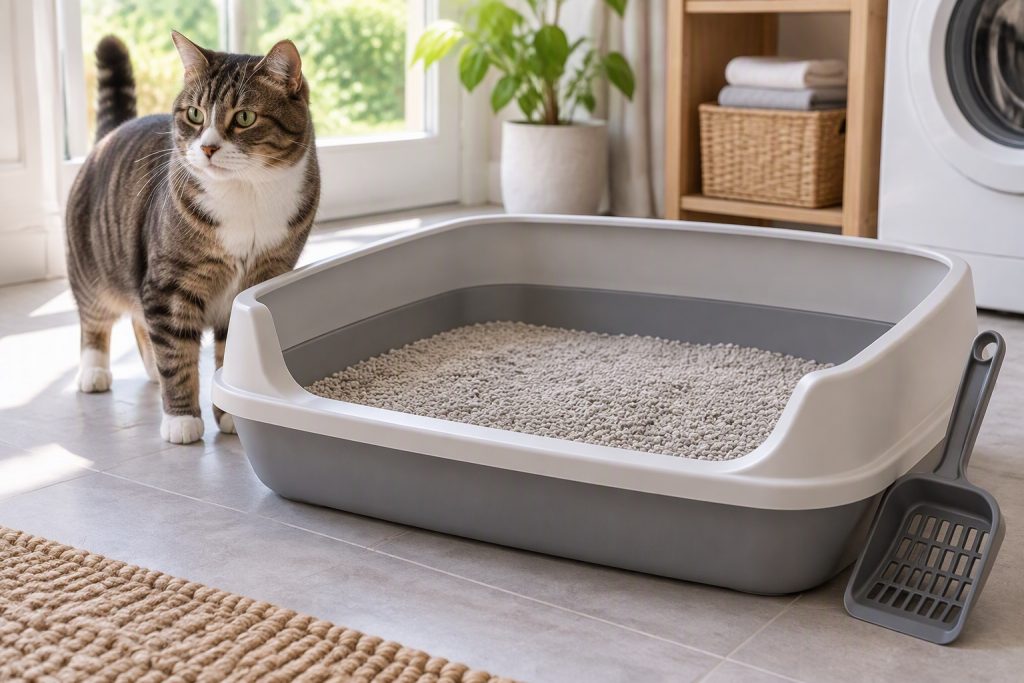
The best extra-large cat litter box is one that measures at least one and a half times the length of your cat from nose to the base of her tail, is low-sided enough for her to step in easily, and is stable enough not to slide. Bigger is almost always better: a roomy box reduces accidents, lets her turn around and dig properly, and suits large breeds, long cats, and seniors. Look for an open, high-walled design with a non-slip base and a smooth, easy-to-clean surface.
- Aim for 1.5 times your cat’s length, nose to tail base.
- Open designs suit most cats better than hooded ones.
- Low entry helps kittens, seniors, and arthritic cats.
- A stable, non-slip base stops sliding and spills.
How big should an extra-large litter box be?
The rule most behaviourists use is simple: the box should be about one and a half times the length of your cat from nose to the base of her tail, and at least as wide as she is long when she stands. That gives her room to walk in, turn around, squat, and dig without touching the sides. A box that is too small forces her to stand awkwardly or hang over the edge, which is a common cause of accidents and of cats avoiding the box altogether. For an average cat, that usually means a box around 24 inches long or more; for a large breed such as a Maine Coon, look for 30 inches or bigger. If you cannot find one big enough, a shallow plastic storage tub with a cut-down entry works well. Measure your cat with a tape while she stands, and write the numbers down so you can compare boxes in a shop or online.
Tray, scoop, anti-splash mat and clumping litter. The whole litter corner, one box. Keeps the litter area contained,…
Is an open or covered box better for a big cat?
For most cats, an open box wins. It gives a clear view in all directions, lets odour escape, and never traps a cat in what feels like a dead end. That matters most for a big cat, who may find a covered box cramped, and for any cat who is nervous or living with other cats. Covered boxes do control litter scatter and smell, which appeals to owners, but they concentrate ammonia and can make a cat hold her breath or rush. Our guide to the best covered litter box explains when a hood is genuinely useful. If you want the tidiness of a covered box, choose the largest one you can find and consider removing the flap or the lid entirely for a cat who seems reluctant. If she is a large cat, a high-sided storage tub with a cut-out doorway often beats a commercial covered box on both size and price.
What features actually matter?
Size is the headline, but a few details decide whether a big box works in practice. Look for high walls on the back and sides to contain urine and litter, with a lower front entry so she can step in without a jump. A non-slip base or rubber feet keep the box from sliding across tile when she digs. Smooth, non-porous plastic is easier to scoop and disinfect than textured surfaces, and rounded interior corners stop waste collecting in hard-to-reach spots. Avoid narrow rims and sharp edges, which can be uncomfortable for a cat to grip. If the box comes with a lid or flap, check that it can be removed. A simple, generous, well-made open box usually beats a clever one that is too small. Check the depth too: a box that is very shallow will spill litter over the front, while one that is too deep is hard for a small cat to enter. Smooth interiors and rounded corners also make daily scooping quicker, which helps you keep up the routine.
How do I stop a big box from being messy?
A large, open box scatters more litter, so plan for it. Place a textured litter mat in front of the entry to catch granules from her paws, and use a litter with larger, heavier granules that track less. Do not overfill — a couple of inches of litter is enough, and a deep layer is easier to kick out. Leave a clear zone around the box so stray litter lands on the mat rather than across the room, and scoop daily so she does not dig furiously to find a clean spot. If she urinates over the side, a box with a higher back panel helps. And keep the box in a spot where a little mess is easy to sweep, not on a pale carpet in a formal room. Keeping the area swept and the mat shaken out daily stops the mess from building up and keeps the box inviting.
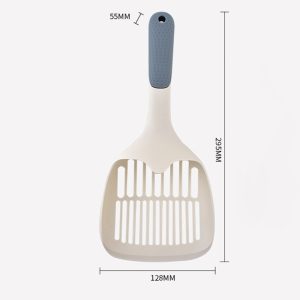
A large plastic scoop takes the daily pass, which is the one that keeps the smell down. Keep…
Will a bigger box help with accidents?
It very often does. Accidents outside the box are frequently a space problem: the cat cannot get comfortable, cannot turn around, or is standing with her back end over the edge. A larger box removes those mechanical causes. It also helps in multi-cat homes, where a roomy box means less competition and less chance of being ambushed while she is vulnerable. That said, a bigger box will not fix a medical problem. If she is straining, passing blood, crying, or going frequently in small amounts, she needs a vet, not a new box. It also will not fix a dirty box or a scary location. Use size as one part of a complete setup: clean, quiet, generous, and plentiful. If accidents continue after you have fixed size, cleanliness, and location, a vet check is the next step, because pain and illness can override even a perfect setup.
How do I get my cat to switch to a bigger box?
Make the change gradual and low-stress. Put the new box beside the old one rather than replacing it outright, and keep the same litter she already knows so the only difference is the size. Let her explore at her own pace, and if she uses it, do not fuss or praise too loudly. Once she is using the new box consistently, remove the old one — but only after a week or two of reliable use. Never wash the new box with a strong scented cleaner, because a strange smell can put her off. If you are also moving the box, do that slowly too. Our guide to litter box placement covers where the new box should sit for the best chance of acceptance. Some cats accept a new box immediately, while others need a week or more of gradual exposure before they trust it.
Frequently asked questions
- How big is an extra-large cat litter box? Generally 24 inches or longer for an average cat, and 30 inches or more for large breeds.
- Is a bigger litter box always better? Bigger helps most cats, as long as the entry is low enough and the box is stable and clean.
- Do cats prefer covered or open boxes? Most prefer open boxes because they can see out and odour does not build up.
- Can I use a storage tub as a litter box? Yes — a shallow tub with a cut-down entry is a cheap, effective extra-large box.
- Will a large box stop my cat peeing over the edge? Often yes, especially if it has a higher back panel and a lower front entry.



