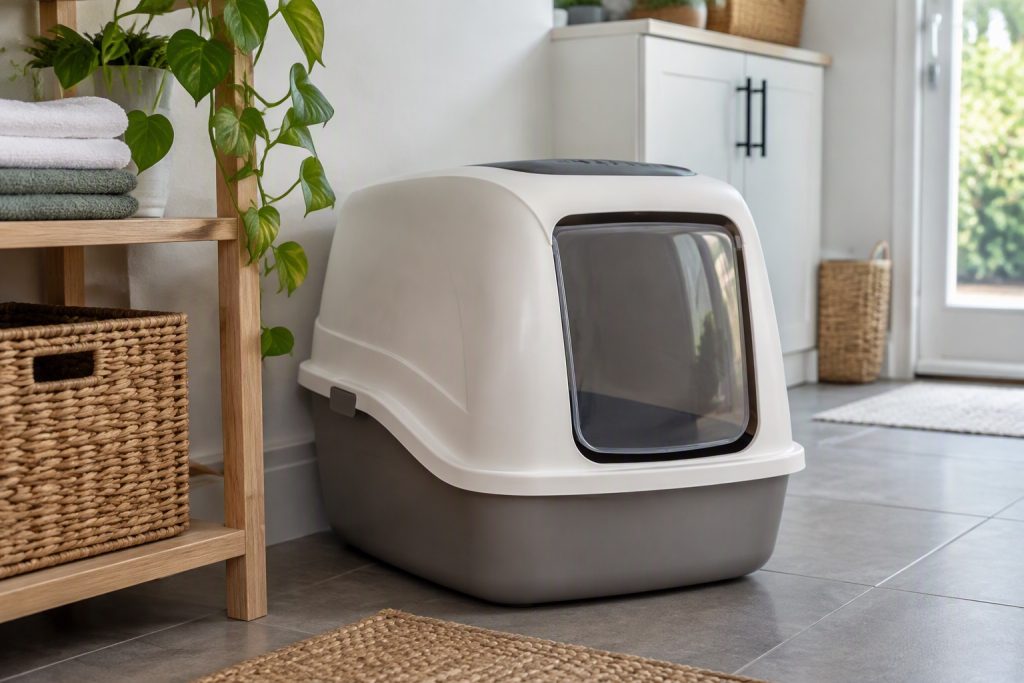
The best covered litter box for most cats is the largest one you can fit in a quiet spot, with a wide, low entry, a lid you can lift off easily for cleaning, and enough internal height for a cat to stand and turn without crouching. Cover is a trade-off: it contains scatter and gives privacy, but it also traps odour and can feel like a dead end to a nervous cat. Buy the biggest box your space allows, then decide whether the lid helps or hurts.
- Size beats style: buy the biggest box that fits.
- A low, wide entry suits kittens and seniors.
- A removable lid makes cleaning far easier.
- Some cats refuse covered boxes entirely.
Are covered litter boxes better than open ones?
Not inherently. A covered box solves two real problems for the owner: it keeps litter from being kicked across the floor, and it hides the contents from view. For a cat, though, the lid changes the experience. It reduces air circulation, which concentrates odour inside, and it creates a single exit, which a cat who feels vulnerable may read as a trap. That is why the honest answer is that covered boxes suit some cats and homes and fail in others. Our comparison of cat litter types makes a related point: the box and the litter have to work together, because a covered box with a dusty or strongly scented litter becomes an unpleasant closed room. If your cat is relaxed, healthy, and uses a covered box happily, there is no reason to change. If she has ever toileted beside the box rather than in it, the lid is a prime suspect.
Tray, scoop, anti-splash mat and clumping litter. The whole litter corner, one box. Keeps the litter area contained,…
What size should a covered litter box be?
Bigger than most products sold as “large”. The practical test is simple: your cat should be able to stand upright, turn around fully, and dig without her nose touching the walls or the lid. For an average adult cat that means a box roughly one and a half times her body length, which is around 60 centimetres or more in the longest dimension. For a large breed or a long cat, go bigger still. Many covered boxes are made small precisely because the lid makes them look neat, and that is the single most common mistake buyers make. Height matters too. A box that is too shallow forces a cat to crouch, and a cat who cannot posture comfortably may start hovering at the edge instead. If your cat has a history of peeing over the edge, an undersized covered box is very often the cause.
Which features matter most in a covered box?
Four features do most of the work. First, entry height: a low, wide doorway suits kittens, seniors, and cats with arthritis, while a high entry means more scatter control but more effort for the cat. Second, lid design: a hinged or fully removable top transforms cleaning, whereas a lid that clips in four places will make you dread the job. Third, a carbon filter slot, which genuinely helps with odour if you replace the filter on schedule rather than leaving it in for a year. Fourth, a base with a decent depth and a smooth interior, because textured or ridged plastic traps urine in the seams and never fully comes clean. Extras such as a built-in scoop holder or a swing door are conveniences rather than necessities, and a swing door in particular is disliked by many cats, so choose one you can remove if needed.
How do I stop a covered box from smelling?
Odour in a covered box comes from three sources: the litter, the box surfaces, and the trapped air. Scoop at least once a day, ideally twice, because clumps left in place release smell continuously in a space with no airflow. Do a full litter change on a sensible schedule rather than only topping up, and wash the box itself with mild soap and warm water every few weeks, since plastic develops a smell that litter alone will not remove. Replace the carbon filter monthly. Position matters as much as cleaning: a box in a hot, stuffy corner will smell worse than the same box in a ventilated spot. Our guide to litter box placement explains where a box should and should not go. If the box still smells immediately after cleaning, the plastic has absorbed odour and the box needs replacing.
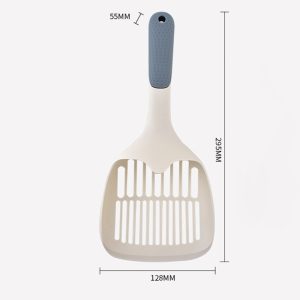
A large plastic scoop takes the daily pass, which is the one that keeps the smell down. Keep…
How do I get my cat to accept a covered box?
Introduce it as though it were a new object, not a replacement. Leave the lid off for the first week so she learns the box itself is safe and familiar, then place the lid on loosely without latching it, so the box still feels open and escape is possible. Give her a few days at each stage, and if she avoids it, step back rather than pushing forward. Keep the old box available during the transition so she always has a reliable option, and only remove it once she is using the new one consistently. Never put her in the box to show her how it works. If she urinates beside it, that is a clear vote against the lid; try the same box with the lid removed and see whether the behaviour stops. Cats who grew up with covered boxes usually adapt in days, while cats who have never used one may never accept the cover at all.
When should I switch back to an open box?
Switch back if your cat stops using the covered box reliably, urinates or defecates beside it, or starts hovering at the entrance instead of stepping inside. Any sudden change in toileting behaviour also deserves a veterinary check first, because urinary and digestive problems can look exactly like box refusal and are far more serious than a preference. Switch back too if you cannot keep up with cleaning: a covered box that is not scooped daily is worse for the cat than an open box that is. Older cats, cats with arthritis, and cats recovering from surgery generally do better with a low-sided open box. The good news is that the lid is removable, so you can test both configurations with the same box. If she uses the open version happily and the covered version never, keep the open version and simply add a litter mat to manage scatter.
Frequently asked questions
- Do cats prefer covered or open litter boxes? Most studies and most cats favour open boxes, but plenty of cats use covered ones happily.
- How often should I change litter in a covered box? Scoop daily and do a full change every one to two weeks, or sooner if it smells.
- Can a covered box cause litter box avoidance? Yes, it is one of the most common reasons a cat stops using the box.
- Should I get a covered box for a kitten? Only with a low entry and the lid off at first, since kittens need easy access.
- Do carbon filters really help? They help modestly if replaced monthly, but they do not substitute for daily scooping.