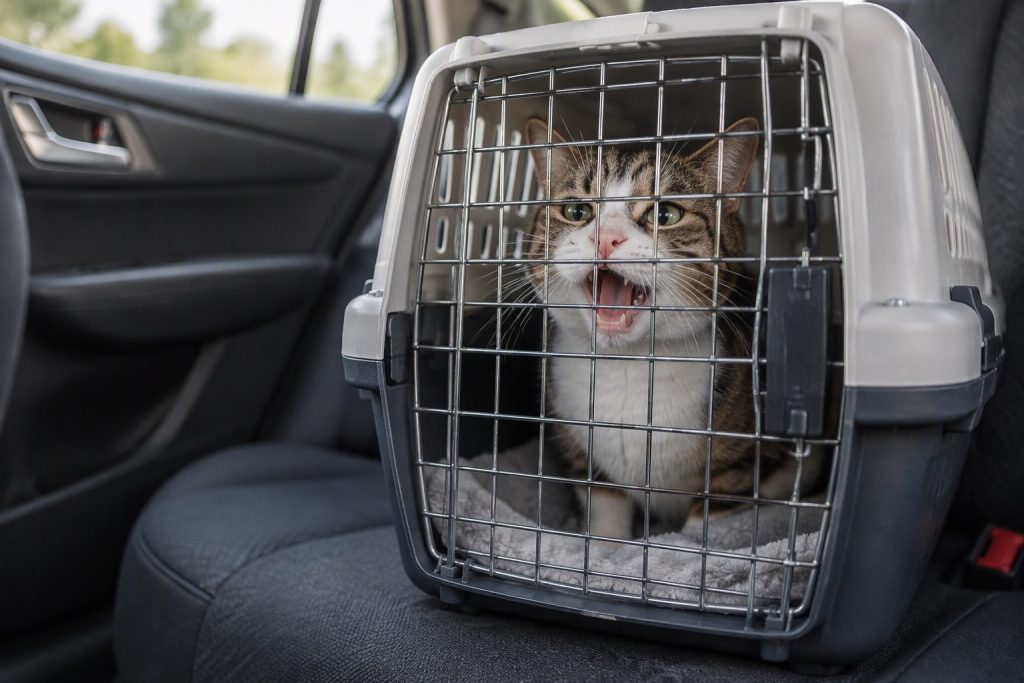
A cat meows in the car because she is stressed, unsure, and often mildly motion sick, and meowing is how she asks for help. Some cats also learn that meowing earns attention, so the noise can become a habit layered on top of real distress. A secure carrier, a familiar smell, a covered view, and calm practice trips usually quiet a car meower far more effectively than anything else.
- Meowing in the car usually means stress, not naughtiness.
- Motion sickness and fear are common causes.
- A covered, secure carrier calms many cats.
- Never let her loose in the car to stop the noise.
Is my cat meowing from stress or something else?
In most cases it is stress, and the meowing is a plea to make it stop. Cats meow at people, not really at each other, so a cat who vocalises in the car is directing the sound at you. The tone tells you a lot: a low, repeated, complaining meow usually signals anxiety, while a sharp, urgent cry can mean pain or nausea. If she also drools, licks her lips, vomits, pants, or tries to dig out of the carrier, the distress is significant. A cat who meows only when the engine starts and settles once the car is moving smoothly is likely reacting to the noise and motion. Learning to read the difference helps you decide whether to focus on comfort or to ask a vet about travel anxiety and nausea. Our guide on why cats hate car rides explains the underlying causes. Filming a short clip of her in the car can be surprisingly useful, because it captures the exact sounds and behaviour for your vet.
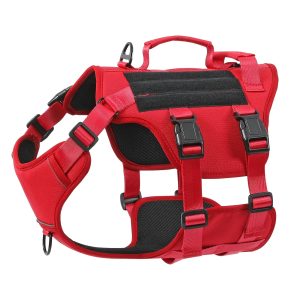
A fabric and Oxford cloth harness stays close enough that a cat cannot back out of it. Take…
Can motion sickness make a cat meow?
Yes. Motion sickness is common in cats, especially younger ones, and it causes genuine nausea that a cat cannot explain or escape. The signs are drooling, lip licking, swallowing, vomiting, and sometimes a plaintive, repetitive meow. Nausea is unpleasant, so it is no surprise that a sick cat complains. You can reduce it by keeping the carrier level and firmly secured so it does not sway, avoiding a heavy meal just before travel, keeping the car cool and well ventilated, and driving smoothly with gentle braking. Some cats outgrow it as their balance system matures. If your cat is sick on every journey, mention it to your vet, because there are treatments that can genuinely help rather than just sedating her. Some cats are worse on winding roads and in stop-start traffic, so a smoother route can genuinely reduce the noise. Feeding her a light meal a few hours before travel, rather than right before, also helps settle the stomach.
Why does covering the carrier help?
Covering the carrier blocks the fast-moving view that tells an anxious cat she is in danger, and it turns the carrier into a dark, enclosed den she can hide inside. Cats feel safer in a small, dim space with a solid wall around them, which is why many settle almost immediately once a towel is draped over the top and down two sides. Leave one side open so air still flows, and make sure the cover does not block the ventilation holes entirely. The cover also dampens the noise of traffic and the engine, which reduces the sensory overload. Combine the cover with a familiar-smelling blanket inside and a calming pheromone spray on the fabric a few minutes before you leave. Together these simple steps often turn a screaming cat into a quiet one. A cover that is too heavy can make the carrier hot, so choose a light towel and check the temperature before you set off.
Should I talk to her or stay quiet?
There is no perfect answer, but consistency and calm matter more than words. Talking to her in a soft, low, steady voice can reassure some cats, especially those who already find your voice comforting. Others become more agitated when you engage, because they read it as you joining the alarm. Watch her response: if your voice quiets her, keep talking; if she gets louder, go quiet and let the cover do the work. Avoid shouting, sighing, or scolding, which only adds stress. Do not open the carrier to comfort her while the car is moving, because that is unsafe and teaches her that meowing gets the door opened. The goal is to be a calm, boring presence so she learns nothing bad is happening. If she quietens when you hum or talk softly, that is a sign she finds your voice reassuring rather than alarming.

Rainbow-striped plush cylinder. Keeps a bored indoor cat busy and burns off restless energy. Made from fleece and…
Could meowing be learned attention-seeking?
It can become that, on top of the original stress. Cats are quick to learn what works. If meowing once made you stop the car, open the carrier, or fuss over her, she may repeat it because it pays off. Over time the fear can fade but the habit remains, because the meowing still gets a reaction. The fix is not to punish her but to stop rewarding the noise. Do not open the carrier, stop the car, or offer food while she is mid-meow, because that teaches her the sequence. Instead, reward quiet moments: if she pauses, offer a calm word or a treat. Make travel uneventful and predictable so there is nothing to complain about, and over several trips the meowing usually fades. Our guide on getting your cat into the carrier without a fight helps remove one of the biggest triggers. It also helps to feed her in the carrier at home, so being inside it is not automatically linked to travel.
How do I build up to longer trips?
Start with the carrier sitting open at home, so it is a normal piece of furniture. Then take her out to the parked car with the engine off for a few minutes, with the cover on and a treat inside, and go back indoors. Next, sit in the car with the engine running but not moving, then drive around the block, then take a short trip somewhere pleasant that is not the vet. Keep sessions brief and end on a calm note. Repeat the short trips over a few weeks rather than jumping straight to a long journey. If you must make a long trip soon, break it up with breaks and keep the car cool. Patience and repetition build a cat who tolerates travel far better than any single trick. A cat who is calm for five minutes is ready for ten, so build slowly and never rush the steps. Rewarding quiet behaviour, rather than reacting to the meowing, is the fastest way to change the pattern.
Frequently asked questions
- Why does my cat meow non-stop in the car? Usually stress and sometimes motion sickness. A covered, secured carrier and practice trips help most cats.
- Is it bad to cover the carrier? No — it usually helps, as long as one side stays open so air can circulate.
- Should I let my cat out of the carrier if she cries? No. It is dangerous and teaches her that crying opens the door.
- Can I give my cat something for car anxiety? Only with veterinary advice. Never use human medicine or unguided supplements.
- Will my cat grow out of hating the car? Some do, especially if motion sickness fades, but most need patient, gradual practice to improve.