Cats hate car rides because the car is unfamiliar, noisy, and moving, and because most trips end somewhere unpleasant such as the vet. Add motion sickness, a carrier that feels unstable, and a total lack of control, and you have a recipe for panic. The good news is that most cats can be made far more comfortable with a secure carrier, gradual practice, and a calmer routine around travel. Patience matters more than any gadget.
- The car is noisy, moving, and unfamiliar.
- Most rides end at the vet, so the car predicts stress.
- A secure, covered carrier reduces panic.
- Short, calm practice trips build tolerance.
Why is the car so stressful for cats?
Cats are territorial animals who feel safest in a familiar space they control. A car removes all of that at once: the smells are strange, the engine is loud, the floor vibrates, and the view rushes past. She cannot hide, cannot predict what will happen, and cannot leave. On top of that, most cats only ever travel to the vet, so the car reliably predicts something frightening or uncomfortable. That learned association builds quickly and can make even the sight of the carrier stressful. Cats also dislike being off the ground and unsteady, so a carrier that slides or wobbles makes things worse. Understanding this helps, because it tells you what to fix: predictability, security, and a carrier that feels like a safe den rather than a trap. Our guide on travelling with a cat walks through the whole routine. The more predictable a journey is, the less alarming it becomes, which is why routine and repetition matter so much. Cats also pick up on your own tension, so a calm, unhurried owner genuinely helps.
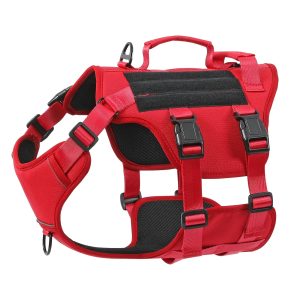
A fabric and Oxford cloth harness stays close enough that a cat cannot back out of it. Take…
Does motion sickness play a part?
For some cats, yes. Motion sickness is common in cats, especially younger ones, and it can cause drooling, lip licking, vomiting, and meowing during the journey. Unlike fear, which can be worked on with practice, motion sickness is physical and often improves as a kitten matures. You can reduce it by keeping the carrier level and secure so it does not sway, facing her forward or across the seat rather than backwards, and avoiding a heavy meal in the hour before travel. Fresh air and a steady, smooth drive help too. If she vomits or drools on every trip, mention it to your vet, because there are treatments that can help. Do not assume she is only being dramatic — nausea is genuinely unpleasant. Cats who are sick often meow in a low, repetitive way and may swallow repeatedly, so watch for those small signs as well.
Why does the carrier matter so much?
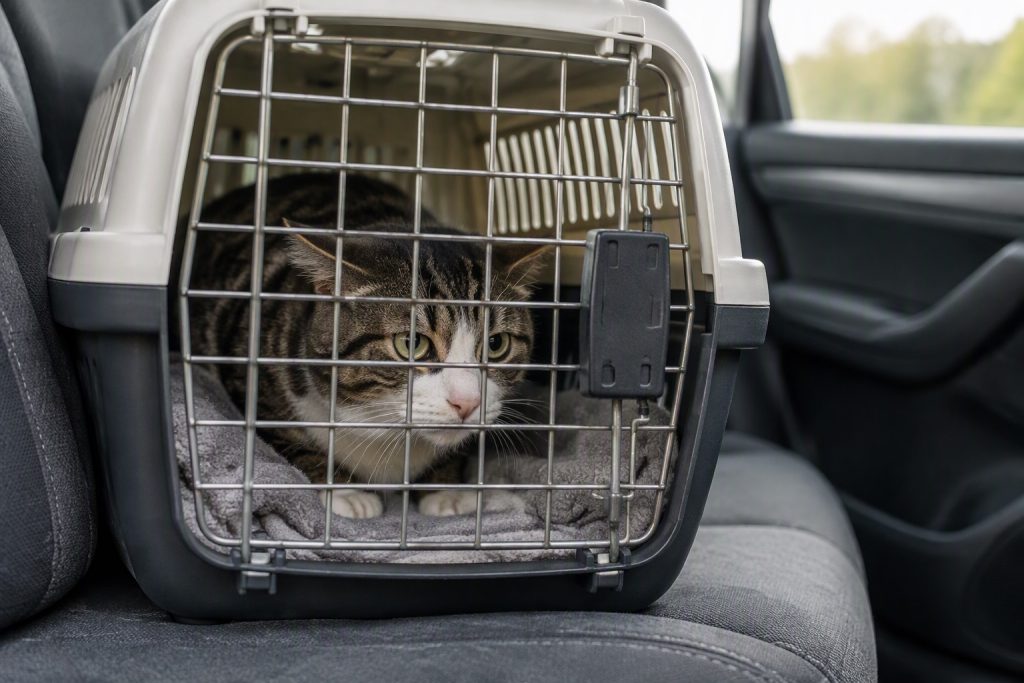
The carrier is the single biggest factor you control. A cat who travels loose in the car is in real danger and usually far more frightened, because she has nowhere to hide. A sturdy carrier that she already knows gives her a den she can retreat into, and a cover over the top blocks out the moving view that fuels anxiety. Choose one that is big enough for her to stand and turn, opens from the top for easy vet handling, and sits flat and stable on the seat. Leave it out at home permanently, with a soft blanket inside, so it becomes ordinary furniture rather than a sign that something bad is about to happen. Our article on the best carrier for vet visits covers what to look for. A carrier that already smells of home, rather than of the clinic, is far more likely to be accepted without a struggle. Practising short lifts and short drives with the carrier teaches her that it is not always followed by something unpleasant.
How can I make the car feel safer?
Small changes add up. Put the carrier on the seat with a seatbelt or strap around it so it cannot slide, and cover it with a light towel, leaving one side open for airflow. Keep the car cool and quiet, avoid loud music and sudden braking, and drive smoothly. Spray the carrier with a calming pheromone a few minutes before you leave, and add a familiar-smelling blanket or worn T-shirt. Do not let her out of the carrier while the car is moving, and do not open the door with her loose. Talk to her in a calm, low voice, and keep the first trips very short. The aim is to teach her that the car can be boring rather than terrifying, which is a much easier lesson than unlearning fear. Playing quiet music, avoiding strong air fresheners, and keeping the temperature cool all reduce the sensory load she has to cope with. Covering the carrier and securing it so it cannot slide are the two changes owners report helping most.

Bundle of multicoloured printed leashes. Made from fabric. Made for walks, travel and everyday wear. Keeps your cat…
Should I feed her before a trip?
It depends on the cat and the journey. For a cat who gets car sick, a light meal a few hours before travel, or none at all if the trip is short, reduces the chance of vomiting. Never withhold water, and for longer journeys offer small amounts. For a cat who is simply anxious rather than nauseous, a normal meal can actually help her feel settled, as long as you allow time to digest. Avoid rich treats or new food right before a drive. If you are travelling to a vet appointment that involves sedation or anaesthesia, follow your vet’s fasting instructions exactly, because those override general travel advice. When in doubt, ask the clinic what they prefer for your cat’s specific appointment. If she tends to drool or vomit, a light meal a few hours before travel is usually kinder than a full one.
When should I ask a vet about travel anxiety?
Ask for help if your cat panics on every journey, injures herself trying to escape, vomits or drools heavily, or becomes so distressed that routine vet care is impossible. These are welfare issues, not just inconveniences. Your vet can check for an underlying problem, advise on motion sickness treatment, and discuss short-term calming options for essential trips. In some cases, pre-visit medication makes the difference between a terrifying ordeal and a manageable one. Always use only what a vet prescribes, never human medication or supplements bought online without guidance. With the right plan, even a very anxious cat can travel more calmly, and you will both dread appointments far less. Even with help, some cats will always find travel unpleasant, and the goal is to make it manageable rather than perfect. Ask your vet about a pre-visit plan well before the appointment, so you have time to test what works.
Frequently asked questions
- Why does my cat scream in the car? Usually fear and stress, sometimes mixed with motion sickness. A secure, covered carrier and practice trips help most.
- Do cats get car sick? Yes, motion sickness is common, especially in younger cats, and causes drooling, lip licking, and vomiting.
- Should I let my cat out of the carrier in the car? No. It is dangerous for her and for you, and it usually increases her fear.
- How do I get my cat used to the car? Leave the carrier out at home, then take short, calm trips that do not always end at the vet.
- Can I give my cat something to calm her? Only with veterinary advice. Never use human medication or unguided supplements.