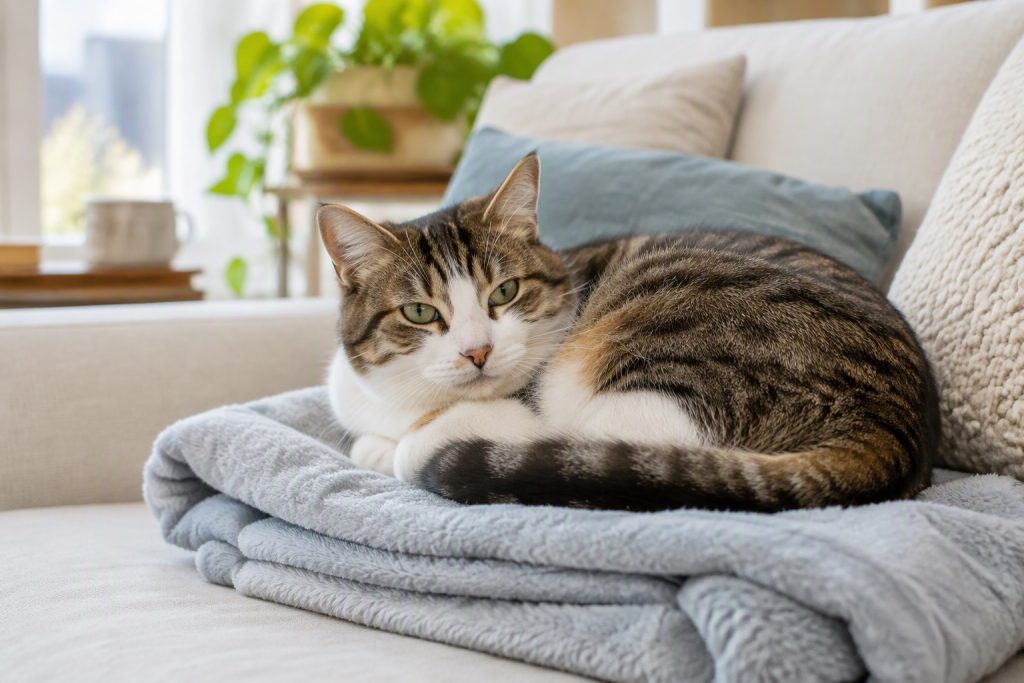
The best blanket for cats is a soft, lightweight fleece that traps warmth without being heavy, is machine-washable, and is big enough for her to knead, suckle, and burrow into. Cats are drawn to fleece because it holds warmth and smells of the household, and they often knead and purr on it. Look for one with no loose threads or tassels that could be swallowed, and wash it regularly, since a blanket is one of the most intimate items a cat uses.
- Soft fleece traps warmth and invites kneading.
- Machine-washable is essential, not optional.
- Avoid loose threads, tassels, and heavy weights.
- Big enough to burrow into, not just lie on.
What makes a blanket good for a cat?
Cats choose bedding by texture, warmth, and smell, and a good blanket hits all three. Fleece and microfibre are favourites because they feel soft against the pads and hold a cat’s body heat, creating a warm pocket that a flat cotton sheet cannot. A slightly heavier knit can also work for a cat who likes to knead, because it does not slide around. Size matters: a blanket that only covers a small pad leaves her feeling exposed, whereas a generous one lets her circle, knead, and tunnel in. Washability is critical, because blankets collect fur, dander, and saliva, and a greasy blanket quickly becomes unappealing. Neutral, unscented detergent is best, since cats dislike strong perfume. Finally, a blanket that stays put, whether tucked into a bed or draped over a chair, will be used far more than one that bunches and slides.
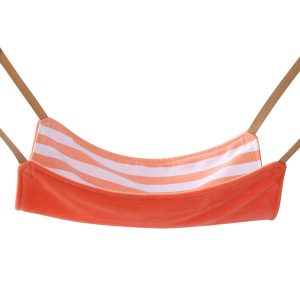
Cervical pillow, plush hammock, floor mat and paw cushion — four places to nap. Gives a cat a…
Is a cat blanket actually necessary?
Necessary is a strong word. Cats do not require a blanket the way they require food, water, and a litter tray, and many cats happily sleep on a plain surface. But a blanket does real work: it insulates against cold floors and draughts, it gives a cat something to knead and scent-mark, and it creates a portable, familiar spot that helps with settling in a new home, travelling, or visiting the vet. For older cats, a soft blanket over a firm mattress reduces pressure on stiff joints. For nervous cats, a blanket that smells of home is genuinely calming. For cats who are cold, a fleece layer under a self-warming or heated pad makes the warmth feel more comfortable. So while no cat needs one, most cats benefit, and the cost is trivial. Our article on whether cats need beds looks at the wider question of bedding.
Which materials are safest and best?
Softness and safety usually point the same way. Fleece, microfibre, and tightly knitted cotton are all good choices because they are gentle, warm, and durable. Avoid blankets with long, loose fibres, decorative tassels, pom-poms, or bead trim, since cats who suckle and chew can swallow strands and risk an intestinal obstruction. Loose threads on a worn blanket are just as dangerous, so inspect regularly and replace anything fraying. Wool can be warm but some cats react to lanolin and it felts easily, making it harder to wash. Heated blankets made for humans are not suitable for cats, because they run too hot and pose a chew and burn risk. If you want active warmth, use a pet-specific low-voltage pad under the blanket instead. Whatever you choose, check for dyes and finishes with a strong chemical smell, and wash before first use.
How do I get my cat to use a blanket?
Let her choose it rather than placing her on it. Put the blanket where she already rests, such as on her favourite chair, at the foot of your bed, or in a quiet corner, and let curiosity bring her over. Scent is the strongest lure: drape it where she sleeps for a night, or rub it gently against her bedding, so it carries familiar smells. Some cats are drawn in immediately by fleece, while others need a few days. Never wrap her in it or force her onto it, which makes the blanket feel like a trap. If she ignores it, try a different texture, since some cats prefer a firmer knit to soft fleece, or fold it to create a raised edge she can lean against. A blanket tucked into a bed, or draped over a box, often works better than a flat one on the floor. Our guide to the best cat tunnel bed covers cats who like to be enclosed.
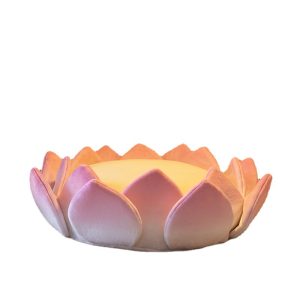
A thickened cloth bed is stepped into rather than climbed over. Try it near the window first, then…
How do I keep a cat blanket clean?
Wash it often, more often than you would guess. A blanket a cat sleeps on daily should ideally be washed weekly, or more often if she has allergies, a skin condition, or has been unwell. Shake off loose fur outside or in a bin first, then wash on a gentle, warm cycle with a mild, unscented detergent. Avoid fabric softener and strong biological detergents, which leave residues that can irritate skin and put cats off the smell. If your cat has fleas or has had an accident, use a hot wash if the fabric allows and dry thoroughly. Tumble dry on low or air-dry fully, because a damp blanket grows mould and smells. Keep two or three blankets in rotation so one is always clean and available. Replace blankets that are worn, matted, or fraying, since damaged fabric is a chewing hazard.
What about blankets for older or anxious cats?
For these cats, a blanket is more than comfort; it is part of their care. Older cats lose body fat and feel cold easily, so a warm fleece over a supportive mattress helps them stay comfortable and reduces stiffness in arthritic joints. Keep the blanket on a low, easy-to-reach surface so they do not have to jump. For anxious cats, a blanket that smells of home can be a genuine settling aid, so take one with you when travelling or visiting the vet, and place it in a carrier. Some cats also benefit from a covered or enclosed sleeping spot, which a blanket draped over a box can create. Wash senior cats’ blankets frequently, since older cats may have minor incontinence or reduced grooming, and a soiled blanket can cause skin problems. If your cat suddenly avoids a blanket she loved, consider whether pain or illness is behind the change.
Frequently asked questions
- Do cats like blankets? Most do, especially soft fleece that holds warmth and smells familiar, though a few prefer a firmer surface.
- Is it safe for a cat to suckle a blanket? Occasional kneading and suckling is usually harmless, but remove blankets with loose fibres she might swallow.
- How often should I wash a cat blanket? Weekly for a daily-use blanket, and more often if she has skin issues or has been unwell.
- Can I use a human electric blanket for my cat? No. They run too hot and pose burn and chew risks. Use a pet-specific pad instead.
- Why does my cat knead her blanket? It is a comfort behaviour rooted in kittenhood, often a sign she feels safe and relaxed.