

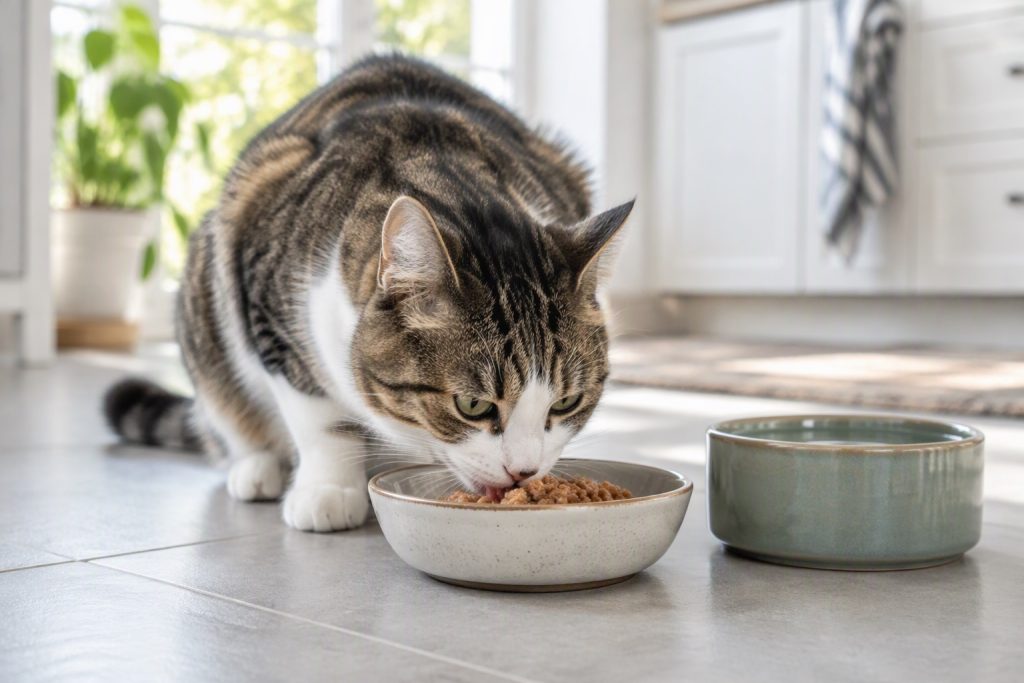
The best urinary health cat food is a moisture-rich, vet-recommended diet that produces dilute urine and controls the minerals that form crystals and stones. For cats with a history of urinary problems, a prescription urinary diet is usually the most effective choice, because these foods are formulated to specific mineral and pH targets. For prevention in a healthy cat, more wet food and more water is the foundation, and any diet change should be matched to your cat’s actual diagnosis.
- Wet food increases water intake and dilutes urine.
- Prescription urinary diets target minerals and urine pH.
- Match the diet to the specific crystals or stones involved.
- Change diets gradually and only with veterinary guidance.
How does diet affect urinary health in cats?
Diet influences urinary health in three main ways: water content, mineral levels, and urine pH. Cats evolved to get most of their water from prey, so they have a weak thirst drive and produce concentrated urine on dry food. Concentrated urine is more irritating to the bladder lining and allows minerals to crystallise, so increasing water intake is the single most useful dietary change. Mineral levels matter because struvite crystals form from magnesium, ammonium, and phosphate, while calcium oxalate stones form from calcium and oxalate, so a diet must be balanced for the specific problem. Urine pH affects which crystals can form, and prescription diets target a range that discourages them. Overall, a diet that keeps urine dilute and at the right pH reduces irritation and the risk of stones. Because the details differ by condition, the right food depends on what your vet finds, not on general advice. Our guide on urinary tract signs explains what to watch for.
Round bowl with a removable flower insert. Made from PP. Made for daily feeding and fresh water. Keeps…
Wet food or dry food for urinary health?
For most cats with urinary issues, wet food is the better default, because it delivers far more water and produces more dilute urine, which is protective. Many cats on wet food drink little and still stay well hydrated, whereas cats on dry food must drink enough to compensate, and many do not. That said, prescription urinary diets come in both wet and dry forms, and the formulation matters more than the texture when you are managing a specific condition. Some cats will only eat dry food, and a prescription dry urinary diet is still far better than a non-prescription food for a cat at risk. A practical approach for many owners is a mixed feeding plan: a prescription wet food as the main diet, with a measured amount of the matching dry food for grazing or to slow eating. Always confirm the combination with your vet, because mixing prescription and non-prescription foods can undermine the mineral balance.
What should I look for in a urinary diet?
If your cat has a diagnosed condition, look for a veterinary prescription diet designed for that specific problem, such as struvite dissolution, oxalate prevention, or general urinary care. These foods have controlled magnesium, phosphorus, calcium, and sodium levels, and a targeted urine pH, and they have been tested for the purpose. For general prevention in a healthy cat, choose a complete wet food with high moisture, moderate minerals, and good protein, and avoid supplements that add minerals indiscriminately. Check the calorie content, because weight management is part of urinary health. Look for a named meat source and a complete nutritional statement. Avoid foods marketed for urinary health that carry no evidence or veterinary formulation, since the label claim may be more about marketing than formulation. If your cat has had stones, ask your vet whether a dissolution diet or a prevention diet is appropriate, because these are not interchangeable. Never start a prescription diet without a diagnosis.
How do I switch my cat to a urinary diet?
Gradually, over seven to ten days, mixing increasing amounts of the new food into her current food so her digestive system adapts and she accepts the taste. Cats are often strongly attached to their usual food, and a sudden change can cause refusal or stomach upset. If she resists, slow the transition, hold at the current ratio for a few extra days, or warm the wet food slightly to boost aroma. In a multi-cat home, feed separately or use microchip feeders so only the right cat eats the prescription food, since it is not balanced for other cats long term. Once she is fully transitioned, do not offer other foods, treats, or scraps, because they dilute the dietary effect and can shift urine pH. Keep water available in several places and consider a fountain. Weigh her regularly and watch her urine output and litter tray habits, and report any change to your vet.
Clear glass bowl holding dry food. Made from plastic. Made for daily feeding and fresh water. Keeps food…
Does my cat need a urinary diet at all?
Not every cat does. A healthy cat with no history of urinary problems generally does well on a good-quality, moisture-rich diet with plenty of fresh water and clean litter trays, and does not need a prescription diet. A urinary diet is most valuable for cats who have had crystals, stones, bladder inflammation, or repeated infections, and for breeds or individuals at higher risk. Your vet will base the recommendation on her history, urine tests, and imaging. If your cat has had a single episode of stress-related bladder inflammation with no crystals or stones, the priority may be more water, less stress, and environmental changes rather than a prescription food. If she has had calcium oxalate stones, she may need a diet that specifically reduces oxalate risk, which is different from a struvite diet. Getting the diagnosis right is essential, because the wrong diet can make some conditions worse. Our article on blood in cat urine explains why testing matters.
What else supports urinary health besides food?
Diet is central, but environment and lifestyle matter just as much. Increase water intake with wet food, fountains, and multiple bowls, and keep water away from food and litter, since cats prefer that. Keep litter trays clean, large, uncovered, and plentiful, because tray aversion and stress are common triggers for bladder problems. Reduce household stress by keeping routines stable and providing enough resources in multi-cat homes, along with hiding and climbing spaces. Maintain a healthy weight, because obesity raises the risk, and encourage daily activity. Watch for early warning signs such as more frequent trips to the tray, smaller clumps, straining, or licking the genital area, and act quickly rather than waiting. If your cat has recurring problems, ask your vet about a monitoring plan with periodic urine tests. With diet, hydration, low stress, and prompt attention, many cats stay comfortable and avoid repeat episodes.
Frequently asked questions
- What is the best food for a cat with urinary problems? A vet-recommended prescription diet matched to her diagnosis, usually wet, with plenty of water.
- Is wet food better for urinary health? Usually yes, because it increases water intake and dilutes urine.
- Can urinary food dissolve stones? Some prescription diets can dissolve struvite stones, but not all types. Your vet will advise.
- Can I feed a urinary diet to all my cats? No. Prescription diets are formulated for the affected cat and are not balanced for others long term.
- Do healthy cats need urinary food? Not usually. Good hydration, clean trays, and low stress are the main preventive measures.





