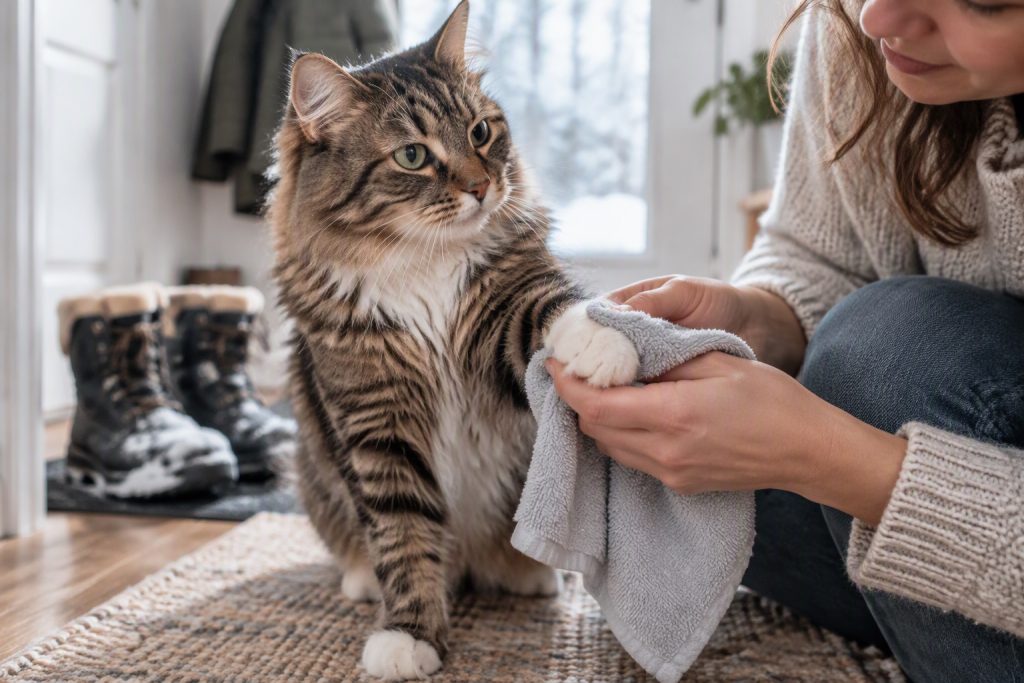
Winter is hard on cat paws because cold air, dry indoor heating, grit, and salt all strip the pads of moisture and can cause painful cracks. Good paw care in winter means checking the pads regularly, keeping the fur between the toes trimmed, protecting paws from de-icing salt, and moisturising dry pads with a cat-safe balm. Most winter paw problems are manageable at home, but deep cracks, bleeding, or limping need veterinary attention.
- Check pads weekly for cracks, cuts, and dryness.
- Rinse off salt and grit after any outdoor time.
- Trim the fur between the toes to reduce ice balls.
- Use a cat-safe balm, never human hand cream.
Why do cat paws suffer in winter?
Paw pads are thick, tough skin designed for grip and shock absorption, but they are not built for the combination of freezing air and dry indoor heat. Cold reduces blood flow to the extremities, which leaves the pads more vulnerable, and low humidity indoors pulls moisture out of the skin. Add the grit and salt spread on pavements and driveways, which are caustic and abrasive, and the pads can become dry, cracked, and sore. Cats who go outside can also collect ice balls between their toes, where snow compacts around the fur, and these pull on the skin and make walking painful. Indoor cats are not immune, because heated homes are dry, and a cat who sits near a radiator or a fire loses moisture from her pads. Older cats and those with existing skin conditions are most at risk. Prevention is far easier than treating cracked pads.
Nail scissors, bath brush, de-shedding glove and a drying towel — the full groom in one box. Cuts…
What do healthy and unhealthy paws look like?
A healthy pad is smooth, slightly pliable, and even in colour, with no deep grooves, cracks, or swelling. Signs of trouble include visible splits in the pad, flaking or peeling skin, redness between the toes, swelling, a waxy or greasy feel, or a strong smell, which can indicate infection. Bleeding, a torn pad, or a cat who flinches when you touch her foot needs prompt attention. Look for hair loss around the paw, which can indicate over-grooming or irritation, and check for foreign objects such as grit, thorns, or small stones lodged between the pads. Also watch how she walks: limping, licking a paw constantly, or refusing to jump up can all point to paw pain. Cold-weather damage often starts as small cracks that worsen if ignored, so catching it early keeps it minor. Our guide on cat paw pad cracks covers treatment in detail.
How do I protect paws from salt and grit?
The simplest protection is to limit exposure and clean up afterwards. If your cat goes outside, rinse or wipe her paws with a warm, damp cloth as soon as she comes in, paying attention to the spaces between the toes and pads, because salt and grit are irritants that she will otherwise lick off. Dry the paws thoroughly, since damp paws in cold air chap faster. Where you can, use pet-safe de-icing products on your own paths instead of rock salt, and avoid walking her on heavily salted routes. A little protective balm applied before she goes out can form a barrier, though many cats dislike the feel, so test it first. If she is an indoor cat, her main risks are dry indoor air and hot surfaces, so keep her away from radiators and open fires. Never use human ice-melt chemicals around a cat’s outdoor area.
Which balms and products are safe for cat paws?
Only use products formulated for cats, because human creams and lotions often contain ingredients that are harmful if licked off, including some essential oils, zinc, and certain preservatives. A cat-safe paw balm based on simple, food-grade ingredients such as shea or coconut butter is generally suitable, but check the label and ask your vet if unsure. Apply a small amount, rub it in well, and distract her for a few minutes so it absorbs before she grooms. Never use a medicated or steroid cream unless your vet has prescribed it for a specific diagnosis. For dry skin more broadly, supporting hydration from the inside helps, so offer wet food and plenty of fresh water. If the paws are cracked or bleeding, a plain protective balm is not enough; they need veterinary assessment. Our article on dry skin treatment for cats covers the wider picture.
Brush designed to lift loose hair out of a cat's coat — the hair has to go somewhere…
What about ice balls and matted fur between the toes?
Long-haired cats and cats with tufty toe fur are prone to ice balls forming between the pads, which are painful and can force an odd gait. The fix is prevention: keep the fur between the toes trimmed short with small, rounded scissors, taking care not to cut the skin, or ask a groomer to do it. If ice balls do form, do not pull them off, which tears the skin; instead, hold the paw in a bowl of lukewarm water or press a warm, damp cloth against it until the ice melts, then dry the paw thoroughly. Never use hot water, which can scald already-chilled skin. Check the paws after every outing in snow. Indoor cats rarely get ice balls, but a cat who steps onto a wet balcony or a snowy doorstep can. If the skin looks red or raw after thawing, keep it clean and watch for infection.
When should I see a vet about my cat’s paws?
See a vet if a crack is deep, bleeding, or does not improve with basic care within a few days. Seek prompt attention for a torn or partially detached pad, obvious swelling, discharge, a foul smell, or a paw that is hot to the touch, all of which suggest infection. Limping, holding a paw up, refusing to walk, or constant licking and chewing of one foot needs assessment, because paw pain is often the first sign of an injury or a foreign object. Cats with underlying conditions such as diabetes, allergies, or immune problems may develop paw issues that will not resolve without treatment. Also be alert to symmetrical hair loss or crusting around the paws, which can indicate an allergy or an autoimmune problem. For anything persistent, or if your cat seems unwell alongside the paw problem, speak to your vet rather than continuing home care.
Frequently asked questions
- Can I use Vaseline on my cat’s paws? It is generally low-risk if licked in small amounts, but a cat-specific balm is a better, safer choice.
- How often should I check my cat’s paws in winter? Weekly for indoor cats, and after every outing for cats who go outside.
- Why is my cat licking her paws more in winter? Often dryness, irritation from salt, or pain. Persistent licking needs a vet check.
- Should I put boots on my cat? Most cats refuse them, and they can cause distress. Rinsing paws after outings is usually enough.
- Are cracked paw pads serious? Minor cracks can heal with care, but deep or bleeding cracks need veterinary attention.