

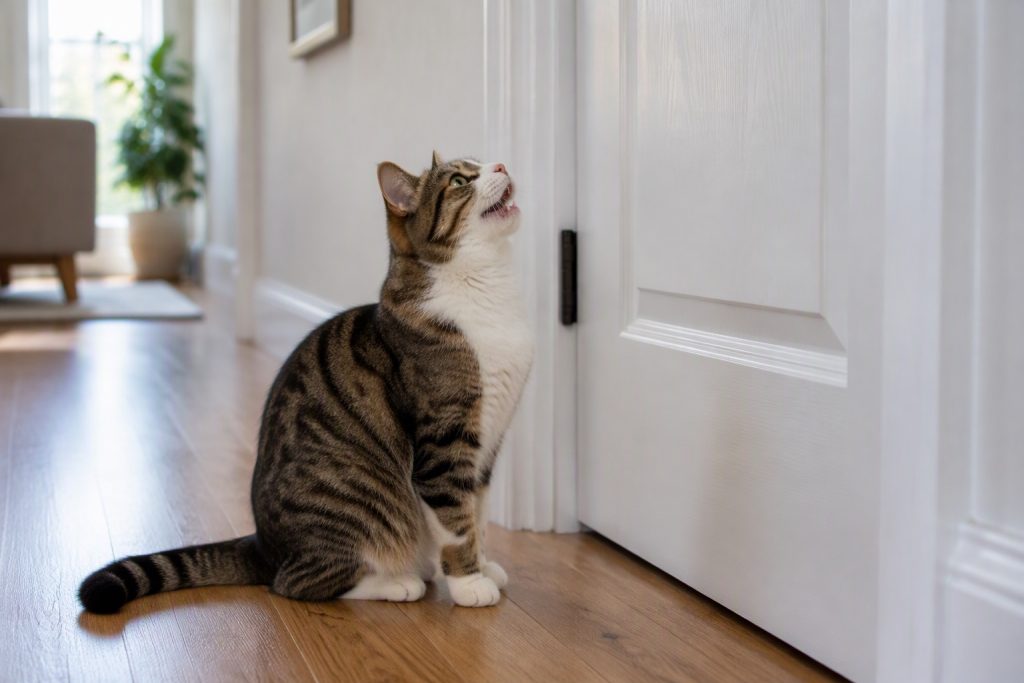
Your cat meows at the door because she wants something on the other side, or because she has learned that meowing there gets a reaction. The most common reasons are wanting to go out or come in, wanting attention or food, feeling bored or lonely, or hearing or smelling another cat outside. Occasionally it signals stress or a health problem. The fix depends on the cause, and the key is to reward the behaviour you want and stop rewarding the meowing itself.
- Most door meowing is a request: out, in, food, or attention.
- She repeats it because it has worked before.
- Another cat outside can trigger it, even unseen.
- Reward quiet, never open the door mid-meow.
Why does my cat meow at the door?
Cats meow almost exclusively to communicate with people, so a cat at the door is usually asking for something specific. If she is an indoor cat, she may want to go out, or she may simply want the door open so she can see and smell the world. If she is an outdoor cat, she may want to come in for food, warmth, or company. Meowing at the door also happens when a cat is bored, when she wants you to follow her, or when she associates the door with a routine, such as you returning from work. Cats hear and smell other cats outside, and an intruder in her territory can cause anxious meowing and marking. Sometimes the behaviour is a leftover from kittenhood, when meowing brought her mother’s attention, and it persists because it reliably brings yours. Understanding which request she is making is the first step to changing the pattern.

A teaser wand built to turn a few minutes into a full hunt — a cat needs to…
Why does she keep doing it even after I let her out?
Because the behaviour has been reinforced. Every time meowing results in the door opening, the cat learns that meowing works, and she will do it again, more loudly and more often. This is classic accidental training, and it is the most common reason door meowing escalates. A cat who goes out, changes her mind, and wants straight back in is not being difficult; she is exploring, and the door is the tool. If you open the door at all during the meowing, even to tell her off, you have rewarded the behaviour, because she got attention. The only way to reduce it is to stop the payoff: wait for a moment of quiet before opening the door, and never open it while she is vocalising. Consistency across everyone in the house is essential, because one person who gives in resets the whole pattern. Our article on why cats meow so much covers other triggers.
Is door meowing a sign of stress or illness?
Sometimes. A cat who meows at the door persistently, especially at night, may be stressed by something outside, such as a neighbourhood cat, a fox, or a new dog next door. Stress-related meowing often comes with other signs: spraying, over-grooming, hiding, or pacing. Older cats may meow at doors because of confusion or because failing senses make the home feel unfamiliar, which can point to cognitive change or an underlying condition such as high blood pressure or thyroid disease. A cat in pain may also become more vocal, and a sudden increase in meowing at any age warrants a health check, especially if it comes with weight loss, increased drinking, or changes in appetite. Deaf cats often meow loudly because they cannot hear themselves. If the meowing is new, intense, or accompanied by other changes, speak to your vet before assuming it is behavioural.
How do I stop the door meowing?
Change the consequence, not the cat. Decide on a clear rule, such as the door is opened only when she is quiet, and apply it every time. When she meows, wait calmly until she pauses, then open the door, so quiet is what gets rewarded. If you do not want her going out at all, ignore the meowing completely and make the area less rewarding by blocking her view of the door and giving her something better to do elsewhere. Increase play and enrichment so boredom is less of a driver, and set a predictable routine for meals and attention, since cats meow less when life is predictable. Do not shout, spray water, or chase her, because these add stress and attention, both of which can worsen the behaviour. Be patient, because an established habit takes weeks to fade. Our guide on stopping a cat scratching the door covers the physical side.

Rainbow-striped plush cylinder. Keeps a bored indoor cat busy and burns off restless energy. Made from fleece and…
How do I keep her away from the door altogether?
Redirect and enrich. Place a comfortable bed, a scratching post, or a window perch on the opposite side of the room so the door is no longer the most interesting thing in it. Use a puzzle feeder or a treat ball to occupy her when you know she is likely to start, such as early evening or when you leave. Provide vertical space, since cats who can climb and watch feel more secure and are less likely to fixate on one exit. If another cat outside is the trigger, use motion-activated deterrents in the garden, block the view with frosted film, and ensure your own cat has enough resources indoors so she does not feel she must defend the boundary. If she is an indoor cat who genuinely wants outdoor access, consider a secure catio or harness walks, which meet the need safely. Consistency and enrichment solve most cases without punishment.
When should I see a vet about door meowing?
See your vet if the meowing is new, sudden, or excessive, especially in an older cat, because conditions such as hyperthyroidism, high blood pressure, dental pain, and cognitive dysfunction can all increase vocalisation. A cat who meows at the door all night, who seems disoriented, or who has stopped using the litter tray normally needs assessment. Watch for weight loss, increased appetite or thirst, poor grooming, or changes in sleep and activity, and report them. If the meowing comes with pacing, hiding, or aggression, stress or pain may be involved. A vet can rule out medical causes and advise on behavioural support. Do not assume a sudden change is just a habit, because cats rarely change their vocal behaviour for no reason. For anything persistent, or if you are unsure whether it is behavioural or medical, get professional advice.
Frequently asked questions
- Why does my cat meow at the door at night? Often for attention, access, or because another cat is outside. It persists when meowing gets a reaction.
- Should I open the door when my cat meows? Not while she is meowing. Wait for quiet so you reward calm, not noise.
- Will ignoring the meowing work? Yes, if everyone is consistent and you provide enrichment, though it takes weeks to fade.
- Can another cat outside cause this? Yes. Even an unseen cat’s scent can trigger anxious meowing and marking.
- Is door meowing ever a health problem? Sometimes. New or excessive vocalisation, especially in older cats, should be checked by a vet.





