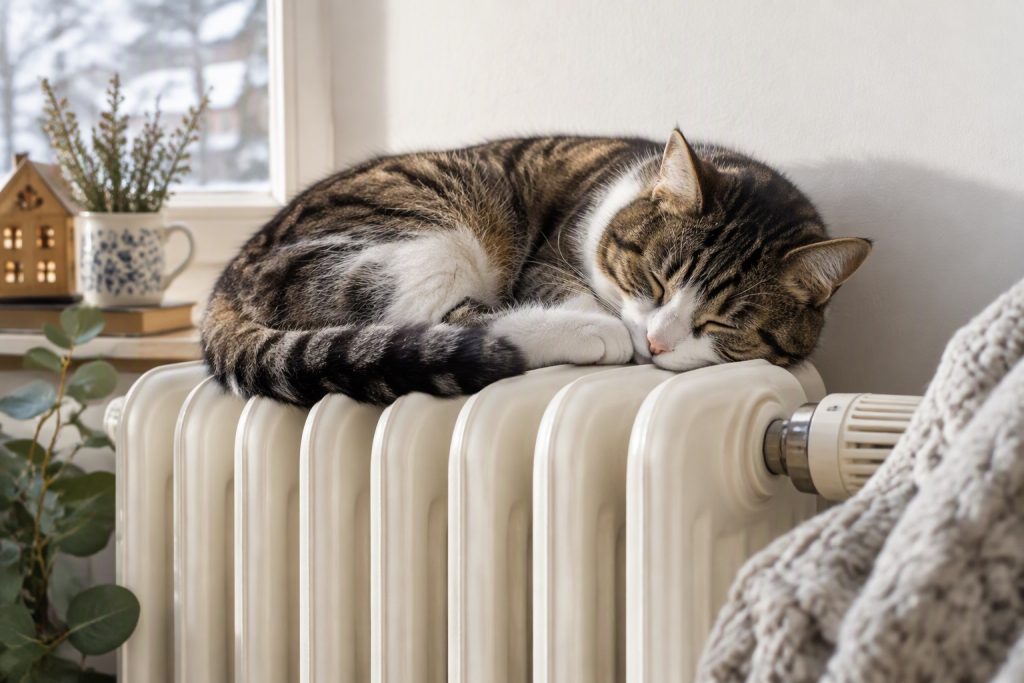
Your cat sleeps on the radiator because it is the warmest, most stable heat source in the house, and cats are drawn to warmth the way they are drawn to a sunbeam. A radiator holds steady radiant heat for hours, and a cat’s normal body temperature sits a couple of degrees above ours, so a surface that feels pleasantly warm to you can feel like a perfect nest to her. It is usually completely normal behaviour, not a sign of illness, though there are a few situations where it is worth a second look.
- Radiators offer steady radiant warmth that cats instinctively seek.
- Cats run warmer than humans and lose heat quickly when resting.
- It is normal unless she presses hard against hot metal.
- Offer a heated bed nearby as a safer alternative.
Why does my cat sleep on the radiator?
Cats are small mammals with a high surface-area-to-volume ratio, which means they cool down faster than we do when they sit still. A resting cat’s body temperature can dip slightly during sleep, and her instincts push her toward any surface that replaces that lost heat with the least effort. A radiator is ideal because it delivers radiant warmth directly to the fur and skin without needing to warm the whole room. Unlike a warm patch of floor, a radiator keeps producing heat for hours, so she never has to move to stay comfortable. This behaviour traces back to wild ancestry, where cats sought out warm rocks, sun-warmed ground, and sheltered spots. Modern central heating simply gives her a version of that same reliable warmth, and she will choose it over a cold bed almost every time.

Cervical pillow, plush hammock, floor mat and paw cushion — four places to nap. Gives a cat a…
Is sleeping on a radiator safe for my cat?
For most cats, resting near or on a radiator is safe, because they are good at judging heat and will move if a surface becomes uncomfortable. Problems arise with very hot surfaces, especially older metal radiators that run at high temperatures, or with underfloor and oil-filled heaters that hold heat long after they are switched off. A cat who presses her belly or paws hard against scorching metal can suffer contact burns, and the signs are easy to miss under thick fur: reddened skin, hair loss in a patch, or flinching when the area is touched. Cats who are elderly, unwell, or on medication may also be slower to react to heat. If your radiator gets genuinely hot to your hand, fit a cover or radiator shelf so she can enjoy the warmth without direct contact, and check her skin occasionally.
Why does she pick the radiator over her own bed?
It usually comes down to temperature and trust. A conventional bed insulates but does not generate heat, so it only feels warm once her own body has warmed the filling, which takes time. A radiator is warm immediately and stays warm, and it is often in a spot where she can watch a doorway or a window at the same time. Cats also build habits around successful choices: if the radiator felt good once, she will return to it. Some cats simply prefer a hard, warm surface to a soft, cool one, which is why a firm heated pad can win her over where a plush bed failed. If you would rather she slept somewhere else, place a heated bed or a blanket-topped mat close to the radiator so she gets the same warmth in a safer, more comfortable form.
Does sleeping on a radiator mean my cat is ill?
Usually not, but heat-seeking can occasionally signal something worth checking. Cats who feel cold all the time, who seek warmth obsessively, who lose weight despite eating well, or who seem restless and unsettled may be dealing with a health issue such as an overactive thyroid, dental pain, or age-related changes in circulation. A cat who suddenly abandons all her usual spots for the radiator, or who seems weak or unsteady, deserves a vet visit. The same is true if she is panting, drinking more than usual, or hiding. For anything persistent, speak to your vet rather than assuming it is just a winter habit. Our guide on keeping a cat cool in summer covers the opposite problem, when warmth becomes a risk rather than a comfort.
A thickened cloth bed is stepped into rather than climbed over. Try it near the window first, then…
What is a safer warm spot for my cat?
A self-warming or low-voltage heated bed placed near, but not on, the radiator gives her the comfort she is chasing without the burn risk. Choose one with a chew-resistant cord and, ideally, a low-voltage or microwave-free design so there is no mains electricity running to a pad she may knead. A simple alternative is a covered radiator shelf or a fleece blanket folded over a chair beside the radiator, which captures the rising warm air. Cats also love a window perch with a soft pad in a sunny spot, because solar warmth is gentle and self-limiting. Whichever you choose, place it where she can still see the room, since a warm spot that feels exposed will be rejected. Wash the cover regularly, because warm bedding collects dander and hair quickly.
How do I stop her blocking the heat or getting burned?
If she is sprawling across the radiator and the room never warms up, or if you are worried about burns, a few simple changes help. Fit a radiator cover or a shelf that lets warm air rise while keeping metal out of reach. Keep the room’s general temperature steady with a thermostat rather than blasting one radiator, since a consistent background warmth reduces the urge to press against a hot surface. Provide two or three alternative warm spots so she is not competing for one. Never drape a thick blanket directly over a hot radiator, because trapped heat can damage the unit and increase burn risk. If she still insists on the bare metal, check the surface temperature with your hand, and if it is too hot to hold comfortably, it is too hot for her. Our article on whether cats need beds explains why a proper bed is still worth offering.
Frequently asked questions
- Is it bad if my cat sleeps on the radiator all day? Not by itself, but all-day heat-seeking plus lethargy, weight loss, or restlessness is worth a vet check.
- Can a cat burn herself on a radiator? Yes, if the metal is hot enough to be uncomfortable to your hand. Fit a cover or shelf to be safe.
- Why does she prefer the radiator to her expensive bed? Beds insulate but do not generate heat. A heated pad or a blanket near the radiator usually wins her over.
- Should I turn the heating off to stop her? No. Keep the room steadily warm and offer safer warm spots instead of removing warmth altogether.
- Do older cats sleep on radiators more? Often yes, because circulation and temperature regulation change with age. Offer gentle, low-level warmth and a vet check if it is new.