

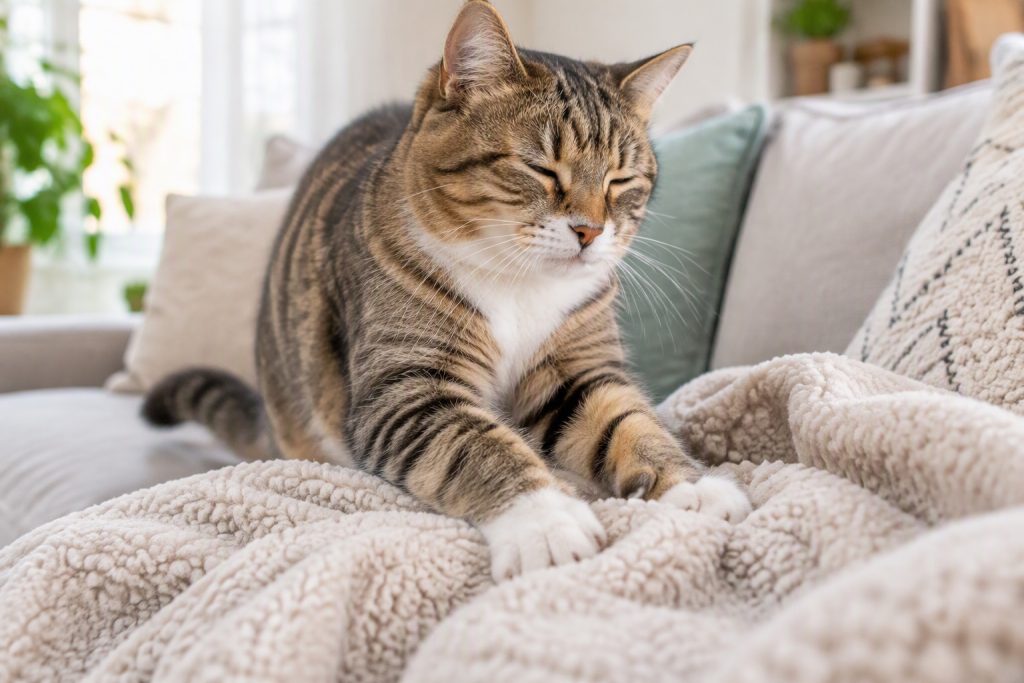
Cats knead blankets because the behaviour is left over from kittenhood, when kneading a mother’s belly stimulated milk flow. In adult cats, the same motion usually signals deep comfort and contentment, and it is often paired with purring, drooling, and slow blinks. It can also be a self-soothing behaviour when a cat is settling down to rest. Kneading is normal and affectionate. You only need to manage it if the claws hurt, if your cat is kneading obsessively out of stress, or if she is kneading a painful area of her body.
- It is a leftover kitten nursing instinct.
- In adults it usually means comfort and trust.
- It often comes with purring and drooling.
- Trim claws if the kneading hurts you.
Why does my cat knead blankets?
Kneading, sometimes called making biscuits, is one of the few behaviours that carries over almost unchanged from kittenhood into adult life. When a kitten nurses, she presses her paws rhythmically against her mother’s belly to stimulate milk flow, and that motion becomes wired to feelings of warmth, safety, and full bellies. Adult cats knead soft, yielding surfaces, such as blankets, cushions, and laps, because the texture and resistance resemble that early experience, and the behaviour reconnects them to a state of deep contentment. This is why kneading is so often accompanied by purring, drooling, and a faraway expression. It is a genuine sign that your cat feels safe with you. Some cats also knead as part of settling down to sleep, using the motion the way a person might fluff a pillow, to make a comfortable spot. Our article on why cats knead explores the behaviour further.
Rainbow-striped plush cylinder. Keeps a bored indoor cat busy and burns off restless energy. Made from fleece and…
Is kneading always a sign of happiness?
Usually, but not exclusively. Most kneading is contentment, especially when it comes with purring, relaxed ears, and a soft body. However, cats also knead as a self-soothing behaviour when they are anxious, uncomfortable, or settling after stress, so a cat who kneads a lot at the vet, after a change at home, or when left alone may be comforting herself rather than expressing joy. The context tells you which it is. Watch her body: relaxed and floppy with a soft expression is contentment, while tense, with flattened ears or a lashing tail, suggests stress. Some cats knead when they are in pain or uncomfortable, particularly around the abdomen, so if the kneading is new, intense, or directed at her own belly, it is worth a vet check. In most cases, though, kneading is exactly what it looks like: a happy cat enjoying a safe moment.
Why does my cat drool when she kneads?
Drooling during kneading is common and usually harmless. It happens for the same reason kneading does: the behaviour taps into the kitten nursing reflex, and nursing kittens drool as they feed. When an adult cat enters that relaxed, regressed state, the salivation response can come along with it. The drooling is a sign of deep relaxation rather than a problem, and it often intensifies if your cat is kneading a particularly soft blanket or your lap. That said, drooling can occasionally indicate nausea, dental pain, or an oral problem, so watch for other signs. If the drooling happens outside kneading, is accompanied by bad breath, difficulty eating, vomiting, or a change in behaviour, it is worth a vet visit. If she only drools while happily kneading and purring, it is simply part of her comfort ritual.
How do I stop kneading from hurting me?
You do not need to stop the behaviour, only protect yourself. The simplest fix is to keep your cat’s claws trimmed every couple of weeks, which blunts the tips and dramatically reduces the sting. If she kneads on your lap, place a thick blanket or a cushion between her and your legs, so she kneads the fabric instead of you. You can also redirect her onto a dedicated soft blanket, which many cats accept happily, especially if it is a fabric they like. Never punish her or push her away harshly for kneading, because it is an expression of trust and punishing it damages the bond. If she grips with her claws, gently unhook them rather than yanking away. If the kneading is on a sore or injured part of your body, simply guide her to a different spot. Our article on why cats sleep on your chest explains the related habit of settling on you.
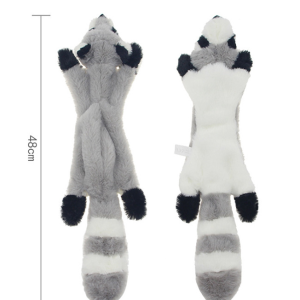
Made from cloth Key features 【Name】 : cat simulation animal sound shell toy[Fill]: No fill, 2 built-in BB…
Do certain cats knead more than others?
Yes, and the differences are mostly individual rather than breed-specific. Cats who were weaned early, or who were separated from their mother young, sometimes knead more intensely, because the nursing behaviour was interrupted. Cats who are particularly bonded to their owners often knead more, since the behaviour is directed at trusted individuals. Some cats knead only on soft fabric, others only on laps, and some on both. Age matters too: many cats knead more as they get older and more settled, and some senior cats knead as part of a comfort routine. Anxiety can also increase kneading, so a cat who suddenly kneads much more than usual, especially with other stress signs, may need reassurance or a vet check. Whatever the pattern, kneading is a normal part of cat behaviour and varies widely between individuals.
When should kneading worry me?
It rarely needs to, but there are a few situations worth noting. If the kneading is directed at her own belly or flank with intensity, or if she seems uncomfortable when you touch her abdomen, see a vet, because it can indicate pain. If the kneading is new and comes with drooling, loss of appetite, weight loss, or changes in behaviour, that combination deserves a check. If she kneads obsessively, to the point where she cannot settle, it can signal stress or an underlying medical issue, and again a vet visit is sensible. Finally, if the kneading is causing skin damage to you or to her own paws, trim her claws and consider a protective layer. In the vast majority of cases, though, kneading is a harmless, endearing behaviour that reflects a cat who feels completely at ease, and the best response is to enjoy it while protecting your lap.
Frequently asked questions
- Why does my cat knead me with her claws out? She is expressing comfort and trust. Trim her claws and place a blanket between you to reduce the sting.
- Is kneading a sign my cat was taken from her mother too early? Sometimes. Early-weaned cats often knead more, but it can also simply be a comfort habit.
- Why does my cat drool while kneading? It is linked to the kitten nursing reflex and usually means deep relaxation.
- Should I stop my cat from kneading? No. It is normal and affectionate. Protect yourself rather than stopping the behaviour.
- Can kneading mean my cat is in pain? Rarely, but kneading at her own belly with signs of discomfort should be checked by a vet.





