The best cat litter box liner is one that fits the box snugly without slipping, is thick enough to resist claw punctures, and does not trap liquid in folds underneath. Many cats do fine with a liner, and many will not tolerate one at all. If your cat scratches the liner, pulls it up, or avoids the box after you add one, the honest answer is that a liner is not right for her and a good scooping routine plus the right litter will serve you better.
- Fit and thickness matter more than brand.
- Thin liners tear and leak into the box.
- Some cats refuse liners outright.
- A liner never replaces daily scooping.
Do cat litter box liners actually help?
They help with one specific problem: making a full box change faster and keeping the plastic base clean. If you use clumping litter and do a full change weekly, a liner lets you lift the whole contents out in one go, which is genuinely convenient and reduces how often you have to scrub the box. That is the honest benefit. What liners do not do is control odour, and they can make it worse, because urine that runs down the side of the liner sits in a pocket between the liner and the box, where it is hard to see and hard to clean. They also do nothing about the smell of the litter itself. Our guide to cat litter box smell covers the changes that actually reduce odour. If your only goal is a fresher box, a liner is the wrong tool. If your goal is faster cleaning, a liner can genuinely help.
Tray, scoop, anti-splash mat and clumping litter. The whole litter corner, one box. Keeps the litter area contained,…
What should I look for in a liner?
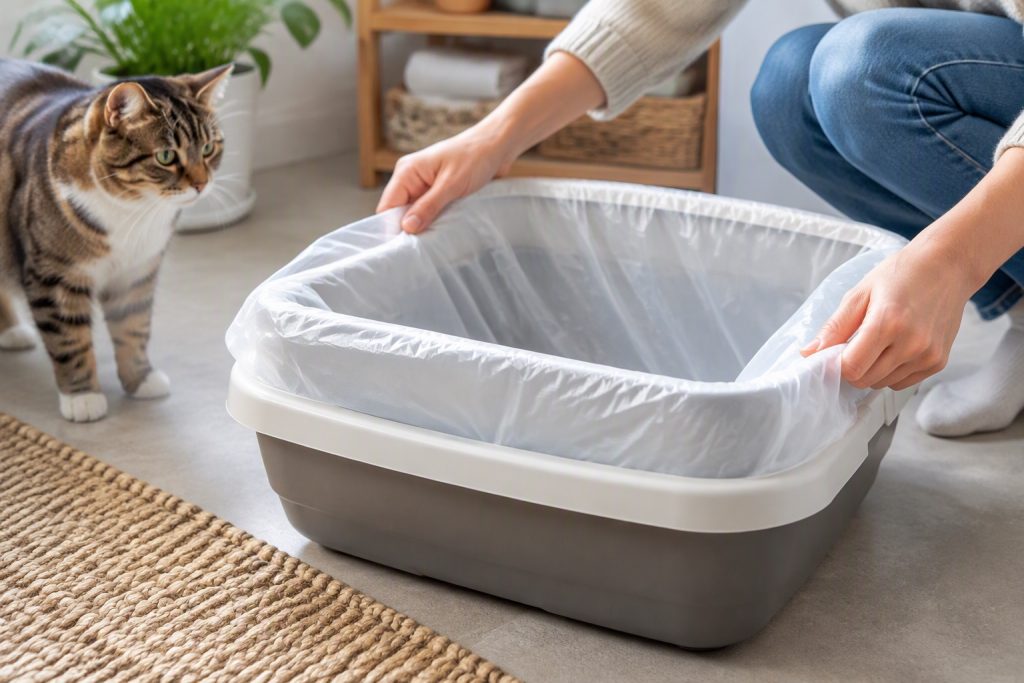
Four things. First, fit: a liner should match your box’s dimensions, including depth, because a liner that is too small will not reach the bottom and one that is too large bunches into folds where urine collects. Second, thickness: thin liners tear on the first scratch, and a torn liner leaks and defeats the purpose, so look for a heavier gauge material. Third, an elasticated edge, which holds the liner in place around the rim and stops it sliding down when your cat digs. Fourth, a material that is not strongly scented, because a perfumed liner adds an odour that many cats dislike. If you can find a liner sized specifically for your box model, that is better than a generic one. Drawstring liners are convenient for removal but can sag while in use. Whatever you choose, buy one box first and test it before committing to a multipack.
Why do some cats hate liners?
For several very good reasons. The plastic surface moves and rustles underfoot, which feels unstable to a cat who is already in a vulnerable position. Claws catch in the plastic, and a cat whose claw snags on the liner while digging may become anxious about the box. Liners can develop a static charge that makes litter cling, and the smell of new plastic is off-putting to a cat with a sensitive nose. Most importantly, a liner changes the digging experience: cats dig to bury, and a slippery plastic base with a shifting sheet over it does not behave like litter on a solid surface. Any of these can be enough to make a cat toilet beside the box instead of in it. If your cat has ever used the floor next to the box, remove the liner first and see whether the behaviour stops.
How do I use a liner correctly?
Install it properly and it will work for the cats who accept it. Unfold the liner fully, press it into the box so it follows the base and corners without large folds, and secure the edge over the rim so it cannot slide. Add enough litter, usually around five to seven centimetres deep, because a thin layer lets claws reach the plastic and tear it. Scoop daily as normal, and when you do a full change, gather the liner edges, lift it out, and dispose of it with the litter inside. Wash the box underneath before fitting a new liner, since a liner over a dirty box just seals the smell in. Never reuse a liner; once it has been soiled it will hold odour. And check the liner weekly for tears, because a small tear becomes a leak quickly. Our article on litter box placement is worth reading alongside this, since a box in a bad spot will cause problems no liner can fix.
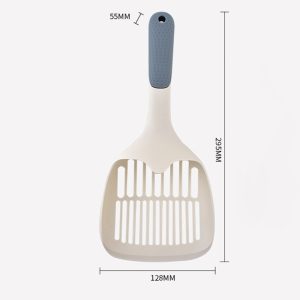
A large plastic scoop takes the daily pass, which is the one that keeps the smell down. Keep…
Are liners safe and environmentally sensible?
Safety-wise, a liner is safe as long as your cat does not chew or eat it, which is rare but possible. Watch for a cat who shreds the liner, since swallowed plastic is a genuine hazard. For kittens especially, skip the liner until she has stopped chewing everything. Environmentally, most liners are single-use plastic, which means a liner adds waste to every full box change. If that concerns you, the alternatives are to wash the box base instead, or to use a liner made from a compostable or recycled material, though these tend to be thinner and tear more easily. A reasonable middle path is to use a liner only if your cat tolerates it and you are changing the whole box frequently, and to skip it if you are scooping daily and doing full changes less often. Convenience and waste are a genuine trade-off here, and either choice is defensible.
What if my cat refuses to use a lined box?
Take the liner out. A cat refusing a box is a much bigger problem than a dirty box base, because box avoidance can become a lasting habit and may spread to other surfaces. Remove the liner, wash the box thoroughly, and refill with the same litter as before. If the avoidance continues after the liner is gone, consider other causes: the box may be too small, too dirty, in a bad location, or the litter may have changed. A sudden change in toileting habits also warrants a veterinary check, because urinary and digestive conditions look exactly like box refusal and are far more serious. If you liked the convenience of a liner, an alternative is to keep two identical boxes and rotate them, so one can be washed while the other is in use, which gives you the same time saving without asking your cat to accept plastic under her paws.
Frequently asked questions
- Do litter box liners reduce smell? No. They can trap urine between the liner and the box, which makes odour worse.
- How thick should a litter box liner be? Thick enough that claws do not tear it on the first dig. Thin liners leak.
- Why does my cat scratch the liner out of the box? The plastic feels unstable and claws snag on it, so she digs it up. Remove it.
- Can I reuse a litter box liner? No. Once soiled it holds odour and weakens, so replace it with each full change.
- What is the alternative to a liner? Scoop daily, do full changes on schedule, and wash the box base with mild soap.