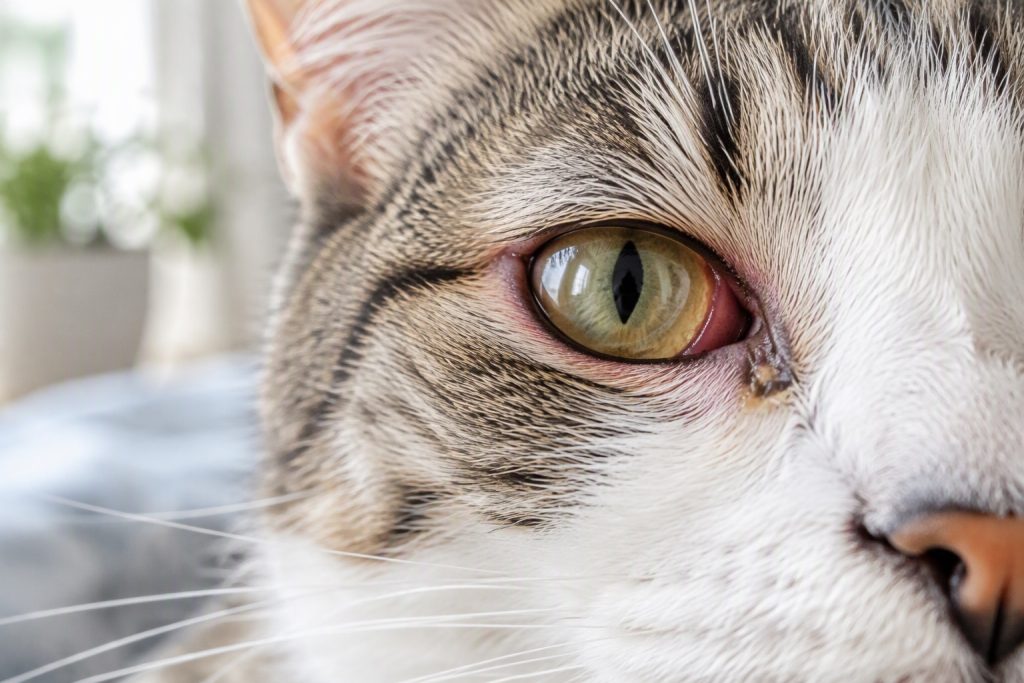
The signs of an eye infection in cats are redness of the white of the eye, discharge that ranges from clear to thick yellow or green, squinting or holding the eye shut, excessive blinking, pawing at the face, and sometimes swelling around the lids. A mild watery eye can clear on its own, but thick discharge, a closed eye, or cloudiness of the eye itself needs veterinary care, because some eye conditions can damage vision permanently if left untreated.
- Redness, discharge, and squinting are the main signs.
- Thick yellow or green discharge means see a vet.
- A closed or cloudy eye is urgent.
- Never use human eye drops on a cat.
What are the early signs of a cat eye infection?
The earliest sign is usually a change in how the eye looks and how your cat uses it. The white of the eye becomes bloodshot, the third eyelid, a pale membrane in the inner corner, may slide across and stay visible, and the eye may water more than usual. Your cat may blink more often, squint slightly, or rub the eye with a paw or against furniture. Discharge appears next, starting clear and watery and often turning thicker and more coloured as the infection develops. Some cats become light-sensitive and prefer to face away from windows. Because cats hide discomfort, subtle squinting is easy to miss, especially in a long-haired cat whose facial expression is harder to read. Our article on cat eye discharge explains how to interpret the colour and consistency of what you see, which is one of the most useful clues you can give your vet.

A breathable plastic grooming tool takes the undercoat first, which is where matting starts. Try it after a…
What causes eye infections in cats?
Several things cause similar signs. Viral infections, particularly feline herpesvirus and calicivirus, are common and often affect both eyes, frequently alongside sneezing and a runny nose. Bacteria can cause infection on their own or, more often, take advantage of an eye already weakened by a virus. Chlamydia and mycoplasma are bacterial causes seen especially in multi-cat households and in kittens. Physical irritants such as dust, shampoo, or a foreign body like a grass seed can inflame the eye and lead to secondary infection. Allergies can cause watery, itchy eyes without infection. More seriously, conditions such as corneal ulcers, uveitis, glaucoma, and entropion, where the eyelid rolls inward and lashes rub the eye, can all look like a simple infection but require very different treatment. Our guide to cat sneezing covers the upper respiratory picture, which often accompanies eye problems.
How can I tell a mild eye issue from something serious?
Severity comes down to four things: the eye itself, the discharge, the pain, and the pattern. A mild issue is usually clear or very slightly cloudy discharge from one eye, with a cat who is otherwise bright, eating, and playful, and the eye stays open. Something more serious is likely if the eye is held closed, if the surface looks cloudy or has a visible spot, if the discharge is thick and yellow or green, if the eye is clearly painful, or if both eyes are affected at once. Also take it seriously if the problem keeps returning, if your cat is sneezing and off her food, or if a kitten is affected. Cloudiness of the cornea, a visible defect on the surface, a pupil that looks different from the other side, or a bulging eye are all urgent. When in doubt, treat any eye problem as significant, because vision is not something to gamble with.
What should I do at home while arranging a vet visit?
Keep the eye clean and stop there. Use a clean, damp cotton pad moistened with cooled boiled water to gently wipe away discharge from the inner corner outward, using a fresh pad for each eye, and do not rub the eyeball itself. Never use human eye drops, including artificial tears, antibiotic drops, or anything containing a decongestant, because some are harmful to cats and many are simply inappropriate. Do not use a home saline solution unless your vet has advised it. Keep your cat indoors and away from dusty or smoky environments, and reduce bright light by drawing curtains. If she is pawing at the eye, ask your vet about a cone, because self-trauma can turn a minor problem into an ulcer. Note when the signs started, which eye is affected, and what the discharge looks like, and take a photo in good light. Then get an appointment rather than waiting to see whether it resolves.
Nail scissors, bath brush, de-shedding glove and a drying towel — the full groom in one box. Cuts…
How are cat eye infections treated?
Treatment depends entirely on the cause, which is why a diagnosis matters. Viral infections are usually managed supportively, since antibiotics do not affect viruses, and your vet may prescribe an antiviral if the eye is badly affected. Bacterial infections are treated with antibiotic drops or ointment, usually applied several times a day, and it is essential to complete the full course even after the eye looks better. Corneal ulcers need specific treatment and sometimes medication to dilate the pupil and reduce pain, and some antibiotic ointments are contraindicated in ulcers, which is a strong reason not to self-prescribe. Uveitis and glaucoma need urgent management to protect vision. Your vet may use a fluorescein stain to check for ulcers and a swab to identify bacteria. Follow-up matters: if the eye is not improving within a couple of days of starting treatment, or is getting worse, tell your vet promptly rather than continuing and hoping.
Can I prevent eye problems in my cat?
You can reduce the risk, though not eliminate it. Keep your cat up to date on vaccinations, since the viral causes of eye disease are covered by the core vaccine schedule. Your vet can explain what is covered and how often boosters are needed. Manage stress in multi-cat homes, because herpesvirus in particular reactivates when a cat is stressed, and stress is a common trigger for recurrent eye flare-ups. Keep the environment clean and dust-free, avoid smoke and strong aerosols, and be careful with shampoos and cleaning sprays around the face. Check your cat’s eyes weekly as part of a general health check, and act early on any squinting or discharge. For cats with a history of recurrent herpes-related eye problems, your vet may recommend a long-term management plan, and sticking to it is what keeps the episodes shorter and less frequent.
Frequently asked questions
- Can a cat eye infection clear up on its own? Mild viral cases can, but thick discharge, squinting, or cloudiness needs a vet.
- Is cat eye discharge contagious to other cats? Viral and some bacterial causes are contagious, so isolate a newly affected cat from others.
- Can I use human eye drops on my cat? No. Many human eye products are harmful to cats, so only use what your vet prescribes.
- When is an eye problem an emergency? A closed eye, cloudy cornea, bulging eye, or sudden vision loss needs same-day care.
- Why does my cat keep getting eye infections? Recurrent episodes often relate to herpesvirus, stress, or an anatomical problem, so ask your vet about a plan.