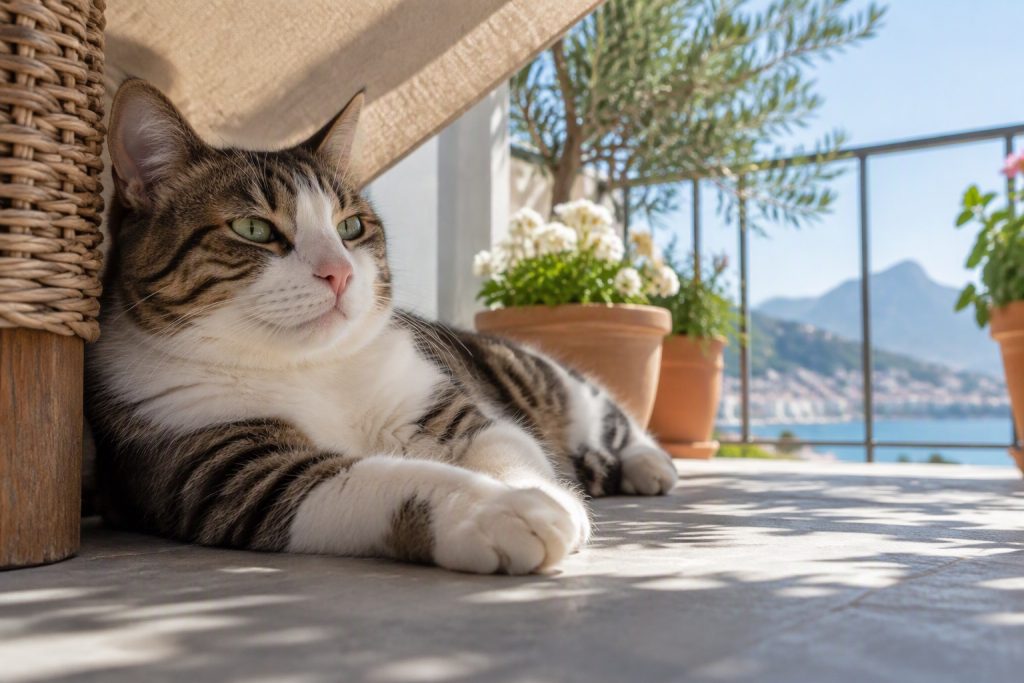
Cats can get sunburn, especially on light-coloured or thinly haired areas such as the ears, nose, and eyelids, and repeated sun damage can lead to skin cancer over time. Protect her by limiting sun exposure during the hottest hours, providing shade, and asking your vet about pet-safe sunscreen for high-risk areas. If you notice crusty, red, or changing skin, or a sore that will not heal, see your vet promptly.
- Light-coloured cats are most at risk.
- Ears, nose, and eyelids burn first.
- Limit sun during the hottest hours.
- Ask your vet before using any sunscreen.
Can cats get sunburn?
Yes, cats can and do get sunburn. Their fur provides some protection, but it is not a complete barrier, and areas with thin or light-coloured hair are vulnerable. The most commonly affected spots are the ear tips, the nose, the eyelids, and around the lips, because the hair there is sparse and the skin is pale in many cats. Sunburn in cats looks like it does in people: the skin becomes red, tender, and sometimes flaky or crusty, and it may be painful to touch. Cats often lick and scratch at sunburnt areas, which can worsen the damage. Because cats spend a lot of time sunbathing, especially near windows and in warm spots, repeated exposure adds up. The bigger concern is not a single mild burn but the cumulative effect of years of sun exposure, which can damage the skin and lead to serious problems later, including a type of skin cancer that is common on the ears and nose of pale cats. Our article on cat dandruff covers another skin concern that can be mistaken for sun damage.
Nail scissors, bath brush, de-shedding glove and a drying towel — the full groom in one box. Cuts…
Which cats are most at risk of sunburn?
Any cat can burn, but some are far more vulnerable. Cats with white or light-coloured fur, and those with white patches on the ears, nose, or face, have less pigment to protect the skin, and they burn much more easily. Breeds with thin or sparse coats, such as Sphynx, Cornish Rex, and Devon Rex, are at high risk because they have little fur to block the sun. Cats who have been clipped short for the summer, or who have lost fur due to a skin condition or over-grooming, are also exposed. Indoor cats are not immune, because ultraviolet light passes through glass, so a cat who naps in a sunny window for hours can still burn, and window glass actually blocks the tanning part of sunlight while letting the burning rays through. Senior cats, cats with thin coats, and those who spend long hours in sunny spots should all be watched closely. Our article on managing shedding explains how coat condition affects skin protection.
How do I protect my cat from the sun?
Protection is mostly about limiting exposure and providing shade. Encourage your cat to rest away from direct sun during the hottest part of the day, roughly late morning to mid-afternoon, by closing curtains or blinds on sun-facing windows and offering shaded, cool resting spots. If she goes outdoors in a secure enclosure or on a harness, make sure there is deep shade available at all times, and bring her inside during peak hours. Avoid clipping her coat short in summer unless a vet or groomer advises it, because the coat insulates against heat and blocks ultraviolet light. If your cat has pale ears or a thin coat, your vet may recommend a pet-safe sunscreen for the vulnerable areas. Reapply it if she is outdoors for a while, and keep her from licking it off, though pet formulations are designed to be safe if some is ingested. Never rely on sunscreen alone; shade and reduced exposure are the first line of defence.
Is sunscreen safe for cats?
Not all sunscreen is safe for cats, so you should never use a human product on your cat without veterinary advice. Many human sunscreens contain ingredients that are toxic if licked off, including zinc oxide and certain chemical filters, and cats groom themselves constantly, so anything applied to their skin is likely to be ingested. Some also contain salicylates or fragrances that can cause irritation or poisoning. If your vet recommends sun protection, ask specifically for a pet-safe sunscreen, which is formulated to be non-toxic if a cat licks it. Even then, apply it sparingly to the vulnerable areas, such as the ear tips and nose, and avoid the eyes and mouth. Test a small area first to check for irritation. For many cats, the safer approach is simply to keep them out of direct sun and provide shade, rather than relying on a topical product. Never apply sunscreen to broken or irritated skin, and stop if you see any redness or reaction.

Brush designed to lift loose hair out of a cat's coat — the hair has to go somewhere…
What does sun damage look like on a cat?
Sun damage on a cat usually appears on the ears, nose, and eyelids, and it can range from mild to serious. Early signs include redness, dryness, flaking, and crusting of the skin, which may look like dandruff or a persistent scab. As damage accumulates, the skin may thicken, become scaly, and develop sores that do not heal. You might notice your cat scratching or rubbing the area, or flinching when it is touched. Over time, sun damage can progress to actinic keratosis, a pre-cancerous change, and eventually to squamous cell carcinoma, a skin cancer that is relatively common on the ears and nose of pale cats. This is why any sore, scab, or lump on a sun-exposed area that persists for more than a few weeks should be examined by a vet. Caught early, these changes are far easier to treat. Regular checks of your cat’s ears, nose, and eyelids, especially if she is light-coloured, help you spot changes before they become serious.
When should I see a vet about skin changes?
See your vet if you notice any sore, scab, crust, or lump on your cat’s skin that does not heal within a few weeks, especially on the ears, nose, or eyelids. You should also book a visit if an area of skin is red, thickened, or scaly and is not improving, if your cat is scratching or rubbing a spot persistently, or if you see any change in the size, colour, or texture of a lesion. Bleeding, discharge, or a bad smell from a skin sore are all reasons to go promptly. Cats with pale ears or thin coats deserve extra attention, and an annual skin check at your vet visit is worthwhile. Because sun damage and skin cancer are much easier to treat when caught early, do not wait to see if a lesion resolves on its own. Your vet can examine the area, take a sample if needed, and advise on treatment or removal. Protecting your cat from the sun, and checking her skin regularly, are the two habits that make the biggest difference.
Frequently asked questions
- Can indoor cats get sunburn? Yes. Ultraviolet light passes through glass, so a cat who naps in a sunny window can burn.
- Which cats get sunburn most easily? White and light-coloured cats, and thin-coated breeds such as Sphynx and Rex cats.
- Is human sunscreen safe for cats? No. Many contain zinc oxide and other ingredients that are toxic if licked. Ask your vet for a pet-safe option.
- What does sunburn look like on a cat’s ears? Red, tender, flaky, or crusty skin, often with scabs, on the ear tips and edges.
- Can sun damage cause cancer in cats? Yes. Repeated sun exposure can lead to skin cancer, most often on the ears and nose of pale cats.