

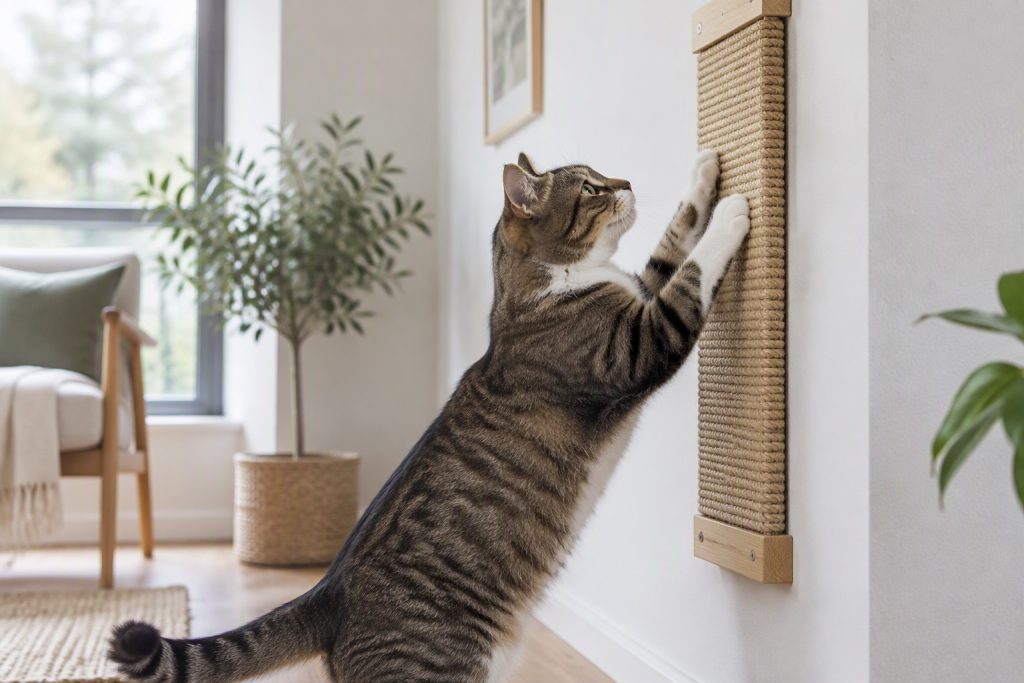
Cats scratch walls to maintain their claws, mark territory, and stretch their bodies, and a wall is often simply the nearest vertical surface. The behaviour is normal and instinctive; the problem is usually that the wrong surface is available or the right one is missing. Providing sturdy scratchers where she already scratches, and protecting the wall while she learns, redirects the habit far more effectively than punishment, which only causes stress and rarely works.
- Scratching marks territory and sheds claw husks.
- Walls get used when a better surface is missing.
- Place a sturdy scratcher where she scratches now.
- Never punish; redirect and reward instead.
Why does my cat scratch the walls?
Scratching is one of the most natural cat behaviours, and it serves three purposes at once. It removes the dead outer husk of the claw, keeping the claws sharp and healthy. It stretches the muscles of the shoulders, back, and legs, which feels good and keeps her flexible. And it leaves both a visual mark and a scent signature from glands in her paws, which tells other cats she has been there. A wall is a convenient vertical surface, often in a doorway or corridor where cats naturally pass and want to leave a message. Cats also scratch when they are excited, frustrated, or stretching after a nap. So wall scratching is not naughtiness; it is a cat meeting a genuine physical and emotional need. The question is not how to stop her scratching, but how to give her somewhere better to do it.
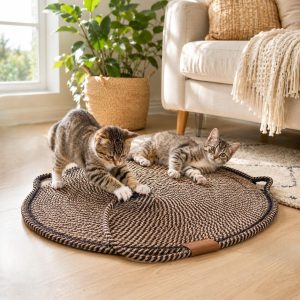
Woven cotton rope pad in an oval shape. Made from mixed materials. Made for scratching and stretching. Gives…
Is wall scratching a behaviour problem?
On its own, no. Scratching is normal, and a cat who scratches is not misbehaving. It only becomes a problem for people because it damages the wall, and sometimes the situation behind it is worth understanding. A cat who suddenly scratches a wall in one spot, especially near a doorway, may be marking territory because of stress, such as a new pet, a new baby, a move, or a neighbourhood cat visible through a window. Scratching can also increase when a cat is bored or under-stimulated, because it is a way to burn off restless energy. If the scratching is new and intense, look at what has changed in her world before assuming it is simply habit. The fix usually combines a proper scratching surface with attention to whatever is driving the behaviour. Our article on why cats scratch the sofa covers the same instincts in a different setting.
Why does my cat scratch one particular wall?
Cats are creatures of habit, and once they have scratched a spot, they often return to it, partly because their own scent mark is already there. The wall she chose may sit on a route she uses daily, near a window where she watches the outside, or close to where she sleeps. The texture matters too: wallpaper, plaster, or the edge of a door frame may offer a grip she finds satisfying, more so than a smooth painted surface. Sometimes the spot is simply where she stretches when she wakes. Height is another factor, because cats like to stretch up to their full length, and a low or wobbly scratcher will not tempt a cat who wants to reach high. Understanding why she picked that exact wall helps you choose a replacement: put a tall, stable scratcher right next to the spot, at the same height and angle, and she is far more likely to switch. Our guide to where to put a scratching post explains positioning.
How do I stop my cat scratching walls?
The reliable method is redirection, not punishment. Punishing a cat for scratching, whether by shouting, spraying water, or tapping her, does not teach her what to do instead and usually just makes her scratch when you are not looking, or damages your relationship. Instead, place a sturdy, tall scratching post right beside the wall she uses, so the acceptable option is easier to reach than the wall. Make the scratcher attractive by rubbing it with catnip or dangling a toy on it, and reward her with praise or a treat whenever she uses it. While she is learning, protect the wall with a temporary barrier such as double-sided tape, plastic sheeting, or a sheet of cardboard, since cats dislike the feel of sticky surfaces. Trim her claws regularly to reduce damage, and give her plenty of play and climbing outlets. Consistency over a few weeks usually shifts the habit for good.
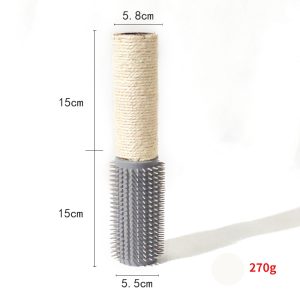
Sisal-wrapped post with a grooming brush base. Made from mixed materials. Made for scratching and stretching. Gives claws…
Where should I put a scratching post?
Location is everything. Put a scratcher where your cat already scratches, not in a corner you chose for tidiness. Because scratching is often about marking the places she uses, a post near a doorway, beside her sleeping spot, or next to a window she watches will be used far more than one hidden away. Provide several posts around the home so she always has one nearby, and choose at least one that is tall enough for her to stretch to full height, which is usually around the length of her body plus an arm’s reach. Vertical posts suit cats who stretch upward, while horizontal or angled scratchers suit cats who like to dig their claws in while lying down. Stability matters: a post that wobbles will be rejected. Anchor it firmly, or choose a heavy, wide-based design. Sisal rope and corrugated cardboard are the textures most cats accept. Placement really is the deciding factor, so it is worth getting it right.
What if my cat scratches the wall at night?
Night-time scratching is usually about energy and routine. Cats are naturally most active at dawn and dusk, and a cat who has slept all day may wake you with scratching because she has nothing else to do. The solution is to shift her activity into the evening. A good interactive play session before bed, ending with a small meal, mimics the hunt-eat-groom-sleep cycle and helps her settle. Puzzle feeders and a perch by a window can also give her something to do if she wakes. Make sure the scratching post is close to wherever she scratches at night, and consider leaving a favourite toy near it. If she scratches the bedroom door specifically, that is often a demand for attention, so responding by opening the door teaches her to keep doing it. Ignore the scratching, provide alternatives, and address her daytime boredom, and the night-time habit usually fades. If the behaviour is new and intense, or comes with other stress signs, mention it to your vet.
Frequently asked questions
- Why does my cat scratch walls instead of her post? The post may be in the wrong place, too short, or unstable. Put a tall, sturdy post where she scratches.
- Does punishing a cat stop scratching? No. It causes stress and hides the behaviour. Redirect to a proper scratcher instead.
- Will declawing stop wall scratching? Declawing is an amputation and is not recommended. It causes pain and other problems.
- How tall should a scratching post be? Tall enough for your cat to stretch fully upright, usually about the length of her body plus her reach.
- My cat scratches one wall corner. Why? It is likely a scent-marking spot on a route she uses. Place a scratcher right beside it.





