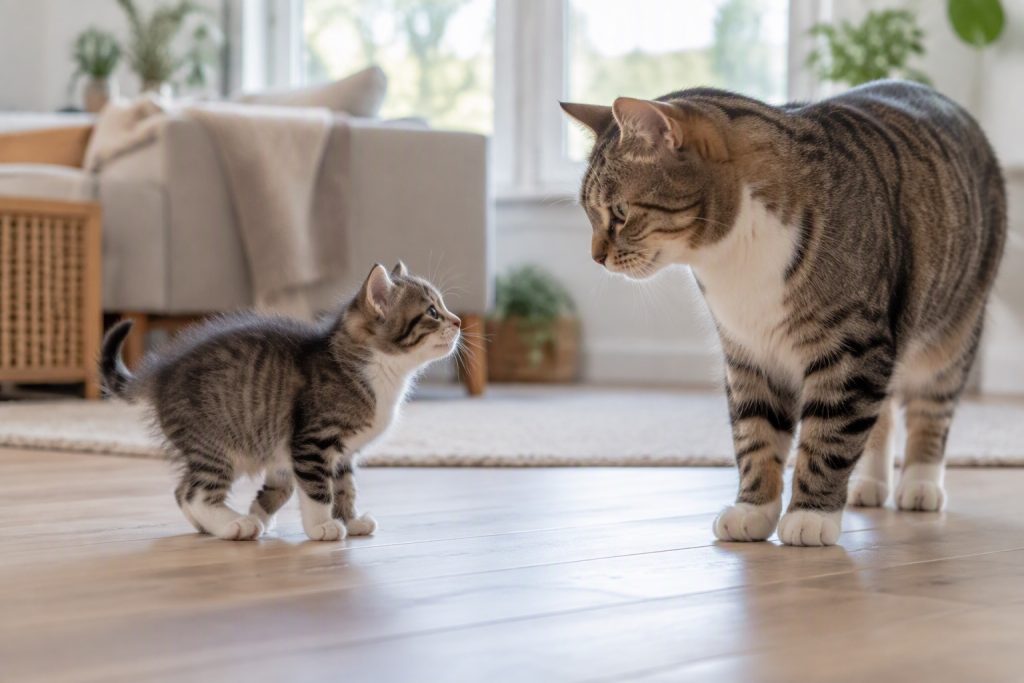
Introduce a kitten to an older cat slowly, through scent and sound first, then sight, then short supervised meetings. Rushing a face-to-face greeting is the most common mistake. Done patiently, most pairs settle within a few weeks, though some cats take months and a few simply tolerate each other rather than becoming friends.
- Start with scent swapping, not face-to-face.
- Keep them in separate rooms at first.
- Go at the older cat’s pace, not the kitten’s.
- Separate resources prevent competition.
How do I introduce a kitten to an older cat?
Set up a separate room for the kitten with her own food, water, litter box, and bed, and let the resident cat keep the run of the rest of the home. For the first few days, keep them apart and swap scents by rubbing a cloth on one cat and letting the other smell it, and by exchanging bedding. Then move to feeding them on opposite sides of a closed door, gradually closer, so they associate each other’s smell with something good. Next, allow brief visual contact through a cracked door or a baby gate, and only then short, supervised meetings with plenty of escape routes. Watch the older cat’s body language and slow down if she is tense. Our guide to introducing a second cat walks through the same steps in more depth. The golden rule is to move at the older cat’s pace, because rushing a resident cat is the fastest way to create lasting resentment.

Tray, scoop, anti-splash mat and clumping litter. The whole litter corner, one box. Keeps the litter area contained,…
How long does the introduction take?
There is no fixed timeline, because it depends on the personalities involved, and the resident cat sets the pace. A confident, sociable older cat may accept a kitten within a week or two, while a nervous or territorial cat may need several months of gradual progress. Kittens are often easier to introduce than adult cats because they are small, playful, and less threatening, and many older cats tolerate them more readily for that reason. The key is not to measure success by days but by whether the older cat is becoming more relaxed: eating normally, using the litter box, and not hiding. If she regresses, step back a stage and go slower. Forcing the process to move faster usually sets you back further, so patience is genuinely the fastest route. The first weeks set the tone, so our guide to the first 30 days with a rescue cat is useful for the kitten’s settling-in period too.
What do I need before the kitten comes home?
Prepare the space before the kitten arrives, so neither cat is stressed by last-minute changes. You need a separate room the kitten can live in for the first days, with her own litter box, food and water bowls, a bed, and a few toys. Add a baby gate or a screen door for visual introductions, and separate feeding stations for each cat. Pheromone diffusers can help some cats feel calmer during the transition. Make sure the resident cat has extra vertical space, hiding spots, and high perches, because being able to get away from the kitten is essential for her sense of control. Have two of everything: two litter boxes, two feeding areas, and plenty of resting places. Feeding stations, water bowls, and beds should all be duplicated and separated so neither cat has to share under pressure. Preparation prevents the resource competition that fuels most conflict between cats, and it lets you move through the introduction calmly.
How do I handle the first face-to-face meeting?
Keep the first face-to-face meeting short, supervised, and easy to end. Choose a neutral room rather than the older cat’s core territory, and make sure both cats have clear exits so neither feels trapped. Have a towel or a treat ready to distract them, and stay calm and quiet. Let them approach each other at their own pace, and do not force interaction or pick either cat up. A little hissing, a swat, or a stare is normal during early meetings and not a sign of failure. Break up the session after a few minutes, before either cat becomes overwhelmed, and reward calm behaviour with treats. End on a positive note, then repeat and gradually lengthen the meetings over the following days. The goal of early meetings is neutrality, not friendship, so low-key tolerance is a good result at this stage.

Cervical pillow, plush hammock, floor mat and paw cushion — four places to nap. Gives a cat a…
What if the older cat hisses or refuses to accept the kitten?
Hissing, growling, and swatting are normal communication, not necessarily rejection, and they usually fade as the cats work out their relationship. What matters is whether the older cat is coping overall: if she is still eating, using the litter box, and relaxing in her usual spots, the introduction is progressing even if she hisses. If she hides constantly, stops eating, or becomes aggressive, slow the process down and give her more separate space and more of your attention. Never punish either cat for hissing, because that adds stress to an already tense situation. Some pairs never become affectionate and simply coexist peacefully, which is a perfectly good outcome. Only if one cat is genuinely distressed or at risk of injury should you consult a vet or behaviourist, and occasionally a pair is simply not compatible. If progress stalls for weeks, a behaviourist can help identify what is blocking the relationship and suggest a fresh approach.
How do I manage food, litter, and resources during the introduction?
Separate resources are the foundation of a peaceful multi-cat home, and they matter most during an introduction. Give each cat her own food and water bowls in different locations, so neither has to eat near the other or guard a shared bowl. Provide at least one litter box per cat plus one extra, placed in separate spots with clear escape routes, because a kitten blocked from a box by the resident cat will toilet elsewhere. Offer multiple beds, perches, and hiding places so the older cat can rest undisturbed and the kitten has her own safe spots. Feed them on opposite sides of a door early on to build positive associations, then move the bowls gradually closer as they relax. Plenty of vertical space helps enormously, since height lets a cat withdraw without conflict. Generous, well-spaced resources reduce the competition that causes most friction between cats.
Frequently asked questions
- How long should I keep a new kitten separate? At least several days, and often longer. Move through scent, sight, and supervised meetings at the older cat’s pace.
- Will my older cat hurt the kitten? Serious injury is uncommon, but supervise early meetings and give both cats escape routes so no one feels cornered.
- My older cat is hissing at the kitten. Is that bad? Hissing is normal communication during introductions and usually fades as the cats adjust, provided the older cat is otherwise coping well.
- Should I let them sleep together? Not until they are reliably relaxed around each other. Keep them separate at night during the early stages.
- Can two cats who dislike each other learn to get along? Many learn to coexist peacefully even without becoming friends, which is a healthy and common outcome.