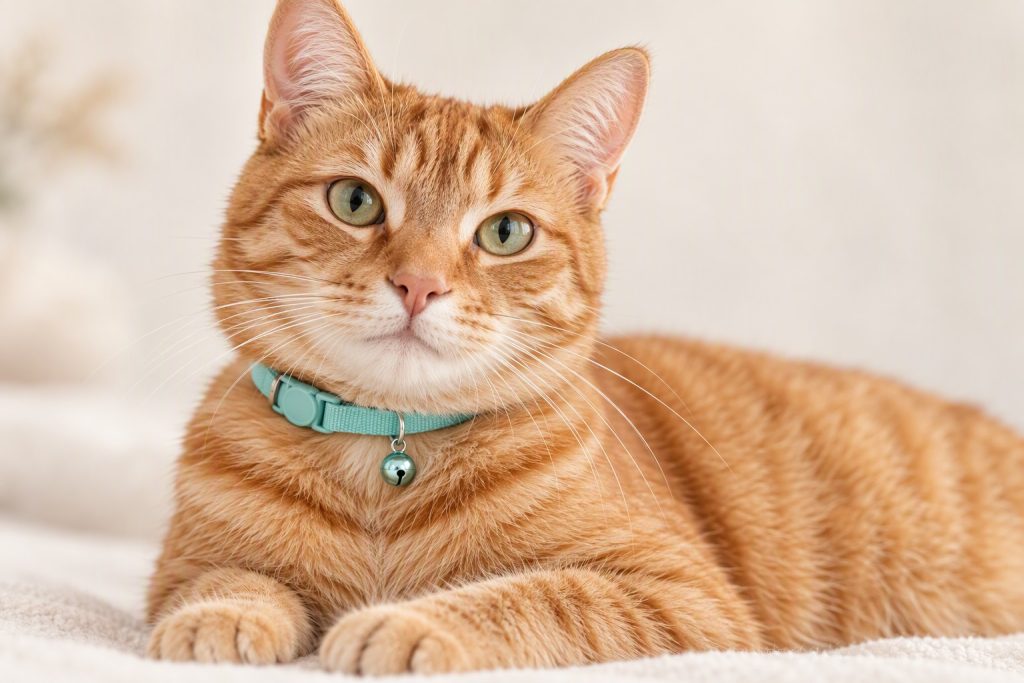
A breakaway collar is a cat collar fitted with a safety buckle that releases under pressure, so if the collar catches on a branch, fence, or furniture, it pops open instead of strangling your cat. Every outdoor-access or unsupervised cat should wear one, because a standard buckle collar can hang her fatally in seconds.
- A breakaway buckle releases under pressure so a caught collar cannot strangle your cat.
- Any cat with outdoor access, or alone at home, should wear one for safety.
- Always attach an ID tag, because a safe collar is also your best lost-cat insurance.
- Pair it with carrier training so travel is safe and identifiable.
What exactly makes a collar “breakaway”?
A breakaway collar uses a buckle engineered to spring open when pulled with a certain force—typically the weight of a struggling cat—while staying closed during normal wear. The mechanism is the whole point: a fixed buckle collar that snags on a tree branch, a fence post, or even a heating grate can tighten and hang a cat, and cats explore with their heads, so snags are common. Our harness training guide is for walks, but the collar is the everyday safeguard. A quality breakaway collar balances two needs: it must stay on through brushing and play, yet give way the moment it is caught. Cheap imitations with weak springs fall off constantly, while stiff ones fail to release; choose a reputable design with an adjustable release tension so the collar protects rather than either disappearing or, worse, failing to open when a life depends on it in a real snag situation outdoors.
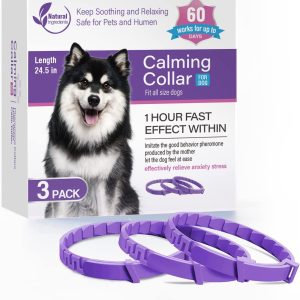
Secure, adjustable fit. Comfortable for daily wear/travel.
Why does a normal collar put a cat at risk?
The danger is a phenomenon owners rarely witness but rescuers see often: a cat jumps a fence, the collar catches, and the cat’s own weight or a panic thrash tightens it around the neck. Standard buckles do not yield, so the result can be a fatal hanging or a deep wound from struggling. Even indoors, a collar caught on a cabinet handle or a cat-tree bracket can injure a cat who cannot free herself. A cat already stressed in a carrier is more likely to thrash, which is why safe gear matters during travel too. A breakaway design eliminates this class of accident entirely by design. The myth that “my cat stays inside so she is safe” ignores that indoor cats escape, and that furniture and fixtures snag collars just as readily as branches. The small cost of a proper breakaway collar is the cheapest life insurance you can buy for a curious, climbing animal who investigates the world with her head first.
Should an indoor-only cat wear one?
Yes, because indoor cats escape through open doors, windows, and during moves far more often than owners expect, and a lost cat without ID is far harder to recover. A breakaway collar with a tag is the fastest way for a finder to return her. A harness is better for controlled outings, but a collar is the always-on backup. A lightweight breakaway collar worn at home means that if she bolts out during a carrier scramble, described in our carrier guide, she is identifiable. The risk of an indoor cat wearing one is essentially zero thanks to the release buckle, while the upside—reunion if she gets out—is enormous. Fit it snugly enough that it cannot snag on her own jaw but with the two-finger slack that prevents choking, and check the fit as she grows or gains weight through the year.
How do I fit a breakaway collar correctly?
The fit rule is two fingers between collar and neck: snug enough that it cannot slip over her head or catch on her lower jaw, yet loose enough to breathe and turn. Too tight risks irritation and defeats the safety purpose; too loose lets it snag or come off in normal play. A calm cat is easier to fit, so handle paws and neck gently. A collar with an adjustable slide and a quick-release buckle lets you fine-tune as needed. Always attach the ID tag on a separate small split ring so the buckle mechanism stays unobstructed—a dangling heavy tag can sometimes interfere with release, though reputable designs account for this. Check the fit weekly, because kittens grow fast and adults fluctuate with weight. A properly fitted breakaway collar stays on through daily life but yields instantly under a dangerous snag, which is exactly the balance that makes the technology worth adopting for every cat you care for.
What about ID tags and microchips?
A breakaway collar is only half the system; the ID tag is what makes it useful. Even with a microchip, a tag lets a neighbour return your cat without a scanner or a vet visit, which speeds reunion dramatically. A harness outing is no substitute for everyday ID at home. A collar plus tag plus microchip is the gold standard: the chip is permanent backup if the collar releases, and the collar is the instant identifier if she wanders. Keep the tag legible and current with your phone number, and recheck it when you move. Note that a breakaway collar can, by design, come off in a serious snag—so the microchip ensures she is still identifiable even after the collar has done its job and released to save her life. Use both, because they cover different failure modes, and together they give a lost cat the best possible odds of coming home safely to you.
How does a collar fit into travel and harness plans?
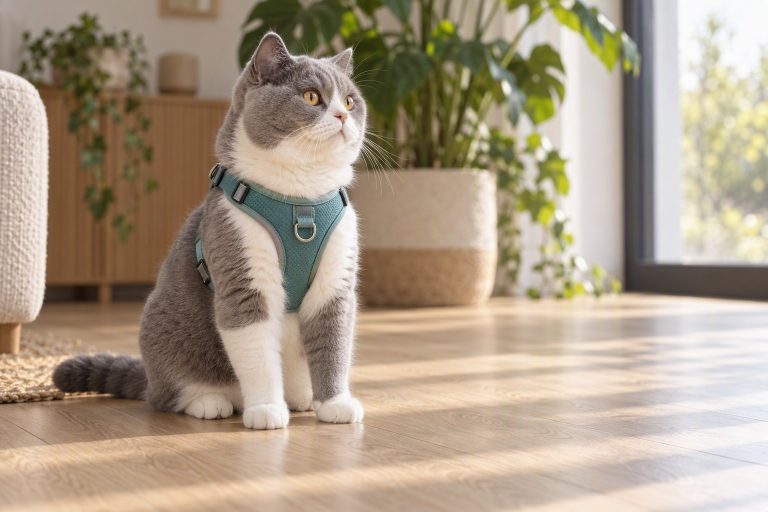
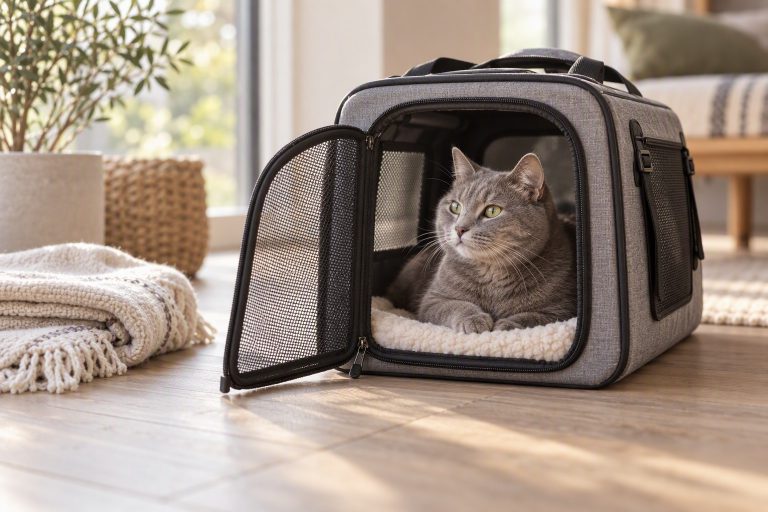
The collar, harness, and carrier form a safety chain for any cat on the move. The collar provides ID if she escapes; the harness gives controlled, escape-resistant walking; and the carrier, trained per our guide, is the secure transport. A complete travel setup means you are ready for a vet trip, a house move, or a garden adventure without scrambling. Importantly, a breakaway collar stays on under a harness as backup ID, because a cat can slip a harness if panicked. Train each element separately and consistently so the cat accepts all three calmly. The owners who travel stress-free are those who layered these safeguards rather than relying on one, because cats are escape artists when frightened, and redundancy is what keeps a scared cat identifiable and recoverable the moment something unexpected happens during transit.
Frequently asked questions
- Will a breakaway collar fall off too easily? A good one stays on through normal wear but releases under real snag force; cheap ones may drop off.
- Can my cat wear a collar and a harness together? Yes—the collar is ID backup, and a harness should not rely on the collar for safety.
- Do kittens need breakaway collars? Yes, once old enough, but check fit often as they grow and outpace the adjustment range quickly.
- Is a microchip enough without a collar? No—a visible tag enables immediate return; the chip is the permanent backup if the collar releases.