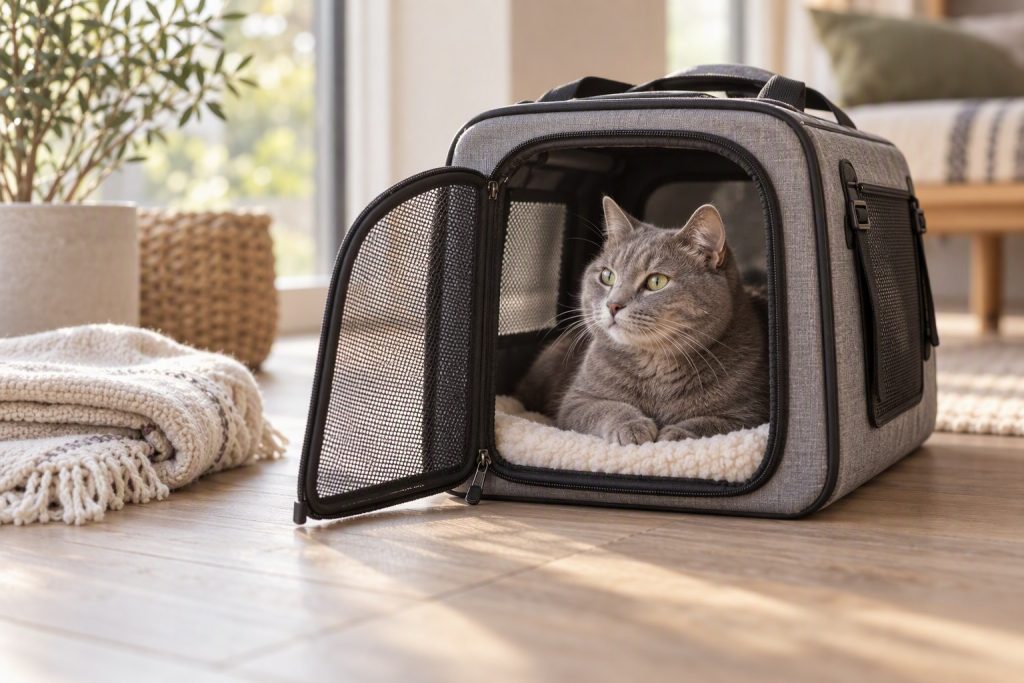
To get a cat into a carrier without a fight, leave the carrier out as a familiar piece of furniture, feed her near and inside it, and let her walk in voluntarily rather than chasing and shoving her at departure time. Build the positive association over days so the carrier means safety and treats, not a trap.
- Leave the carrier open at home so it becomes a normal, safe hideaway, not a crisis object.
- Feed treats and meals near then inside it to build a happy association over days.
- Let her walk in voluntarily; never chase or shove, which creates lasting carrier fear.
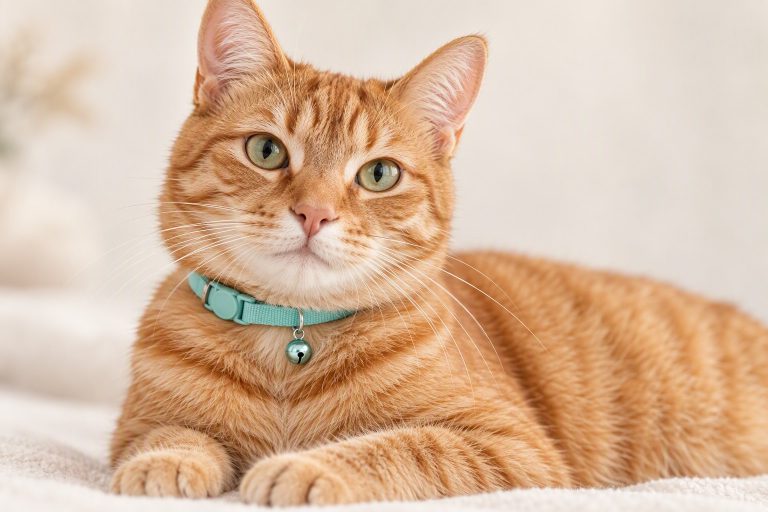
- Use a breakaway collar with ID in case of escape during travel.
Why do cats fight the carrier in the first place?
Most cats learn to hate carriers because the only time the object appears is when something scary happens—a vet trip, a car ride, a loud clinic. The carrier becomes a predictor of stress, so the mere sight of it triggers a panic flight response. Our notes on breakaway collars matter here because a frightened cat that bolts needs ID. A carrier your cat trusts changes the entire equation. The fix is to divorce the carrier from emergencies by making it a permanent, benign fixture—a cosy cave she chooses for naps. When the carrier smells of home and holds good things, the association flips from threat to refuge. Fighting is simply fear expressing itself; remove the fear through familiarity and patience, and the struggle disappears. The owners who succeed are those who start this training on a calm Tuesday, not ten minutes before the vet appointment they have been dreading all week.
How do I make the carrier a happy place?
Start by leaving the carrier open in a room your cat uses, with a soft blanket and a worn t-shirt of yours inside so it smells safe. Drop treats just inside the door, then progressively deeper, until she walks in for them without hesitation. A similar gradual approach works for harnesses too. A comfortable carrier with a familiar scent becomes a chosen bed rather than a trap. Feed occasional meals near it, then inside it, so the object predicts food rather than fear. Keep the door propped open for weeks so she controls entry and exit, which preserves her sense of safety. The goal is a cat who naps in the carrier voluntarily; when that happens, a trip means simply closing a door she already loves. This slow conditioning is the single most effective antidote to carrier fights, and it costs nothing but consistency and a few treats scattered with genuine patience over time.

Courtyard Pet Carrier Nest Top Cover Outdoor Sunscreen Outdoor Waterproof. Part of the KiKi Meow Cat Beds collection…
What is the right way to load her on trip day?
On the day, stay calm and quiet—cats read your tension—and use the routine she already knows. If she walks in for treats, great; if she hesitates, lure with a strong-smelling reward rather than grabbing. A breakaway collar with ID should be on before you even open the door, in case she slips past you. A top-opening carrier lets you lower her in gently from above if needed, which many cats tolerate better than a front shove. Never shake or tip her out; if she must be placed, support her body and lower her softly, then close quickly but without slamming. Cover the carrier with a light towel for the car ride to reduce visual stress. The cats that load easily are those whose owners practised the motion beforehand during play, so the real event is just another repetition of a game she already trusts and enjoys on ordinary days at home.
Should I use a top-loader or front-loader?
Both work, but top-loading carriers are often easier for reluctant cats because you can lower them in vertically, which feels less like being pushed into a tunnel. Front-loaders are fine if your cat already walks in, and they are simpler to clean. Either way, pick a carrier you can secure safely in the car with a seatbelt strap. A well-ventilated rigid carrier protects her better than a soft bag in an accident, though soft bags suit calm cats for short trips. The deciding factor is your cat’s temperament and your loading technique, not the style alone. If she panics at front entry, switch to a top-opener and practise with it empty first. Whatever you choose, make it the same carrier she trains with at home, because a novel box on trip day undoes all your familiarity work and restarts the fear from zero, costing you the trust you carefully built over preceding weeks.
How do I handle a cat that panics anyway?
If despite training she panics, prioritise safety over speed. Wrap her in a thick towel burrito-style to protect your hands and restrict her limbs, then lower her into the carrier; the towel also muffles stress and prevents scratches. A breakaway collar stays on so she is identifiable if she escapes the towel. A calm voice and slow movements reduce the escalation that makes panic worse. If trips are frequent and fear severe, ask your vet about pheromone sprays for the carrier or short-term anti-anxiety medication—neither is a failure, just a tool. Then go back to foundation training afterward so the next trip is easier. The cats that improve most are those whose owners accepted the setback, kept everyone safe, and rebuilt trust rather than forcing repeated traumatic captures that permanently cement the carrier as a terrifying object in the cat’s memory for life.
How does carrier training connect to collars and harnesses?
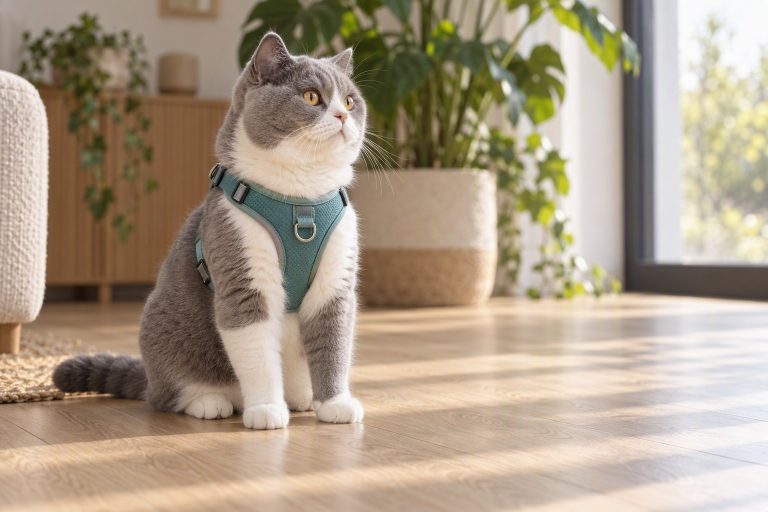
Carrier training, collars, and harness work share one principle: gentle, repeatable conditioning beats force. A cat comfortable in a breakaway collar with ID is safer during any travel, and a cat trained via our seven-day harness plan accepts restraint calmly, which carries over to carrier handling. A complete travel kit—carrier, collar, harness—prepares you for vet visits, moves, and outdoor adventures without fights. Practise each skill separately but consistently, because a cat who trusts your hands to place a harness will also trust them to place her in a carrier. The underlying message to the cat is always the same: nothing you do to her body ends in pain or surprise. Build that message across all three tools and travel transforms from a brawl into a routine she accepts, keeping both of you safer and far less stressed every single time you need to leave the house together.
Frequently asked questions
- How long before a trip should I start training? At least two weeks of daily treat-in-carrier sessions for a reluctant cat; more is better.
- Should the carrier be covered in the car? A light towel reduces visual stress and motion, but leave ventilation and peek holes uncovered.
- What if my cat soils the carrier? Line it with an absorbent pad and a familiar blanket; clean calmly without punishing the stressed cat.
- Can I medicate her for travel anxiety? Yes, with vet guidance; it is kinder than a traumatic struggle for severely fearful cats.