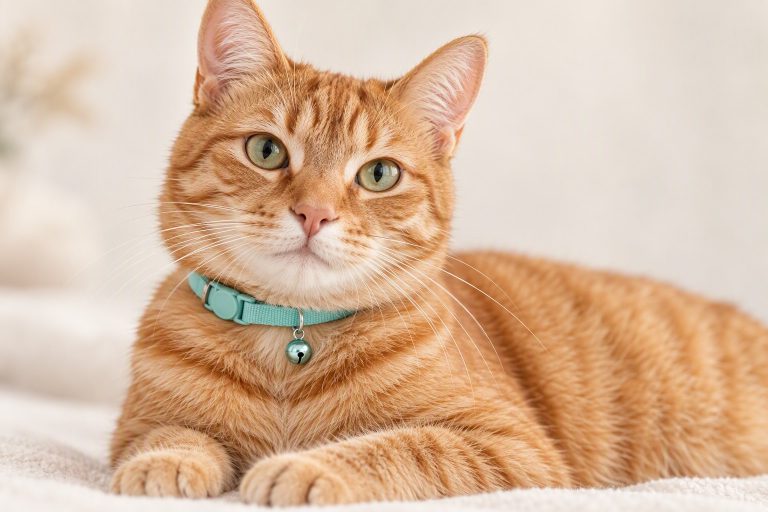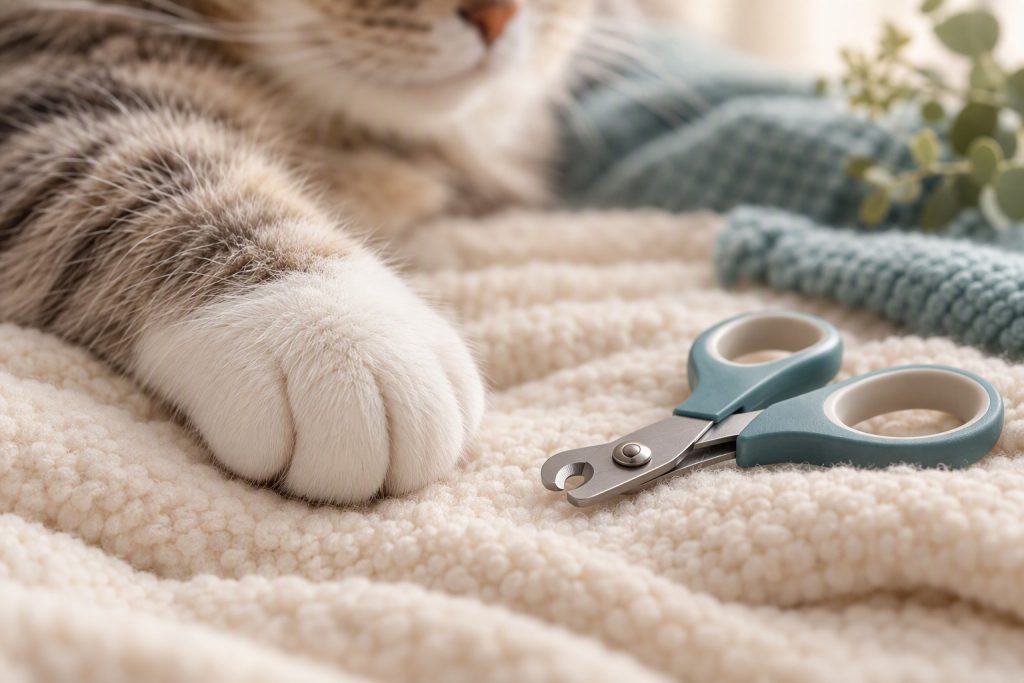
For most cat owners, scissor-style clippers are the better choice because they give you precise control and feel natural in the hand, while guillotine clippers excel at clean single squeezes on very thin claws but can crush or misalign on thicker ones. Pick the style you can use calmly and accurately, since a confident, controlled cut matters more than the tool’s design.
- Scissor clippers offer better control and visibility, ideal for beginners and thick claws.
- Guillotine clippers give a clean single squeeze but suit only thin, straight claws.
- Whichever you choose, cut only the clear tip and avoid the pink quick inside.
- A calm cat from regular brushing sessions is far easier to clip safely.
How do scissor clippers actually work?
Scissor-style clippers look like small pruning shears, with two curved blades that close around the claw like a pair of scissors. Their big advantage is visibility: you see exactly where the blade meets the nail, which makes it easier to avoid the quick, the pink blood vessel running through the claw. They also feel intuitive if you have ever used scissors, so hand tension is natural and controlled. A regular trim routine pairs perfectly with this style because the precise cut suits frequent small trims. A quality scissor clipper with a safety stop helps beginners, and the lever action needs less squeeze strength than you might fear. For thick or curved claws—common in large breeds and outdoor cats—scissor clippers outperform because they do not rely on the nail sitting perfectly in a fixed ring, which is where guillotine designs struggle most with awkward angles and shapes.
What are guillotine clippers best at?
A guillotine clipper has a stationary ring through which you poke the claw, and a blade that slices straight across when you squeeze the handle. It delivers one clean, fast cut with minimal hand effort, which some owners love for speed. It shines on thin, straight, cooperatively-held claws, and the design keeps the nail positioned for a level cut. A cat already comfortable with handling tolerates the quick motion well. However, a guillotine model struggles when the claw is thick, curved, or off-centre, because the ring cannot adapt and the blade may crush rather than slice. It also hides the cutting point inside the ring, reducing your visibility of the quick. For most home users trimming a wriggly cat, that loss of sight lines is the dealbreaker, which is why trainers often recommend scissor styles despite the guillotine’s satisfying single-squeeze simplicity for the right, easy claw.
Which is safer for a beginner?
Safety comes down to visibility and control, and scissor clippers win on both. A nervous first-timer who can see the blade and creep the cut forward a hair at a time is far less likely to nick the quick than one squeezing a hidden blade through a ring. Our claw-trim guide stresses going slow, which scissor clippers support. A beginner kit with scissor clippers, a styptic pencil, and treats is the safest starting point. Guillotine clippers are not unsafe, but they punish hesitation—once you squeeze, the cut is committed, so a sudden cat movement mid-squeeze risks a bad angle. If you are new, practise the motion on a piece of dry spaghetti to feel the pressure, then begin with the front paws where claws are most accessible. The safest tool is the one you handle with confidence, and for most beginners that is the scissor style they can see and adjust throughout the cut.
Does claw thickness change the choice?
Absolutely. Thick, sturdy claws—typical of big cats, active climbers, and some breeds—resist a guillotine blade that was designed for a slim nail and can splay or crush instead of cut cleanly, leaving a split edge that catches on fabric. Scissor clippers close with leverage that handles thickness gracefully. A long-haired cat may also have hidden claws you need to expose, and scissor control helps there. A heavy-duty scissor clipper is the pragmatic pick for any cat with substantial nails. Conversely, a dainty kitten or a fine-clawed cat is perfectly served by a guillotine for quick, gentle trims as long as the claw sits straight in the ring. Assess your own cat’s claws before buying: if they are robust, go scissor; if thin and straight, either works, but scissor still edges ahead for the visibility that prevents painful mistakes during a wriggly, real-world trim session at home.
How do I use either clipper without hurting my cat?
The technique is identical regardless of tool: gently press the paw pad to extend the claw, identify the clear tip separated from the pink quick, and cut only that clear portion at a slight angle. Keep styptic powder nearby in case you clip too close, and stop if the cat is stressed—one paw per session is fine. A cat used to being brushed accepts paw handling more easily, so build tolerance first. A calm environment with treats turns trimming from a battle into a routine. Never cut straight across the quick; if unsure, take less rather than more, because the claw keeps growing and you can trim again. For dark claws where the quick is invisible, shine a light behind the nail or cut conservatively in thin slivers. The clipper is only as safe as the handler’s patience, so prioritise short, positive sessions over a perfect full trim achieved through a struggling, frightened cat.
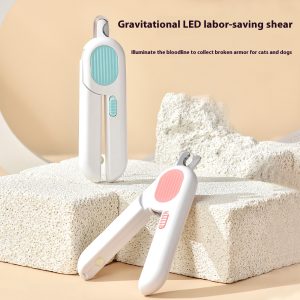
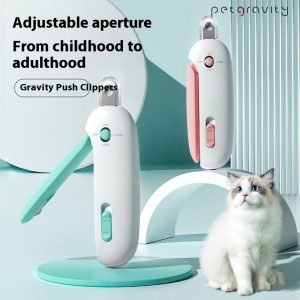
A pet led labor-saving cat nail scissors.
Should I also consider other grooming tools?
Clippers are one part of paw care; a fine-toothed comb and a good brush prevent the fur around the claws from matting and hiding the nail, which is especially relevant for long-haired cats covered in our matting guide. A claw file or grinder is an alternative to clippers for owners who prefer smoothing edges gradually, though grinders scare some cats with their noise. A complete grooming set—scissor clippers, comb, and styptic—covers most needs. Whatever cutting tool you choose, pair it with regular handling so the paws are familiar, and with brushing so you are not fighting tangled fur while trying to see the claw. The best results come from an integrated routine where clipping is just one calm step, not an isolated struggle that both you and your cat dread every few weeks when the claws grow long again.
Frequently asked questions
- Can I use human nail clippers on a cat? Not ideal—they can split the claw; use cat-specific scissor or guillotine clippers instead.
- How often should I trim? Every two to three weeks; our guide gives the full schedule.
- What if I cut the quick? Apply styptic powder, stay calm, and the bleeding stops quickly; the claw will heal.
- Are grinder tools better than clippers? Grinders smooth edges but scare noise-sensitive cats; clippers are simpler for most owners.