Cat-proofing means removing the things a cat will chew, swallow, knock over, or get tangled in before she ever walks through the door. Focus on six areas: toxic plants and foods, open windows and balconies, electrical cords, small swallowable objects, medicines and cleaning products, and anything that can tip or burn. Do this before she arrives, because a curious cat explores with her mouth and her paws far faster than you can react. The goal is not a sterile home, just a safe one, so that you can relax and let her explore without hovering over her every move. Most of the work takes an afternoon, and it prevents the kind of emergency that costs far more in worry and vet bills.
- Remove toxic plants, foods, and medications first.
- Secure windows, balconies, and balcony doors.
- Tidy cords, strings, and small swallowable objects.
- Prepare one safe room before she comes home.
What are the biggest dangers to a new cat at home?
The highest-risk items are the ones a cat can swallow, chew, or become trapped by. Lilies, antifreeze, human medications, and certain essential oils are genuinely dangerous, while hair ties, rubber bands, sewing thread, and dental floss cause serious internal blockages that often need surgery. Open windows without screens are a leading cause of falls, especially in apartments, and a balcony without netting is an invitation to a jump a cat cannot judge. Candles, hot stovetops, and unattended space heaters burn paws and tails. Plastic bags and dryers are suffocation risks, so always check the drum before you close it. The common thread is curiosity plus a body that fits into gaps we overlook. Walk your home at knee height and look for anything small enough to bat, long enough to tangle, or hot enough to hurt. It also helps to think like a climber, because cats reach high shelves and the tops of cabinets as easily as they reach the floor.
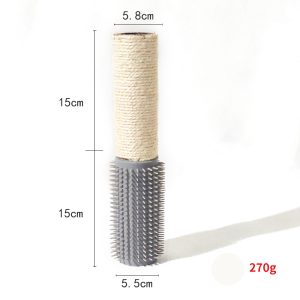
Sisal Scratching Post For Cats Scratching Device For Scratching The Face Sisal Toy Scratching Device. Part of the…
Which houseplants and foods are toxic to cats?
Lilies are the single most dangerous plant for cats — even a small amount of pollen or water from the vase can cause kidney failure, so keep them out of the house entirely. Other common offenders include sago palm, tulip and daffodil bulbs, azalea, oleander, and pothos or philodendron, which irritate the mouth and stomach. On the food side, chocolate, onions, garlic, grapes and raisins, alcohol, xylitol, and raw yeast dough are all unsafe. Caffeine and macadamia nuts also cause problems. Milk is not toxic, but most adult cats are lactose intolerant and it causes diarrhoea, so it is best avoided. If you are unsure about a plant, look it up before you buy it rather than after. Keep a list of your plants and check each one, and place anything questionable on a high shelf or rehome it entirely.
How do I secure windows, balconies, and doors?
Fit sturdy screens to every window you plan to open, and check that they latch, because cats lean on screens and pop them out. If you have a balcony, install a full-height safety net or mesh, anchored to the walls rather than to a loose railing. Cats fall from surprising heights and often survive the drop but break bones or suffer internal injuries, so prevention is the only reliable option. For doors, teach the household to close them behind them and consider a screen door for the room you want to ventilate. A cat who has never been outside still tries to slip through an open door, so be deliberate about exits during the first weeks. If you want her to enjoy fresh air safely, plan a secure enclosure rather than trusting an open window.
What about cords, small objects, and appliances?
Cords are a chew hazard, particularly for kittens, so bundle and hide them inside cable channels or behind furniture, and unplug what you can when it is not in use. Small objects are the bigger emergency: hair ties, ear buds, bottle caps, coins, paper clips, and jewellery all get batted under furniture and then swallowed. Get down on the floor and look under the sofa and bed, then store anything tiny in a closed drawer. Tidy dangling blind cords, curtain pulls, and long charging cables, because a cat can strangle herself in a loop. For appliances, keep the washer, dryer, dishwasher, and oven doors closed, and check the dryer drum before every load. Stovetop safety matters too, so use back burners and never leave a pan unattended when a cat can jump up.

Tray, scoop, anti-splash mat and clumping litter. The whole litter corner, one box.
How do I set up a safe room before she arrives?
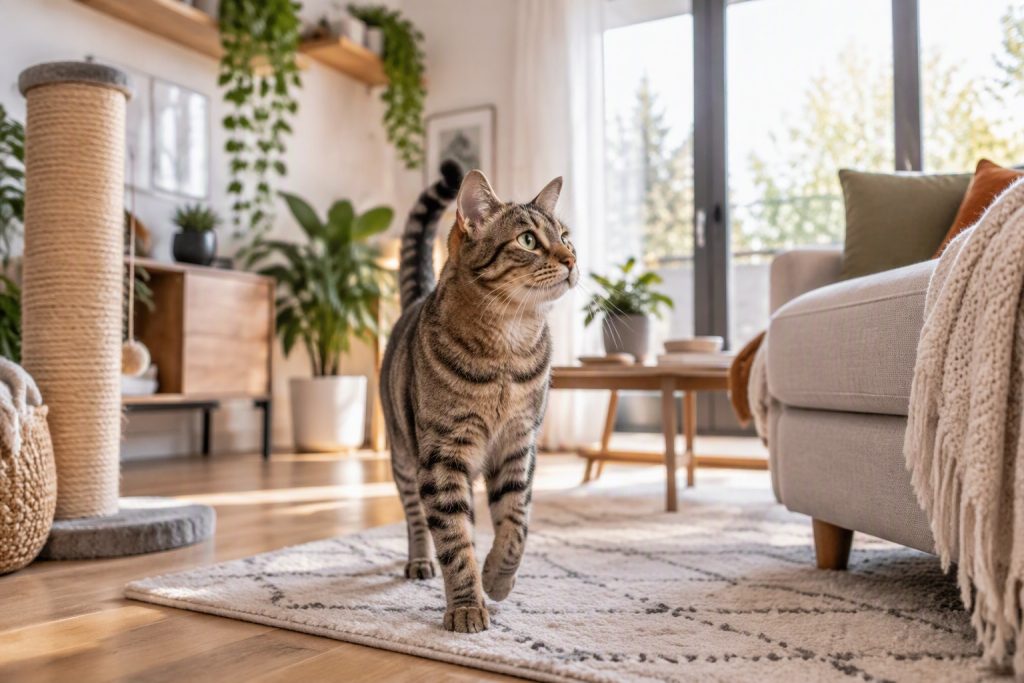
Choose one small, quiet room as her base and make it genuinely cat-proof before she arrives, not after. Remove plants and breakables, cover or block any gap behind or under furniture, and check that the window is screened and the door latches. Set up food and water on one side, a litter box on the far side and well away from the bowls, and a soft bed plus a hiding spot such as a covered cave. Our guide to litter box placement explains why that separation matters, and our walkthrough of the first 30 days with a rescue cat shows how to use the room while she settles. Keep the room uncluttered so you can see her easily, and remove anything she could pull down onto herself. A tall scratching post and a couple of quiet toys give her something safe to do instead of investigating your belongings, and a covered hiding spot lets her retreat when she feels overwhelmed. Test the door latch from the inside, because a determined cat can nose open a handle that looks secure.
How do I keep cat-proofing as she settles in?
Cat-proofing is not a one-time job, because cats change and grow. A kitten who could not reach the counter will be able to within weeks, and a senior cat who once ignored the balcony may suddenly find it interesting. Recheck your home every month or so, and whenever something changes — a new plant, a new piece of furniture, a move. Watch how she interacts with each room and fix problems as you spot them, since her behaviour will tell you what she finds tempting. Keep cabinets with medicines, cleaning products, and chemicals latched, and store string, thread, and plastic bags out of reach. If you are ever unsure whether something is safe, err on the side of removing it. It is far easier to prevent a poisoning or a blockage than to treat one. Write down your vet’s number and the number of the nearest emergency clinic and keep them somewhere you can find them quickly, because in a poisoning case minutes matter and you will not want to be searching.
Frequently asked questions
- Is cat-proofing different for kittens? Yes. Kittens chew more and squeeze into smaller gaps, so hide cords, block under-furniture spaces, and keep all small objects in closed drawers.
- Are all houseplants dangerous? No, but lilies are extremely toxic and several common plants cause harm. Check each plant by name before bringing it home.
- Do I need to secure my balcony? Yes, if you plan to let your cat out there. Use a full-height net anchored to the walls, not a loose railing, because cats fall easily.
- Can I use essential oil diffusers around a cat? Many essential oils are toxic to cats, and diffusers spread them into the air. It is safest to avoid them in rooms your cat uses.
- What should I do if she swallows something? Call your vet or an emergency clinic immediately. Do not wait for symptoms, and never try to make her vomit at home.