

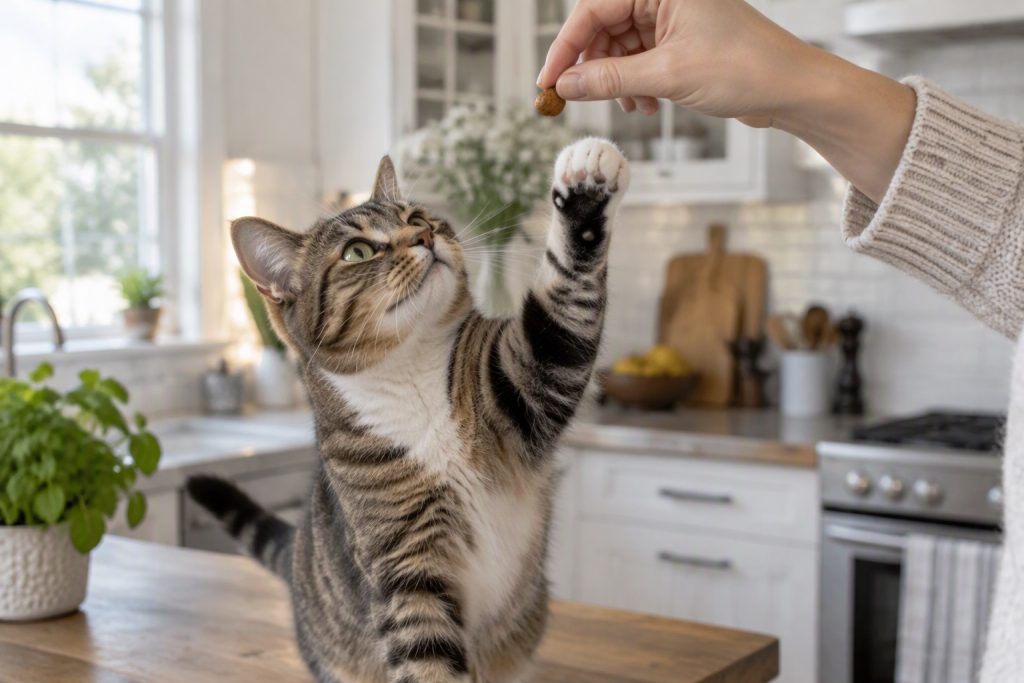
Treats should make up no more than about ten percent of your cat’s daily calories, which for most adult cats works out at roughly 20 to 30 calories, or a small handful of treats a day. Everything above that starts to unbalance her diet and add weight. Weigh or count treats, subtract them from her daily food, and use them for training rather than as a constant extra.
- Treats should be at most ten percent of daily calories.
- For most cats that is about 20 to 30 calories.
- Count treats and subtract them from meals.
- Use small pieces for training, not whole treats.
How many treats can a cat have a day?
A practical rule is to keep treats to no more than ten percent of her daily calorie intake, with the rest coming from a complete balanced diet. If your cat needs around 200 to 250 calories a day, that means roughly 20 to 30 calories from treats, which is often just a few small pieces, not a handful. The exact number depends on the treat: a soft cat treat may be only two or three calories, while a dental chew or a piece of cheese can be far higher. Always check the packaging for the calorie content, because treat sizes and densities vary widely. It helps to set a daily treat budget and stick to it, rather than offering a treat every time she asks. If you are training, break treats into tiny pieces so you can reward many times without exceeding the limit. Treats are for enjoyment and reward, not nutrition.
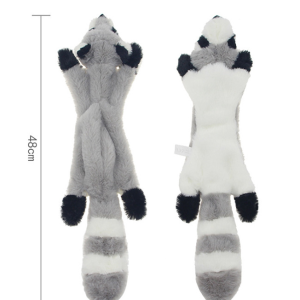
Made from cloth Key features 【Name】 : cat simulation animal sound shell toy[Fill]: No fill, 2 built-in BB…
Why do treats matter so much to calorie balance?
Treats matter because they are easy to overlook and add up quickly. A cat needs only a small surplus each day to gain weight over months, and a few extra treats daily can quietly tip the balance. Because cats are small, even a modest treat is a meaningful share of their calories: a single larger treat can be ten percent or more of a cat’s daily energy. Owners often count the main meals carefully and then give treats freely, which undermines the whole calculation. Weight gain in cats is not just cosmetic; it raises the risk of diabetes, arthritis, urinary problems, and other conditions. The fix is simple arithmetic: add up the calories in her food and treats, compare the total with her target, and adjust. If she is gaining weight, the treats are the easiest place to cut back first, because they can be reduced without changing her main diet.
What makes a treat healthy or unhealthy?
The healthiest treats are small, low in calories, and made from recognisable ingredients, ideally with a named protein such as chicken or fish as the first ingredient. Look for treats with little or no added sugar, and avoid those loaded with artificial colours, flavours, or fillers, since they add calories without benefit. Freeze-dried meat treats are often a good choice because they are high in protein and low in carbohydrates, and many cats love them. Dental treats can help with oral hygiene but are often higher in calories, so count them properly. Some treats marketed as “natural” are still calorie-dense, so check the numbers rather than the marketing. Soft, chewy treats are convenient for training, while crunchy ones suit cats who like texture. Whatever you choose, variety is less important than quality and portion size, and a treat should never replace a balanced meal.
Can I use treats for training without overfeeding?
Yes, and training is one of the best uses for treats, because it gives your cat mental stimulation and strengthens your bond. The trick is to use very small pieces so you can reward often without exceeding the daily calorie budget. Break a single treat into four or five fragments, or use a portion of her regular food as the reward, which counts toward her meal rather than adding to it. Set aside part of her daily ration for training sessions, then feed the remainder in her bowl. Keep sessions short, a few minutes at a time, and reward immediately so she connects the behaviour with the treat. If you are training several times a day, weigh the total treats and reduce her meals accordingly. Puzzle feeders and slow feeders can also deliver part of her food as rewards, and our guide to slow feeders for cats explains how they stretch a meal and add enrichment at the same time.
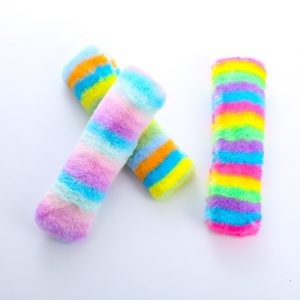
Rainbow-striped plush cylinder. Keeps a bored indoor cat busy and burns off restless energy. Made from fleece and…
Which human foods are safe as treats?
A few plain human foods are safe in small amounts. Cooked, unseasoned chicken or turkey, plain cooked fish without bones, and a small piece of cooked egg are usually fine and many cats enjoy them. Some cats like a little plain cooked pumpkin or a small piece of melon. Always avoid onion, garlic, chocolate, grapes and raisins, alcohol, caffeine, xylitol, and anything containing these, since they are toxic to cats. Never give cooked bones, which splinter, and avoid rich, fatty, or heavily seasoned food, which can cause stomach upset or pancreatitis. Dairy is not a good choice despite the popular image, because most adult cats are lactose intolerant. If you are switching between wet and dry food as part of her diet, our comparison of wet versus dry cat food can help you balance her meals, and remember that any human food you offer still counts toward her daily calories.
How do I cut back if my cat is getting too many treats?
Cut back gradually, because a sudden reduction can make a cat pester you more. Start by reducing the size of each treat rather than the number of times you offer one, so the routine stays familiar while the calories drop. Then replace some treats with affection, play, or a few pieces of her regular food, which satisfies the interaction without the extra calories. If she begs, avoid rewarding the begging, and offer a play session or a puzzle feeder instead. Weigh her monthly so you can see whether the changes are working, and adjust her main meals if needed so she is not left hungry. If she has gained a lot of weight or has a health condition such as diabetes, ask your vet for a proper weight-loss plan rather than cutting food on your own. A gradual, consistent approach is far kinder and more effective than an abrupt ban.
Frequently asked questions
- How many treats a day is too many? Anything above about ten percent of her daily calories is too many. For most cats that means more than 20 to 30 calories of treats.
- Are dental treats better than normal treats? They can help with oral hygiene, but they are often higher in calories, so count them within the treat budget.
- Can I give my cat cheese as a treat? Only a tiny piece occasionally. Many cats are lactose intolerant, and cheese is high in fat and calories.
- Should I use treats to train my cat? Yes, but use tiny pieces or part of her regular food so training does not tip her calorie balance.
- My cat begs constantly. Should I give in? No. Rewarding begging strengthens it. Offer play or affection instead, and keep treats to set times.





