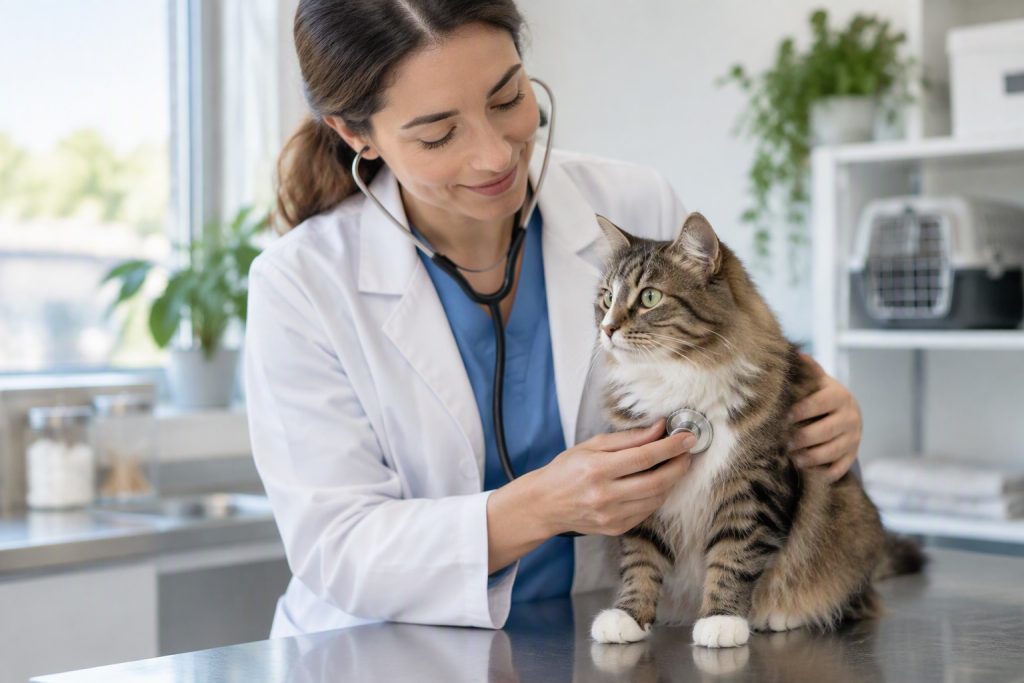
Most cats need a core set of vaccines that protect against feline herpesvirus, calicivirus, and panleukopenia, plus rabies where it is required by law or recommended locally. Kittens usually start a series at around six to eight weeks of age, and adults need boosters at intervals your vet sets based on the vaccine and your cat’s risk. Vaccination is one of the most effective ways to prevent serious illness, so follow your vet’s schedule rather than guessing.
- Core vaccines cover three common viral diseases.
- Rabies may be required by law where you live.
- Kittens need a series, not a single shot.
- Adults need boosters on a vet-set schedule.
Which vaccines does my cat actually need?
Every cat should receive the core vaccines, which protect against feline herpesvirus and calicivirus, the two main causes of cat flu, and feline panleukopenia, a severe and often fatal viral disease. These are recommended for all cats because the diseases are widespread and serious. Rabies is also core in many places and may be legally required, so check your local rules. Beyond that, non-core vaccines are chosen based on your cat’s lifestyle and risk. Feline leukaemia virus is often recommended for cats who go outdoors or live with an infected cat, and other vaccines may be advised in specific situations. There is no single universal list, because risk depends on where you live, whether your cat goes outside, and whether she meets other cats. Your vet is the right person to build a plan for your individual cat, so bring her history and ask what she needs and why.

Cervical pillow, plush hammock, floor mat and paw cushion — four places to nap.
What is the difference between core and non-core vaccines?
Core vaccines are those recommended for all cats because the diseases they prevent are common, serious, and easily spread. They form the backbone of every vaccination plan. Non-core vaccines are optional and are given only when a cat’s lifestyle puts her at genuine risk. For example, a cat who never goes outside and lives alone may not need a feline leukaemia vaccine, while a cat who roams outdoors or shares a home with a feline leukaemia positive cat likely does. Similarly, some vaccines are recommended for cats in shelters, breeding households, or multi-cat homes, where disease spreads easily. Deciding on non-core vaccines is a conversation, not a default, and it should weigh the cat’s age, health, environment, and any previous reactions. A vaccine is a medical treatment, so it should be given because it protects your cat, not simply because it is available.
When do kittens get vaccinated?
Kittens receive some protection from their mother’s colostrum, but that immunity fades, and it can also interfere with vaccines, which is why kittens need a series rather than a single injection. A typical course starts at around six to eight weeks of age and continues with doses every three to four weeks until about sixteen weeks, with the exact schedule set by your vet. The final dose at or after sixteen weeks is important because it helps ensure protection once maternal antibodies have waned. Kittens should be kept away from unknown cats and unvaccinated cats until the course is complete, though they can safely meet healthy, vaccinated cats in their own home. If you have adopted a rescue kitten, our guide to the first 30 days with a rescue cat explains how to plan her early vet visits alongside settling in. Ask the rescue for any records she already has, so your vet can build on them rather than start over.
How often do adult cats need boosters?
Boosters keep immunity strong over time, and the schedule depends on the vaccine, your cat’s age and health, and her risk of exposure. Some vaccines are given annually, while others protect for longer and are given every few years, and your vet will decide based on current guidelines and your cat’s situation. A cat who goes outdoors or lives with other cats may need more frequent protection than a solitary indoor cat. If you have missed a booster, do not panic, but do book a visit, because your vet can advise whether a single dose is enough or whether the course should be restarted. Keeping a written record of every vaccine and date makes this much easier, and it is essential if you ever need to board your cat or travel with her. It also helps when you move to a new vet.

Nail scissors, bath brush, de-shedding glove and a drying towel — the full groom in one box.
Are vaccines safe, and what side effects are normal?
Vaccines are generally very safe, and serious reactions are uncommon, but mild side effects can happen. It is normal for a cat to be a little quiet, sleepy, or off her food for a day or so after a vaccination, and some develop a small, tender lump at the injection site that settles within a few weeks. Mild soreness or a slight fever can also occur. Call your vet if your cat has difficulty breathing, swelling of the face or paws, persistent vomiting, hives, or a lump that grows or lasts longer than a few weeks, since these are signs of a more serious reaction. Tell your vet about any reaction your cat has had before, so future plans can be adjusted. The risk of these side effects is small compared with the risk of the diseases the vaccines prevent, which is why the schedule is worth keeping. If you have concerns, discuss them with your vet rather than skipping protection.
What if my cat is indoors only — does she still need vaccines?
In most cases, yes, at least for the core vaccines. Indoor cats can still be exposed: viruses can be carried in on your clothes, shoes, or hands, and a cat can slip outside through an open door or window. If she ever visits a groomer, a boarding facility, or the vet, she may meet other cats there. Kittens and cats in multi-cat homes are also at higher risk. Some owners and vets reduce the frequency of non-core vaccines for a strictly indoor cat, but the core protection is usually maintained. Your vet can tailor a plan that reflects her real risk rather than a one-size-fits-all schedule. A vet visit is also a chance to check her general health and keep up with routine care such as nail trims, and our guide to how often to trim a cat’s claws explains how to keep that side of her care on track between appointments.
Frequently asked questions
- Are cat vaccines required by law? Rabies vaccination is legally required in many places, while other vaccines are recommended rather than mandated. Check your local rules.
- Can a cat have a reaction to a vaccine? Mild sleepiness or a small lump is common. Serious reactions are rare but need immediate vet care.
- How long do cat vaccines last? It varies by vaccine and cat, from one year to several. Your vet will set the booster interval.
- Can I vaccinate my cat at home? No. Vaccines should be given by a vet, who can store them correctly and manage any reaction.
- My cat is old. Does she still need boosters? Often yes, though your vet may adjust the plan for age and health. Discuss it at her next check-up.