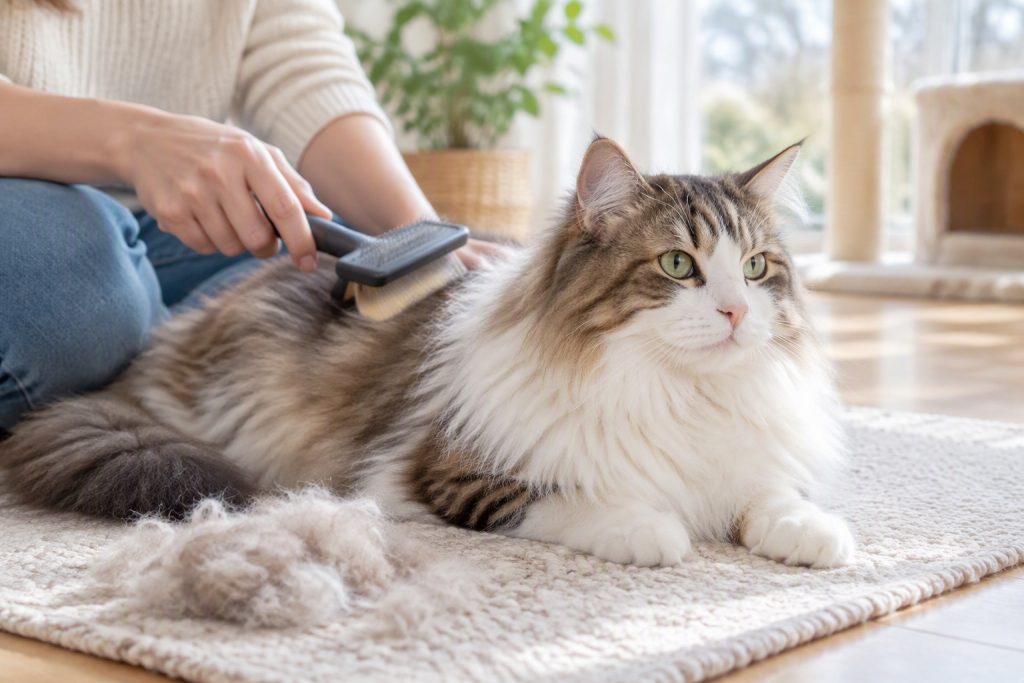
A hairball is a clump of swallowed fur that collects in the stomach and is coughed up as a tubular mass, usually after grooming. Occasional hairballs are normal in cats who shed a lot, but frequent ones are not — they usually mean overgrooming, a coat problem, or an underlying skin or health issue. Regular brushing is the simplest way to reduce them. If they become frequent, treat that as a clue rather than an annoyance.
- A hairball is swallowed fur coughed up from the stomach.
- Occasional hairballs are normal in shedding cats.
- Frequent hairballs point to overgrooming or a skin issue.
- Brushing and hydration reduce them most.
What exactly is a hairball?
A hairball, more accurately called a trichobezoar, forms when a cat swallows loose fur while grooming. Most of that fur passes through the digestive tract and out in the stool, but some accumulates in the stomach, where it can clump together with food and digestive juices into a felted mass. When the clump is large enough, the cat brings it up, usually a soft, cylindrical shape that looks like a cigar and often contains a little food or bile. Long-haired cats and heavy shedders produce more of them, and so do cats who groom compulsively. It is worth knowing that the mass rarely comes up as a neat ball; the classic image of a perfect sphere is more cartoon than reality. If your cat is retching repeatedly without producing anything, that is a different and more urgent situation. A true hairball usually comes up after a short bout of coughing and retching, and the cat returns to normal quickly afterwards.
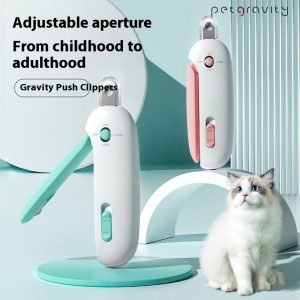
Nail scissors, bath brush, de-shedding glove and a drying towel — the full groom in one box.
How often are hairballs normal?
For a healthy short-haired cat, hairballs should be rare — occasional, perhaps a few times a year at most, and many cats never produce one. Long-haired breeds and cats going through a heavy seasonal shed may have them a little more often, but even then, a hairball every week or two is a signal that something needs attention. Frequent hairballs are not simply a breed quirk to accept; they usually mean the cat is swallowing more fur than she should, either because she is shedding heavily, overgrooming, or has a coat problem. Vets increasingly treat repeated hairballs as a symptom rather than a normal event. If you are seeing them regularly, treat it as a prompt to look at grooming, diet, and skin health, and mention it at your next vet visit so underlying causes can be ruled out.
What causes excessive hairballs?
The most common causes are overgrooming and coat problems. A cat may overgroom because of fleas or other parasites, allergies, dry skin, pain in a specific area, or stress, and all that extra licking means extra swallowed fur. Long coats that are not brushed regularly tangle and shed into the mouth more readily. Digestive issues can also play a part, since fur that would normally pass through may linger if gut motility is slow. In some cases, frequent retching is not a hairball at all but a sign of something else, such as inflammatory bowel disease or a blockage. If the coat looks dull, patchy, or matted, the fur problem and the hairballs likely share a cause. Our guide to stopping matting in long-haired cats covers the coat care that makes the biggest difference. A matted coat is not just a cosmetic issue, because mats pull on the skin, cause discomfort, and can hide sores or parasites underneath.
How do I prevent hairballs?
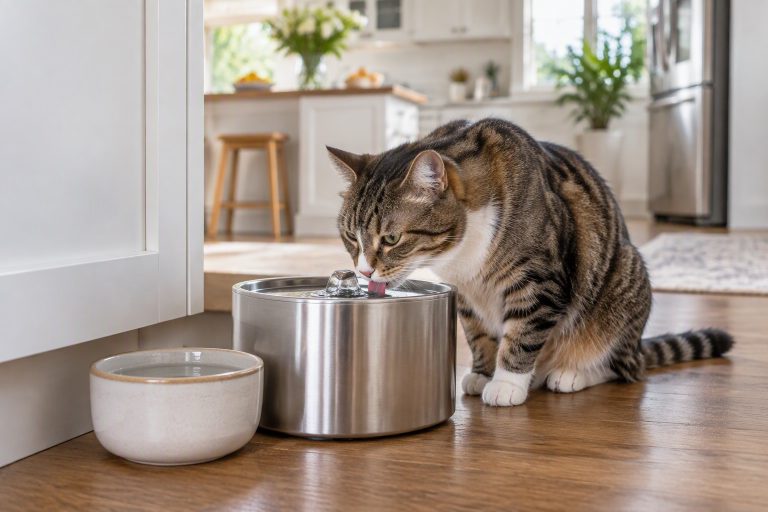
Brushing is the single most effective step, because every tuft you remove is fur your cat cannot swallow. Brush several times a week, and daily during heavy shedding seasons, using a tool suited to her coat type. Our guide to how often to brush a cat helps you set a realistic routine. Hydration matters too, since good water intake supports healthy digestion and skin, so offer fresh water and consider adding wet food. A high-quality diet with adequate fibre and fat supports a healthy coat and normal gut movement. Some owners find a vet-recommended hairball diet or a lubricant paste helps, but these support the solution rather than replace grooming. Keep her parasite prevention up to date and address allergies or stress, since overgrooming often has a root cause. If hairballs continue despite good grooming, see your vet.
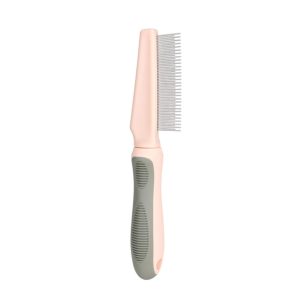
Pet Detangler Comb Pet Hair Removal Comb Cats Combs Rake CombsShedding Combs Grooming Combs Dematting Combs. Part of…
When is a hairball a vet emergency?
A hairball becomes urgent when the cat is retching or gagging repeatedly without bringing anything up, which can indicate a blockage rather than a simple hairball. Other warning signs include persistent vomiting, refusing food, weight loss, lethargy, diarrhoea or constipation, a swollen or painful abdomen, and hiding. A cat who cannot keep water down needs to be seen promptly, because dehydration can develop quickly. Rarely, a large hairball can obstruct the intestine and require surgery, and the signs overlap with other serious conditions. Do not assume a repeated gagging episode is just a hairball and wait it out. If your cat is unwell in any other way alongside the retching, call your vet or an emergency clinic. It is far better to have a simple hairball confirmed than to delay treatment for a blockage.
Do hairball remedies and diets work?
Hairball pastes, gels, and treats generally work as lubricants, helping fur move through the digestive tract rather than collecting. They can help some cats, but they do not address the reason she is swallowing so much fur in the first place, and some are high in calories or contain ingredients your cat may not need. Vet-recommended hairball diets typically increase fibre to help fur pass through, and some cats do well on them. If you use a remedy, choose a product made for cats and follow the label, and check with your vet before giving anything long-term. The most reliable combination remains regular brushing, good hydration, and a healthy coat. If hairballs are frequent, ask your vet whether a diet change, a supplement, or a check for underlying skin and gut issues is the right next step for your cat. A simple trial of a different diet often reveals whether food is part of the problem, and it is far easier than treating a blockage later.
Frequently asked questions
- Are hairballs normal in cats? Occasional hairballs can be normal in shedding cats, but frequent ones are not and usually point to overgrooming or a coat problem.
- How can I stop my cat getting hairballs? Brush regularly, keep her well hydrated, feed a quality diet, and treat parasites, allergies, or stress that cause overgrooming.
- Do hairball treats actually help? They can help as lubricants, but they do not fix the cause. Use them alongside brushing, not instead of it.
- Can a hairball kill a cat? Rarely, a large hairball can cause a blockage, which is serious and needs prompt vet care. Repeated gagging without producing anything is a warning sign.
- My cat retches but no hairball comes up. What now? See your vet. Repeated retching can signal a blockage or another condition, not just a stubborn hairball, and it should never be left to resolve on its own.