Most short-haired cats need brushing once or twice a week, while long-haired cats benefit from daily brushing to prevent mats and hairballs. The right frequency depends on coat length, shedding season, and whether your cat tolerates the routine, but a consistent schedule beats occasional marathons.
- Short-haired cats: brush once or twice a week to remove loose hair and dirt.
- Long-haired cats: brush daily to stop mats forming behind ears and under legs.
- Increase frequency during spring and autumn shedding seasons when loose hair peaks.
- Pair brushing with claw care from our claw-trim guide for full grooming.
Why does brushing frequency depend on coat type?
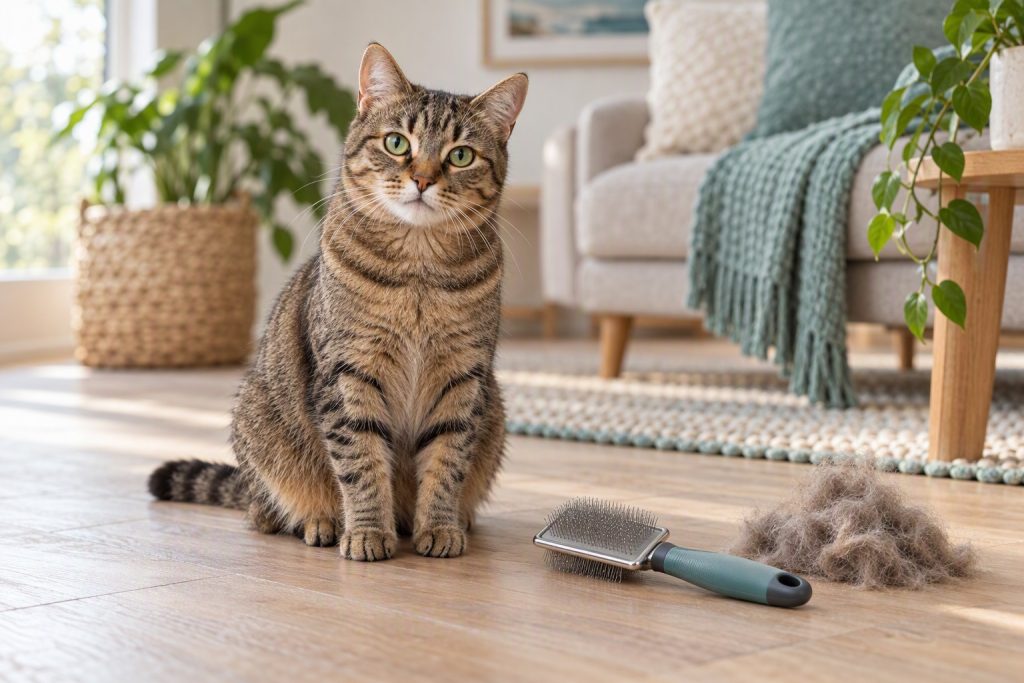
Coat length and density decide how fast loose hair builds and how easily tangles form. A short, sleek coat sheds but rarely mats, so a weekly pass with a soft brush or grooming glove captures the loose hair before it lands on your sofa and reduces hairballs. A long, dense coat, by contrast, traps shed hair against itself and twists into mats within days if neglected, especially in the armpits, behind the ears, and along the belly. Our guide to preventing matting covers the high-risk zones. A suitable brush matched to coat type makes the job quicker and kinder. The principle is simple: the more hair your cat has and the finer its texture, the more often you must brush, because nature constantly produces new loose hair that, left alone, becomes both a hygiene problem and a discomfort your cat cannot fix herself no matter how thoroughly she grooms.
How often should a short-haired cat be brushed?
For most domestic shorthairs, once a week is the maintenance baseline, with a second weekly session during heavy shedding in spring and autumn. A claw check can happen in the same sit-down, making it efficient. A rubber grooming glove or a fine bristle brush lifts the dead undercoat without irritating skin. Weekly brushing also lets you spot fleas, lumps, or sore spots early, which is worth the ten minutes alone. If your short-haired cat is a relentless self-groomer who coughs up hairballs, bump to twice weekly to intercept the hair she would otherwise swallow. The cats that need less are those with very sparse coats and minimal shedding, but even they benefit from a weekly once-over for skin health and bonding. Consistency matters more than duration—a calm five-minute weekly brush beats a stressful half-hour struggle once a month that your cat learns to dread and flee.
How often does a long-haired cat need brushing?
Daily is the honest answer for long-haired breeds like Persians, Maine Coons, and Ragdolls, because their coats mat faster than you can imagine, particularly in friction zones. Skipping two or three days often means a small tangle that becomes a painful clump requiring clippers. Our matting-prevention plan lays out the exact routine. A long-toothed comb followed by a slicker brush reaches the undercoat where mats begin. During seasonal sheds, even daily may not be enough, and you may add a second shorter session. The payoff is huge: fewer hairballs, no painful mats, and a coat that stays glorious rather than a knotted mess. If daily full brushing feels impossible, focus on the high-risk areas—belly, armpits, behind ears, and the trouser feathers—every day, and do a full coat twice a week, because partial consistency still prevents the worst suffering a neglected long coat inflicts on a cat.
Does shedding season change the schedule?
Yes, dramatically. Cats with outdoor access or those sensitive to daylight shed heavily in spring as the winter coat lifts, and again in autumn as the summer coat gives way. During these windows, loose hair multiplies and mats form faster, so add an extra session weekly for short-haired cats and consider twice-daily touch-ups for long-haired ones. A regular claw trim alongside the seasonal brush keeps the whole cat comfortable. A deshedding tool used gently during these peaks removes the undercoat that drives hairballs and furniture fur. Watch the brush: when it comes up full after a few strokes, you are in peak shed and should increase frequency until the coat stabilises. Indoor cats on constant artificial light shed more evenly year-round, so they need steadier maintenance rather than dramatic seasonal spikes, but the principle holds—more loose hair on the brush means more frequent sessions are warranted to stay ahead of it.
What if my cat hates being brushed?
Many cats resist because past sessions were rushed, painful, or involved yanking at tangles. Rebuild trust by starting with a soft grooming glove or finger brush during a calm moment, pairing it with treats so the sensation predicts good things. A gentle handling routine helps your cat accept touch generally. A short, positive session ending before she fusses builds tolerance faster than a long battle. Never brush over mats—that pulls skin and teaches fear; deal with tangles first using a comb or, if severe, professional clipping. Work in small sections and quit while ahead, gradually extending time as she relaxes. For genuinely traumatised cats, a calm pheromone environment and daily tiny exposures work. The goal is a cat who tolerates, then enjoys, grooming, because a cat who fights the brush ends up matted and stressed, which hurts her far more than the few minutes of patient retraining required to fix the association.

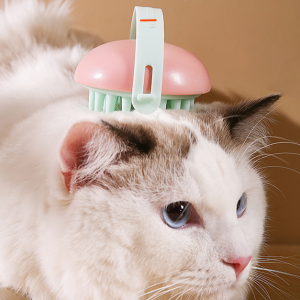
Cat Brush Self Cleaning Kitten Brush For Short Long Haired Cat Grooming Brush To Remove Loose Fur And…
How does brushing fit with the rest of grooming?
Brushing is the anchor of a grooming routine that also includes claw trims, ear checks, and the occasional bath, and doing them together on a schedule keeps your cat healthy and handled. Our claw-trim schedule suggests every two to three weeks, which pairs naturally with a weekly brush. A complete grooming kit—brush, comb, clippers, and wipes—keeps everything in one place so sessions are smooth. Use brush time to inspect ears for wax, eyes for discharge, and skin for parasites, turning a cosmetic task into a health screen. For long-haired cats, the matting guide should run alongside brushing so you catch clumps early. The cats that thrive are those whose owners treat grooming as a regular, gentle ritual rather than a crisis response, because prevention through routine always costs less time, money, and stress than repairing a matted, overgrown, or claw-damaged coat later.
Frequently asked questions
- Can I brush my cat too much? Over-brushing with a harsh tool can irritate skin, but gentle daily brushing is safe for long-haired cats.
- What brush is best for a short-haired cat? A rubber grooming glove or soft bristle brush lifts loose hair without scraping delicate skin.
- Should kittens be brushed? Yes, gently and briefly, to build tolerance early so adult grooming is stress-free.
- Do hairballs mean I should brush more? Often yes; increasing frequency reduces the hair your cat swallows during self-grooming.