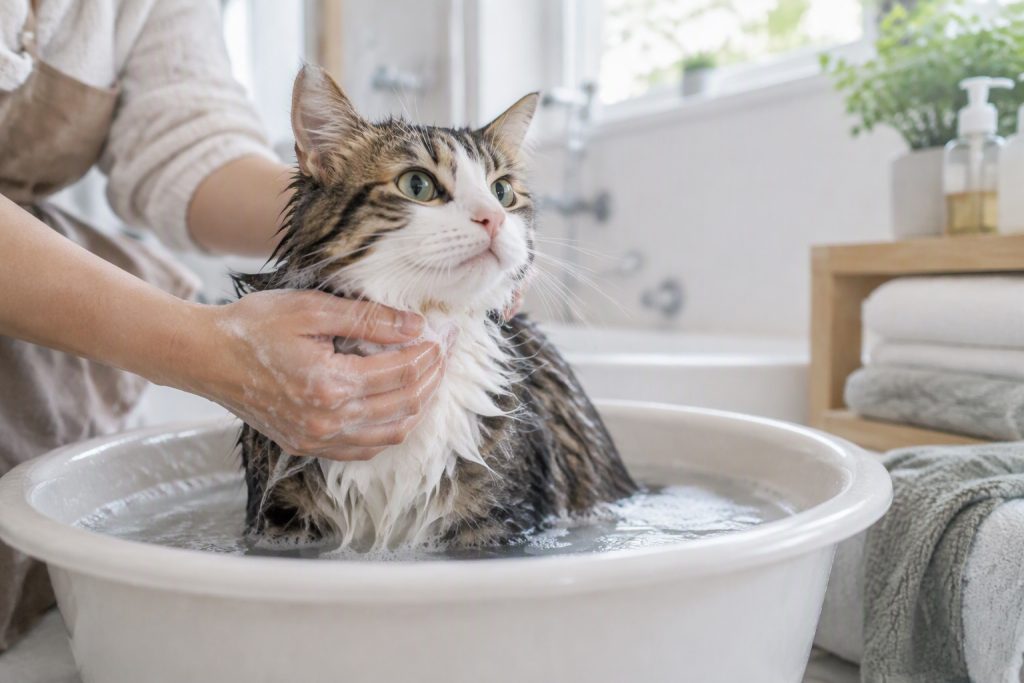
Most cats do not need regular baths, because they groom themselves effectively, but a bath is sometimes necessary for a cat who is soiled, has got into something toxic, or cannot groom. To bathe a cat safely, use a shallow basin of lukewarm water, a cat-safe shampoo, and a calm, quiet room, working quickly and avoiding the face. Expect protest, and never use force.
- Most cats rarely need a bath.
- Use lukewarm water and cat-safe shampoo.
- Keep water away from the face and ears.
- Dry her thoroughly and keep her warm.
Do cats need baths at all?
Generally no, because cats are fastidious groomers and their coats stay clean with routine brushing. A healthy short-haired cat may never need a bath in her life. There are, however, situations where a bath is the right call: if she has walked through something oily or toxic, if she has diarrhoea or cannot reach a soiled area, if she has rolled in something unpleasant, or if a vet advises one for a skin condition. Long-haired cats may need occasional help if their coat becomes greasy or matted. Some cats with mobility problems, arthritis, or excess weight cannot groom properly and benefit from regular bathing or wiping. Very young kittens should not be bathed unless a vet advises it, and cats recovering from surgery or illness need veterinary guidance first. Outside these cases, brushing does the job, and our guide to how often to brush a cat explains how much is enough.
Nail scissors, bath brush, de-shedding glove and a drying towel — the full groom in one box. Cuts…
How do I prepare before the bath?
Preparation is what makes the difference between a quick bath and a disaster. Brush her first to remove loose fur and any tangles, since wet mats tighten and become painful, and our guide to stopping matting in long-haired cats helps if her coat is already matted. Gather everything before you start: cat-safe shampoo, a couple of towels, a cup for pouring water, and a non-slip mat for the basin or tub. Fill a basin or the tub with a few inches of lukewarm water, tested with your wrist, and keep a second container of clean water for rinsing. Choose a warm, quiet room with the door closed, and avoid draughts. Trim her claws beforehand if you can, or ask someone to help you hold her gently. Have a treat ready for afterwards. Work at a calm pace, keep your voice low, and do not let the preparation drag on, because a cat’s patience is short.
How do I actually wash a cat?
Lower her gently into the water, supporting her chest and hindquarters, and keep a firm but gentle hold so she feels secure. Using a cup or your hands, wet her body from the neck down, avoiding the head, ears, and eyes entirely. Apply a small amount of cat-safe shampoo and work it into a lather with your fingers, massaging along the coat and down the legs and tail. Avoid scrubbing hard or tangling the fur. Rinse thoroughly with clean, lukewarm water, because leftover shampoo irritates the skin and leaves a residue she will lick off. If she is very dirty, you may need to wash twice, rinsing between. Keep the whole process as short as possible, talk to her calmly, and if she becomes distressed, pause and let her settle. Never hold her under running water or use a spray nozzle on her face, as the noise and sensation frighten most cats.
How do I dry a cat safely?
Drying matters as much as washing, because a wet cat gets cold quickly. Lift her out and wrap her straight into a warm towel, then blot and squeeze gently rather than rubbing, which tangles the coat. Change to a dry towel when the first is soaked, and keep her in a warm room away from draughts until she is fully dry. Most cats will finish the job themselves once they are damp rather than dripping. If you use a hairdryer, set it to the lowest heat and speed, hold it well away, and keep it moving, because cats can be burned by concentrated heat and frightened by the noise. Never leave a wet cat alone in a cold room, and never put her outside until she is dry. For long-haired cats, a gentle comb once she is mostly dry helps prevent tangles as the coat dries.

A stainless ABS plastic and metal comb clears the loose hair before it lands on the furniture. Keep…
What if my cat is terrified of water?
Many cats are, so do not force it. If the bath is essential, keep it as brief as possible and use the minimum water needed, or try a waterless alternative such as cat-safe pet wipes or a no-rinse foam shampoo for a cat who truly panics. For a cat who must be bathed regularly, you can build tolerance slowly over weeks by getting her used to the bathroom, the sound of running water, and brief touches with a damp cloth, always paired with treats. Two people often make it easier and safer, with one holding gently and one washing. If she becomes extremely distressed, stop and seek advice, because forcing a terrified cat can lead to injury for both of you. In many cases, a professional groomer is the better option, especially for long-haired cats or cats who need medicated baths. Your vet can also advise on the safest approach for your cat’s temperament.
What should I never do when bathing a cat?
Never use human shampoo, dish soap, or any product not made for cats, because these can irritate the skin or be toxic if she licks her coat afterwards. Never use hot water, which scalds, and never get water in her ears, nose, or eyes, since this can cause infection or injury. Do not use a hairdryer on a high heat setting close to her skin, and never leave her unattended in water. Avoid bathing a cat who is unwell, recovering from surgery, or very young without veterinary advice, and never bathe a cat who has just had a topical flea treatment unless the product label says it is safe. Do not hold her by the scruff to control her, and do not shout or punish her if she struggles, as this increases fear. If she has a skin condition, use only the medicated shampoo your vet prescribes and follow the contact time exactly.
Frequently asked questions
- How often should I bathe my cat? Most cats never need a bath. Bathe only when necessary, and no more often than a vet or groomer advises.
- Can I use baby shampoo on my cat? No. Use a shampoo made for cats, because human products can irritate her skin and are unsafe if licked off.
- My cat hates water. What can I use instead? Cat-safe pet wipes or a no-rinse foam shampoo work for light soiling. For heavy soiling, a professional groomer may be best.
- Should I bathe my cat after flea treatment? Not unless the product label allows it. Bathing too soon can wash the treatment off and reduce its effect.
- How do I dry a cat without a hairdryer? Wrap her in warm towels, blot gently, change towels as they soak, and keep her in a warm, draught-free room until she is dry.