

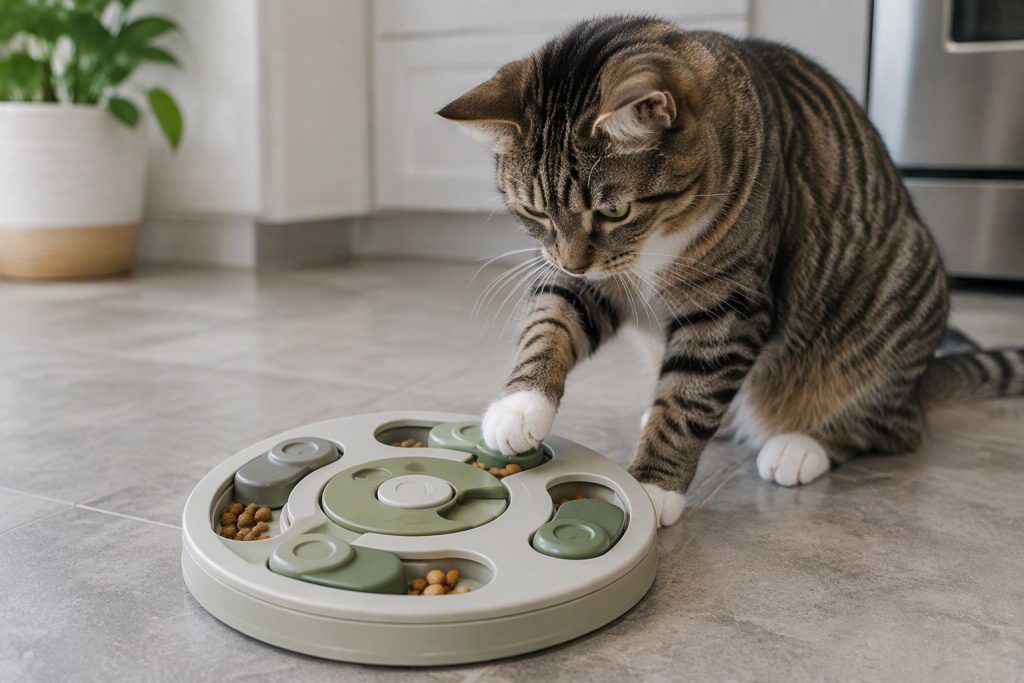
A puzzle feeder is simply a container that makes a cat work for its food. Instead of eating from a bowl in two minutes, the cat noses, paws and bats dry food out of a maze, which takes longer and uses the same problem-solving it would use hunting. For most indoor cats the effect is immediate: eating takes longer, the cat moves more, and there is less leftover energy looking for an outlet. It is one of the few changes that costs little, needs no training, and works for cats of almost any age, so the main thing to get right is the starting difficulty.
- A puzzle feeder slows eating and turns a meal into something to solve.
- Start with the easiest design and only increase difficulty once the cat is confident.
- Use dry food or small treats, and count it as part of the daily ration rather than extra.
- Cats that are unwell, or on a prescribed diet, should not be switched without veterinary advice.
What is a puzzle feeder and how does it work?
It is a feeding container designed so the food is not simply available. Some are simple: a shallow tray with raised ridges that force the cat to use a paw. Others are mazes, tubes, rotating discs or balls that release a few kibbles at a time as they are pushed around. The principle is the same in every case, which is that the cat has to do something to eat. That single change has two effects. It slows eating down, which is useful for cats that bolt their food and then vomit, and it gives the cat a small problem to solve several times a day. Cats are natural foragers, and a bowl removes that entire part of their behavioural repertoire. A puzzle feeder puts a little of it back.
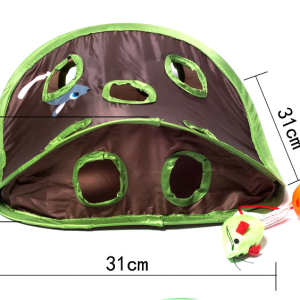
This rolling toy rolls and moves the way a cat's prey does — movement is the whole point.…
Which puzzle feeder should I start with?
Start easier than you think. The most common mistake is buying a complex maze and finding that the cat gives up within a minute and walks away, which teaches nothing except that the new object is frustrating. A good first feeder is a shallow dish with a few obstacles, or a simple rolling ball that drops food as it moves, because both reward even clumsy attempts. Once the cat is clearing those easily, move up in difficulty: a deeper maze, a feeder with sliding elements, or one that requires lifting a lid. It also helps to have more than one design, because rotating them keeps the task novel and prevents the cat from solving it once and losing interest. If your cat eats wet food, a puzzle feeder is less practical, though licking mats can serve a similar purpose.
How do I introduce a puzzle feeder?
Make the first attempt very easy and very short. Put a few familiar kibbles in the feeder with the rest of the meal in the normal bowl, and place it where the cat usually eats. Let the cat investigate without help, and resist the urge to demonstrate. Most cats work it out, and the ones that struggle usually need the food to be more accessible rather than more encouragement. Do this for a few days, gradually shifting more of the ration into the feeder, and only increase the difficulty when the cat is emptying it quickly. Never let a meal go uneaten because the puzzle is too hard, and never use a puzzle feeder to withhold food as a challenge. If the cat is genuinely not eating, go back to the bowl and try again later with an easier design.
Will a puzzle feeder help my cat lose weight?
It can help, but it is not a diet on its own. The weight-loss effect comes from two things: the cat is more active while eating, and meals take longer, which tends to reduce the frantic eating that leads to begging afterwards. That is a genuine contribution, but the decisive factor in feline weight loss is the total number of calories, which means portion control and a measured daily ration rather than a free-fed bowl. A puzzle feeder makes portion control easier to live with, because the food lasts longer and the cat has something to do with it. If your cat is overweight, a vet should confirm the target weight and the daily amount, because crash dieting is dangerous for cats. More on this is in whether the cat is overweight.
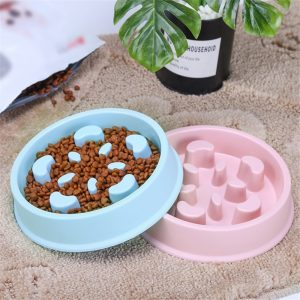
This slow feeder slows a cat down so a meal lasts longer — a meal that takes longer…
Can a puzzle feeder replace play?
No. A puzzle feeder provides mental work and some movement, but it does not provide the running, jumping and chasing that a hunting play session gives. The two do different jobs, and a cat benefits from both. What a puzzle feeder does well is fill the long, quiet stretches of the day when nobody is available to play, which is when bored cats get into trouble. Used that way, it reduces the pressure on the play sessions you do have. A reasonable routine is a puzzle feeder for one or two meals, an interactive play session in the evening, and a window perch for the rest of the day. Treats fit into the same budget, and how many treats a cat should have is worth checking if you are using food as a reward.
When should I not use a puzzle feeder?
There are a few clear cases. Do not use one for a cat that is unwell, losing weight, or recovering from illness, because the priority then is that the cat eats, not that it works for food. Do not use one for a cat on a prescribed veterinary diet without checking with your vet, since the food may need to be eaten in full and in a particular way. Do not use one for a very young kitten or a frail older cat that may struggle with the mechanics. Avoid them entirely for cats with dental pain, because hard kibble in a puzzle can be uncomfortable. And do not use one to manage a cat that is vomiting regularly, since that needs a vet. When in doubt, ask a vet first.
Frequently asked questions
- Will my cat actually use a puzzle feeder? Most do once they understand it, though some need an easier design at first. Start simple and be patient.
- Can I use wet food in a puzzle feeder? Most puzzle feeders are designed for dry food. For wet food, a licking mat is a more practical option.
- How long should a meal take in a puzzle feeder? A few minutes is reasonable. If it takes much longer, or the cat gives up, the puzzle is too hard.
- Do puzzle feeders work for older cats? Many do, using simpler designs. A cat with arthritis or dental pain may find them difficult, so adapt or ask a vet.
- Should I feed every meal in a puzzle feeder? Not necessarily. Using it for one or two meals a day is usually enough to get the benefit without frustration.


