

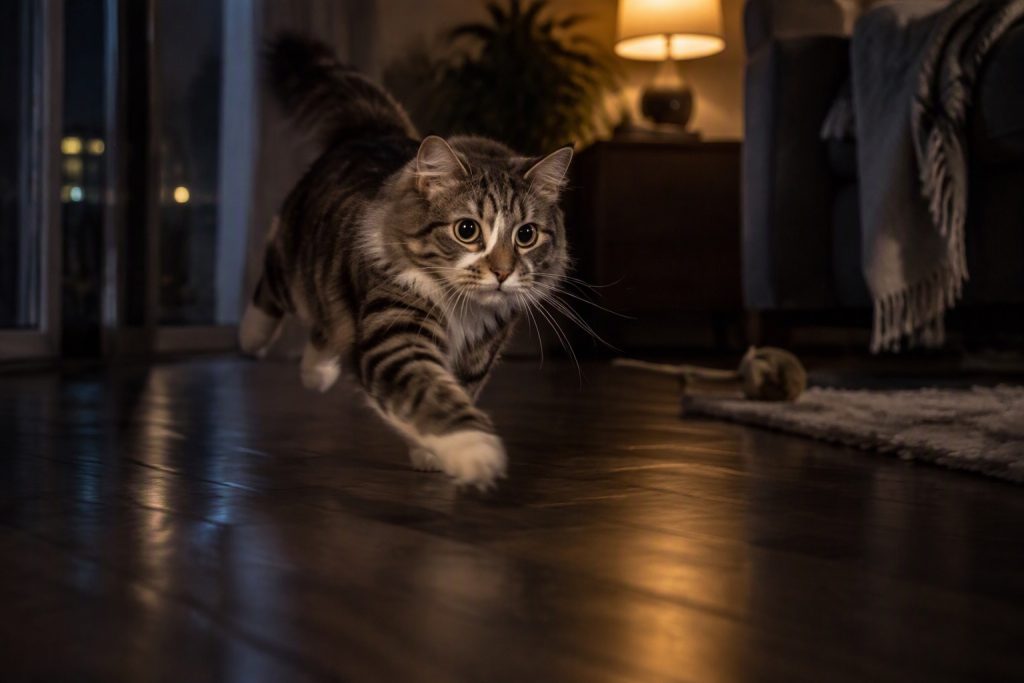
The sprint from hallway to bedroom and back at three in the morning is not a malfunction. Cats are crepuscular hunters, most active around dawn and dusk, and a house cat with nothing to hunt and a full bowl on the floor often sleeps through the day and wakes up ready to run at the exact hour you would rather be asleep. The zoomies themselves are usually harmless. What matters is whether they are occasional bursts of energy or a nightly pattern that is getting worse, because the second version generally points at an unmet need or a health change.
- Zoomies are normal bursts of energy and are rarely a sign of a problem on their own.
- They cluster at night because cats are naturally most active at dawn and dusk.
- The most effective fix is a real play session followed by the last meal of the day.
- A sudden new pattern of night activity in an older cat is worth a vet check.
What actually causes the 3am zoomies?
Mostly stored energy and a body clock that does not match yours. Cats in the wild hunt at dusk and dawn, eat, groom, then sleep — a sequence that repeats twice a day. An indoor cat has the same wiring but no hunt, so the energy has to go somewhere. The result is the classic late-night dash, often up and down a corridor, over furniture and sometimes across your face. Boredom makes it worse, and so does a daytime routine that offers no play at all. There is also a social component: some cats have learned that a 3am sprint brings a human downstairs, which is a reward even if the human is annoyed. A young cat doing this is entirely expected. For more on the daytime side, see whether the cat is bored.

This rolling toy rolls and moves the way a cat's prey does — movement is the whole point.…
Are zoomies a sign of anything wrong?
On their own, no. A healthy cat that runs around for a few minutes and then settles is doing something normal and getting useful exercise. The pattern worth attention is different: night activity that is new in a cat that never used to do it, that comes with loud vocalising, or that is accompanied by pacing, restlessness or disorientation. In older cats, night waking and vocalising can be linked to pain, high blood pressure, thyroid problems or cognitive change, and those need veterinary assessment rather than more play. Sudden frantic running that cannot be interrupted, or that comes with panting, drooling or a cat that seems unable to settle at all, is also a reason to call a vet. When in doubt, describe the pattern to your vet rather than guessing.
How do I stop night zoomies?
Shift the cat’s clock rather than fighting the behaviour. The most reliable routine is a proper interactive play session in the evening — ten to fifteen minutes of genuine hunting play, with a catch at the end — followed by the last meal of the day, ideally within half an hour of your bedtime. That closes the hunt-eat-groom-sleep sequence the cat is built for, and many cats will then sleep through the night. Keep the daytime interesting too, with a window perch, a puzzle feeder holding part of the day’s food, and a couple of short play sessions. Feed the largest meal at night rather than the morning if you can. Be consistent for at least two weeks, because a routine the cat cannot predict does not change the clock.
Why does my cat run after using the litter box?
This is a different behaviour from ordinary zoomies, and it is worth separating out. Many cats sprint away from the litter box after a bowel movement, and in most cases it is just a burst of energy after a period of stillness. But if the running is new, if the cat also strains, vocalises, or visits the box repeatedly, or if the stool looks abnormal, that is a sign of discomfort rather than high spirits. Cats with constipation, anal gland problems or urinary tract disease often show it as behaviour around the litter box. Because urinary problems in cats can become serious quickly, any cat that seems to be struggling in the box should be seen by a vet promptly rather than monitored at home.

Teaser wand designed to turn a few minutes into a full hunt — a cat needs to finish…
Should I get up and play at 3am?
No, and it is the single most common mistake. Getting up teaches the cat that the sprint works, and the behaviour will get stronger, not weaker. If the cat is not in distress, stay in bed, keep the room dark and quiet, and do not talk to it. If the cat is scratching at the door, a firm, boring response is better than opening it. The exception is genuine distress: a cat that is panting, howling in a way that is unlike it, or seems unable to settle should be checked. For an ordinary young cat with energy to burn, the fix happens earlier in the day, not at three in the morning. Patience for a fortnight, plus the evening routine, usually resolves it.
When is night activity a health concern?
When it is new for that cat, when it comes with other changes, or when it is clearly not play. Older cats that start wandering at night and calling loudly are a common example, and the causes can include pain, high blood pressure, an overactive thyroid, or age-related cognitive change. A cat that is restless rather than playful, that paces without settling, or that seems confused about where it is, needs a vet appointment. So does a cat that suddenly stops sleeping at night and starts losing weight or drinking more. Bring a note of when the behaviour happens, how long it lasts, and anything else that has changed, because that timeline is genuinely useful to a vet. Night restlessness and night calling often travel together, and persistent night vocalising is worth mentioning specifically.
Frequently asked questions
- Are zoomies a sign my cat is happy? They are a sign of energy and a healthy body, which is generally good. They are not a measure of mood, but a cat that plays and runs is usually not in pain.
- Do all cats get zoomies? Most do at some point, and young cats do it far more often. Frequency varies widely between individuals.
- Should I lock my cat out of the bedroom at night? It can help if the cat has learned that night activity gets a reaction. Pair it with a strong evening play-and-feed routine so the cat is genuinely tired.
- My cat is older and has started night zoomies. Why? A new pattern in a senior cat is a change worth investigating. Ask a vet to check for pain and common age-related conditions.
- Can I tire a cat out during the day? Partly. Daytime play helps, but the evening session followed by a meal is the part that changes the night.


