

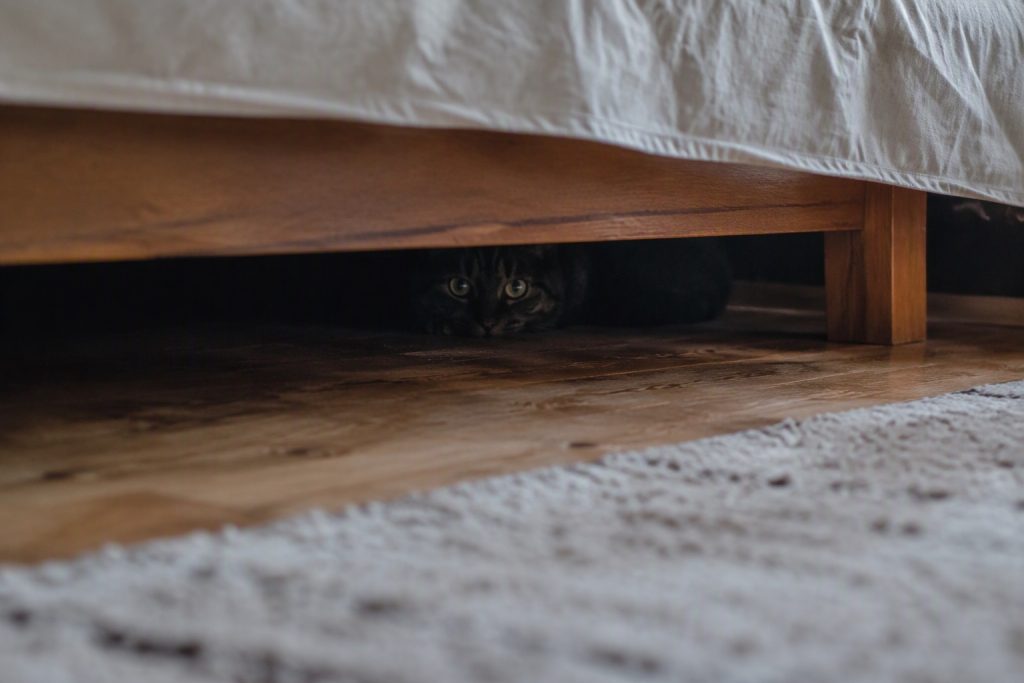
A cat that hides is usually doing something sensible. Hiding is how cats manage fear, and a new hiding spot after a change in the house is often a normal adjustment rather than a crisis. The distinction that matters is between a cat that hides sometimes and still comes out for food, play and company, and a cat that has withdrawn from its normal routine and stays withdrawn. The second pattern is the one worth taking to a vet, because in cats hiding is frequently the first visible sign that something hurts.
- Hiding is normal coping behaviour; a cat that still eats, plays and uses the litter box is usually fine.
- The worrying pattern is withdrawal from the normal routine that does not lift.
- A hunched posture, squinting or shallow breathing while hiding can mean pain — ask a vet.
- Give a hiding cat a safe den and some space rather than dragging it out.
Why does my cat suddenly hide all the time?
Look first at what changed. Cats hide in response to new people, new animals, new furniture, building work, a move, a new baby, or a neighbourhood cat appearing at the window. Even a rearranged room can do it, because cats navigate partly by a mental map of their territory and a map that no longer matches is unsettling. Illness is the other major cause, and it is the one owners are slowest to consider because the cat is not crying or limping. A cat that hides because of a change usually emerges as the change settles, and often within a few days. A cat that hides with no identifiable trigger, or that stays hidden for more than a day or two, needs a closer look at its health rather than its environment.

Grey house-shaped bed with a cat. Made from mixed materials. Made for everyday resting. Gives a cat a…
How do I know if hiding means pain?
Read the posture rather than the location. A cat in pain often sits hunched, with its head lowered and its front legs tucked, or lies in a crouch with its eyes partly closed or squinting. It may be unusually quiet, refuse to be touched on a particular area, breathe more shallowly than usual, or stop grooming. It may also hide in a place it has never used before, and stay there past mealtimes. None of those signs is proof of anything on its own, and none of them tells you what is wrong. They are reasons to call a vet and describe exactly what you are seeing. Cats are good at concealing discomfort, so a change in posture or routine is often the only information available, and it is worth acting on.
Should I pull my cat out from under the bed?
Usually not, and certainly not by force. A hiding cat has chosen that spot because it feels safe, and removing it takes away the only control it has. Dragging a frightened cat out teaches it that hiding does not work, which tends to produce a cat that hides harder next time or becomes defensive. Instead, sit quietly nearby at floor level, talk in a low voice, and let the cat come out on its own terms. Offer food and a litter box within reach so the cat does not have to choose between safety and basic needs. If you must move the cat — for a vet visit, for example — use a towel or a carrier rather than hands, and read up on getting a cat into a carrier without a fight before you need it.
What makes a good hiding place for a cat?
A good hiding place is enclosed, dark, elevated slightly or tucked against a wall, and has more than one way out where possible. Boxes, covered beds, cat huts, the space under a low shelf and the inside of a wardrobe all qualify. What matters is that the cat can see out without being seen, because that is the position that feels secure. Rather than removing the hiding spots, add one or two good ones so the cat has a safe base in the room it actually wants to be in. A covered bed in a corner of the living room often becomes the spot a nervous cat uses to be near the family without being in the middle of it, which is a real improvement in welfare.

Round furry plush bed with cat ears on the rim. Made from velvet. Made for everyday resting. Gives…
Why does my cat hide when visitors come?
Because unfamiliar people are one of the most common feline stressors, and hiding is the sensible response to a threat you cannot control. Most cats are not social with strangers the way dogs often are, and a cat that disappears when the doorbell rings is behaving normally. The mistake is to let well-meaning guests seek the cat out, because being cornered by a stranger is far more frightening than being ignored. Tell visitors to let the cat come to them, and never to pick it up. If the cat is hiding for hours after guests leave, or starts hiding before they arrive, the anticipation has become the problem. In that case, set up a quiet room with everything the cat needs and put it there before the guests come.
When does hiding need a vet?
Book an appointment when the hiding is new and lasts more than a day or two, when it comes with any change in eating, drinking, litter box use or grooming, or when the cat’s posture or breathing looks different. Hiding alongside weight loss, vomiting, or a cat that flinches when picked up are all reasons to be seen promptly rather than to wait and see. Older cats deserve particular attention, because arthritis, dental disease, kidney problems and thyroid disease all commonly present as a cat that has quietly gone to ground. A vet can examine for pain and run basic tests, and will tell you whether this is behaviour or illness, the same question covered in why cats hide illness. Do not give any medication, supplement or remedy for a suspected problem without veterinary advice.
Frequently asked questions
- Is it normal for a new cat to hide for days? Yes. A newly adopted cat may hide for several days while it maps the territory. Keep the room quiet, offer food and litter nearby, and let it set the pace.
- My cat hides but comes out to eat. Is that serious? That is a better sign. A cat that maintains its appetite and litter habits is usually adjusting rather than ill, though you should still watch for other changes.
- Should I block off under the bed? Generally no. Blocking a hiding place removes the cat’s safe base and often increases stress. Add a better den instead and let the cat choose.
- Can hiding be a sign of depression in cats? Cats do not get a human-style diagnosis, but prolonged withdrawal with reduced eating, play and grooming is a welfare concern and should be assessed by a vet.
- Why does my cat hide only from one person? Often that person is louder, taller, faster-moving, or has previously picked the cat up against its will. Calm, low, food-led interactions usually improve it over time.


