Sisal scratchers generally last longer than cardboard ones because the natural fibre resists shredding, while cardboard satisfies a cat’s urge to dig in but wears out in weeks. Choose sisal for a permanent post your cat uses daily, and keep cardboard as a cheap, replaceable bonus near her favourite lounge spot.
- Sisal lasts months and suits a daily-use post your cat returns to again and again.
- Cardboard wears out in weeks but is cheap, satisfying, and easy to replace.
- Most cats enjoy both, so offer sisal as the main post and cardboard as a bonus.
- Placement beats material—a scratcher beside the sofa outlasts one hidden in a corner.
Why do cats scratch in the first place?
Scratching is not vandalism; it is a biological need. Cats scratch to shed the outer layer of their claws, to stretch the muscles of the shoulders and back, and to leave both visual marks and scent from glands in their paws that say “this is mine.” Understanding this is the first step to solving furniture damage, which is why our guide on why cats scratch the sofa is essential reading. A cat denied an acceptable scratching outlet will simply pick your couch, because the behaviour cannot be trained away—only redirected. The material of the scratcher matters less than that it allows a full-body stretch and a satisfying pull. Sisal and cardboard both permit this, but they feel different under the claws, which is why many cats use one for daily maintenance and the other for enthusiastic digging. Give her a legal target and the sofa stops being one.
How long does a sisal scratcher actually last?
A good sisal post used by one cat typically lasts three to six months of daily scratching before the rope is visibly frayed, and you can often extend it by flipping or rotating the post so a fresh section faces her. Sisal is a tough plant fibre that resists the pulling and shredding that destroys softer materials, which is why it is the standard for a main, permanent scratcher. A quality sisal scratcher pays for itself by sparing your furniture across several seasons. Signs it is done include loose, dangling ropes and a bare wooden core; at that point replace or re-wrap it, because a bare post loses its appeal fast. With two cats the life halves, so rotate a spare. The key advantage is predictability—you know a sisal post will still be standing and usable long after a cardboard pad has turned to confetti.
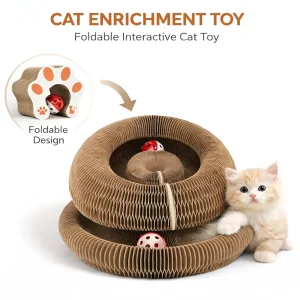
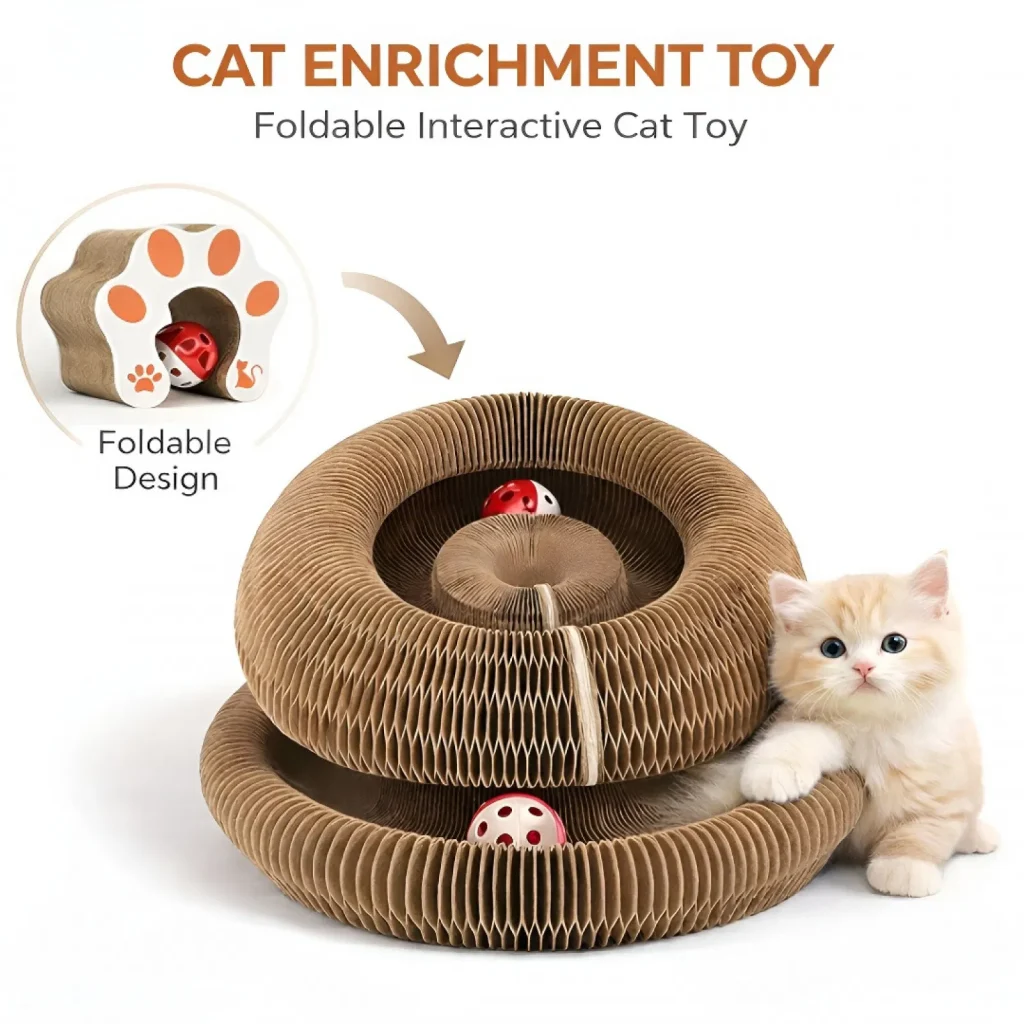
A kitty curls cat toy - foldable accordion cat scratcher withball - magic organ cat scratch.
How long does cardboard last, and is that a problem?
Cardboard scratchers are the opposite of durable: a enthusiastic cat can reduce one to a pile of grey dust in two to four weeks. For some owners that short life feels wasteful, but it is also the appeal—cardboard is inexpensive, lightweight, and cats love the give of corrugated layers under their claws. The mess is the trade-off, and you will find grey crumbs on the floor that need regular vacuuming. A well-placed cardboard scratcher near her favourite nap spot keeps the debris contained to one area. Rather than seeing the short life as a flaw, treat cardboard as a consumable like litter: cheap, satisfying, and replaced on a schedule. Use it to supplement a sisal post, not replace it, and your cat gets variety while your main scratcher stays intact for months.
Which material do cats prefer to scratch?
There is no universal winner—preference is individual, and many cats clearly favour one texture for stretching and another for digging. Sisal gives a firm, resistant pull that satisfies the claw- conditioning stretch, while cardboard offers a softer, shreddable surface that triggers happy digging. Offering both lets your cat choose, which is the surest way to protect furniture. Watch which she uses and lean into it: if she ignores sisal, try a vertical cardboard post; if she shreds cardboard in hours, add a sisal alternative. A mixed-material scratcher setup covers both urges. Texture preference can also change with age—kittens often love cardboard, while senior cats may prefer the stable resistance of sisal. The material that wins is the one placed exactly where she already wants to scratch, so location and texture together decide success.
Can I use both sisal and cardboard together?
Yes, and most cat owners should. The ideal arrangement is a sturdy sisal post as the permanent, daily scratcher anchored beside the furniture she targets, plus one or two cardboard scratchers rotated through her favourite lounging spots. This gives her a reliable main post and easy, cheap novelty that keeps scratching interesting. Use a proper post placement strategy so each material sits where she naturally scratches, not where you hope she will. Cardboard pads are brilliant inside cat trees, on the floor by the sofa, or near a window perch, while sisal handles the heavy daily workload. Having both also helps multi-cat homes, where one texture can become contested. Think of sisal as the workhorse and cardboard as the treat—together they satisfy every scratching instinct and make your furniture the last thing she thinks to claw.
How do I make either scratcher last longer?
Regardless of material, placement and maintenance decide lifespan. Put the scratcher where your cat already scratches, not in a distant corner, because a convenient scratcher gets used and a hidden one gets ignored while the sofa suffers. For sisal, rotate or flip the post to spread wear, and re-wrap with rope when it frays rather than binning the whole unit. For cardboard, buy the denser, wider corrugated pads and keep a spare so you swap before frustration drives her to furniture. A durable scratcher combined with catnip rubbed on the surface trains her to the right spot. Refresh scent weekly with a little catnip, and never punish scratching—reward her for using the post. With good habits, sisal lasts months and cardboard becomes a cheap, predictable consumable rather than a source of annoyance.
Frequently asked questions
- Is sisal or cardboard better for kittens? Cardboard is forgiving and cheap for teething kittens, but introduce sisal early so they accept it.
- Can I re-wrap a sisal post myself? Yes—buy natural sisal rope and wind it tightly around the core, securing the ends with staples.
- Why does my cat prefer cardboard to sisal? Often it is placement; move the sisal beside where she scratches cardboard and she will likely use both.
- Are cardboard crumbs harmful if eaten? Small amounts are usually harmless, but vacuum regularly and keep the pad away from food bowls.